
Reviewed · HISTORICAL TOURS
Guided Tour Historic Town in small group
Santiago’s old town reveals itself one square at a time, and this 90-minute walk gives you a useful first map. You begin beneath the cathedral at Plaza del Obradoiro, then move through the smaller squares, the monastery district, and the Mercado de Abastos.
I like the clear route and the price: $14.51 buys an official guide and a quick introduction to the city. I also like the stop at the food market, which gives the tour a local, everyday finish rather than ending with one more church façade.
The main caution is pace. Some guides pack in a lot of information, and Spanish names can be hard to catch beside street noise. You may want to ask the guide to slow down, especially if English is not your first language.
Key points at a glance
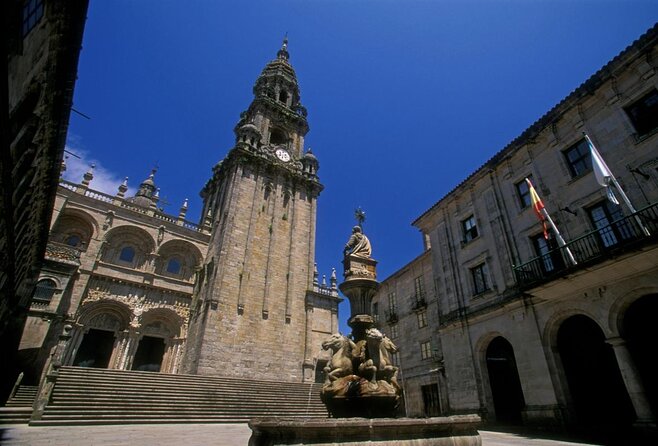
- Cathedral setting: Start in Plaza del Obradoiro, the grand square facing Santiago Cathedral.
- Five central stops: Visit the cathedral squares, San Martín Pinario’s area, and the Mercado de Abastos.
- English walking tour: The experience is offered in English with an official tourist guide.
- Strong value: At $14.51, it is an inexpensive way to get your bearings before exploring alone.
- Food market finish: Learn how Santiago’s main market fits into the city’s food culture.
- Flexible planning: Free cancellation is available up to 24 hours before the start time.
Why this short Santiago walk works well
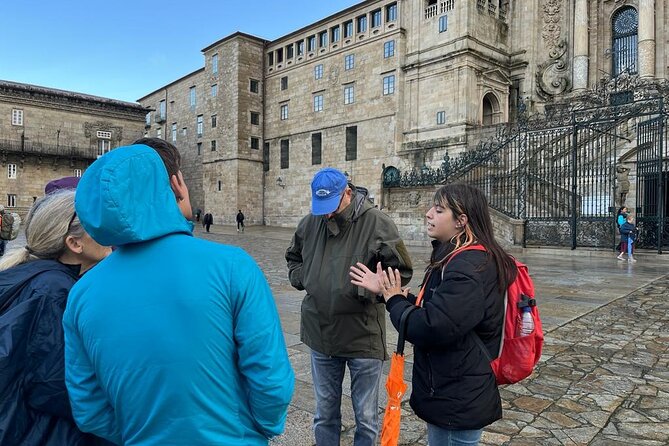
Santiago de Compostela can feel confusing on your first few hours in town. The old quarter is a web of stone lanes, formal squares, religious buildings, and small corners that are easy to pass without understanding. This tour gives you a simple route through the center and explains what you are seeing as you go.
The walk is not built around long interior visits. Admission to Santiago Cathedral is not included, and the scheduled stops are outdoor explanations. That keeps the cost low and makes the experience easy to fit around your own cathedral visit, museum plans, meal, or rest after walking the Camino.
I see this as an orientation walk rather than a full historical course. Some guides, including Maria, Carolina, Veronica, and Mire, have added humor, restaurant suggestions, and extra stories. The quality of the experience depends partly on the guide’s speaking speed and style, but the strongest sessions give you both a basic timeline and a sense of how the old quarter works.
Book it near the start of your stay if you can. You will recognize the squares afterward, know where the market is, and have a better idea of which buildings deserve a second look.
More historic sites in Santiago de Compostela:
- Madrid Essential: Historic Center, Plaza Mayor & Royal Palace
★ 5.0 · 6,416 reviews - Barcelona: Tapas Walking Tour with Food, Wine, and History
★ 4.8 · 4,261 reviews - Sevilla Food Tour: Tapas, Wine, History & Traditions
★ 5.0 · 3,468 reviews
Plaza del Obradoiro: begin beneath the cathedral
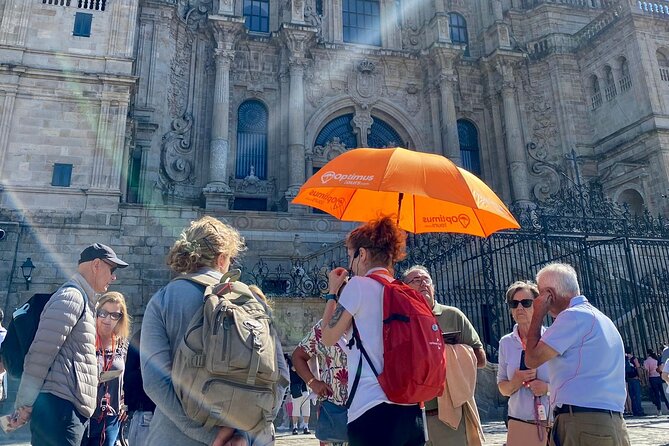
The meeting point is Praza do Obradoiro, also called Plaza del Obradoiro. Look for the guide holding an orange umbrella. This is the easiest part of the meeting plan, since the cathedral square is the city’s best-known gathering place.
The first 20 minutes are spent here. You can expect an explanation of the square, the cathedral setting, and the major buildings around it. The tour does not include entry into the cathedral, so you should treat this section as an outdoor introduction.
That distinction matters. The cathedral is one of Santiago’s main reasons for coming, but a short street tour cannot cover its interior, museum, and religious details in depth. If you want to visit inside, arrange that separately and check the opening information for your chosen date.
The square is also a good place to hear the larger story of Santiago. You get a sense of why pilgrims arrive here, why the cathedral dominates the old town, and how the surrounding buildings frame the final destination. The guide’s explanation can turn a grand stone façade into a place with a purpose, not just a photograph.
Allow yourself a few minutes before the start time to find the meeting point. The square can feel broad and open, and an orange umbrella is much more useful than trying to identify one person in a crowd.
Praza das Praterias and the cathedral’s Romanesque face
The next stop is Praza das Praterias, a short move from the main square. The guide spends about 10 minutes explaining the Romanesque façade.
This is one of the tour’s most useful stops for anyone who wants to read the cathedral rather than simply admire it. Romanesque stonework can look dense at first. A guide can point out the parts that matter and give you a basic idea of how the façade fits into the cathedral’s story.
The stop is brief, so do not expect a full architectural lecture. Its value is practical: you learn enough to look more closely when you return on your own. If you have a camera, this is a good moment to pause and take in the detail instead of rushing from one square to the next.
Some sessions use a headphone or audio receiver setup. That can help you hear the guide without standing shoulder to shoulder, though the system will not remove every problem caused by traffic, voices, or unfamiliar place names. I would stay fairly close and ask for a repeated detail when needed.
Praza da Quintana de Vivos and the Holy Door
The walk continues to Praza da Quintana de Vivos, where the guide explains the Holy Door and the monastery. This section takes about 10 minutes.
The Holy Door is an important part of Santiago’s religious identity, and this stop helps connect the cathedral area with the wider pilgrimage tradition. You will also hear about the monastery nearby, giving the square a broader setting than a simple cathedral viewpoint.
The name of the square can be difficult to catch in spoken English, especially when the guide is moving quickly. If you want to remember it, write it down or save the tour route in your phone after the walk. The same goes for the names of buildings and religious features. Santiago uses Galician and Spanish names side by side, and they can blur together when you are hearing them outdoors.
I like this stop because it adds context to the cathedral quarter. You are not only looking at a church entrance. You are seeing how squares, monasteries, and pilgrimage customs fit together in a compact part of the city.
A few other Santiago de Compostela outings to compare
- Santiago de Compostela Cathedral and Museum Guided Tour
★ 4.6 · 511 reviews - From Santiago: Lugo & Cathedrals Beach Guided Excursion
★ 4.5 · 174 reviews - Santiago: Guided Foodie Tour with Drinks, Tapas & Live Music
★ 4.7 · 153 reviews - Guided tour of Bodegas Granbazán
★ 5.0 · 101 reviews
Praza da Inmaculada and San Martín Pinario
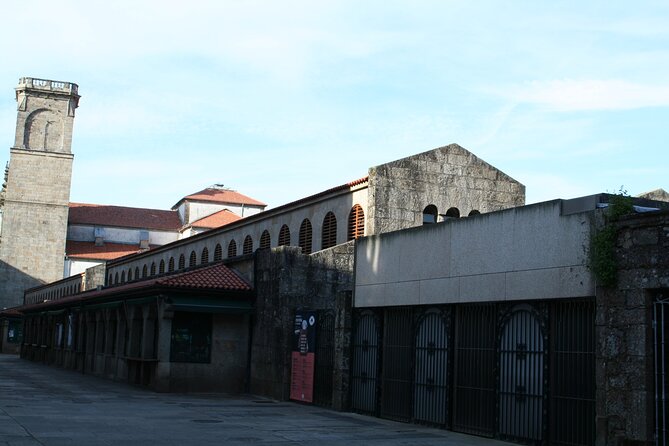
At Praza da Inmaculada, the guide discusses the Monastery of San Martín Pinario, azabache, and other local subjects. The scheduled explanation lasts around 10 minutes.
San Martín Pinario is one of the buildings that gives Santiago its serious stone character. Even if you do not enter, learning what the monastery represented helps you understand why the old quarter contains so many large religious structures close together.
Azabache is another reason this stop feels more local. The term refers to jet, a black stone traditionally linked with Santiago and pilgrimage souvenirs. It is a small cultural detail, but details like this give the walk more texture than a list of dates and façades.
This is also where a good guide can make the city feel more human. The strongest guides mix major events with small stories, humor, and practical observations. Carolina, for example, has been praised for connecting history to everyday life and adding restaurant and activity suggestions. Maria has also been singled out for her warmth, humor, and willingness to answer questions.
Do not expect every guide to spend the same amount of time on each subject. The official schedule allows about 10 minutes here, but the total tour can run close to two hours when the guide answers questions or adds material.
Mercado de Abastos: finish with Santiago’s daily life
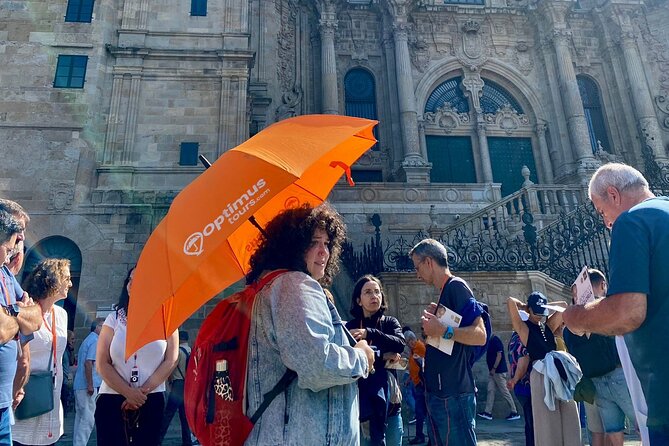
The final scheduled stop is the Mercado de Abastos de Santiago, the city’s food market. The guide gives a gastronomic market explanation, and this is one of the tour’s most useful practical additions.
Churches explain why Santiago matters to pilgrims. The market shows how the city functions on an ordinary day. You can learn how the market fits into local food culture, then return later to look around at your own pace or plan a meal nearby.
A food market is also a good place to end a walking tour. After four historic squares, you get a change of subject and a chance to think about what you want to eat. One guide’s suggestions may help you choose a restaurant or decide to return to the market later in the day.
The market visit is an explanation, not a meal or a tasting. No food, drinks, or market purchase is listed as part of the price. Bring your own plan for eating, and use the guide’s advice as a starting point rather than expecting a hosted food experience.
What the guide adds to the old town
The official guide is the heart of this experience. The route itself is easy to walk, but the meaning of the buildings is not always clear from the street. A guide can explain why a façade matters, connect a square to the pilgrimage story, and point out details you would probably miss.
The strongest guide experiences combine three things:
- Clear explanations of buildings and places
- Stories and humor that keep the walk from feeling like a lecture
- Suggestions for restaurants and other things to do afterward
Maria, Carolina, Veronica, and Mire are names associated with especially well-received sessions, but the guide assigned to your departure may be different. The information provided does not promise a particular guide, so do not book on the assumption that one named person will lead your walk.
Speaking speed is the main issue to watch. One guide may cover a lot of material in a short time, while another may give a more relaxed, casual talk. If you have trouble following, say so early. Short questions such as Can you repeat that name? or Could you speak a little more slowly? can make the rest of the tour much easier.
Pace, group size, and the outdoor setting
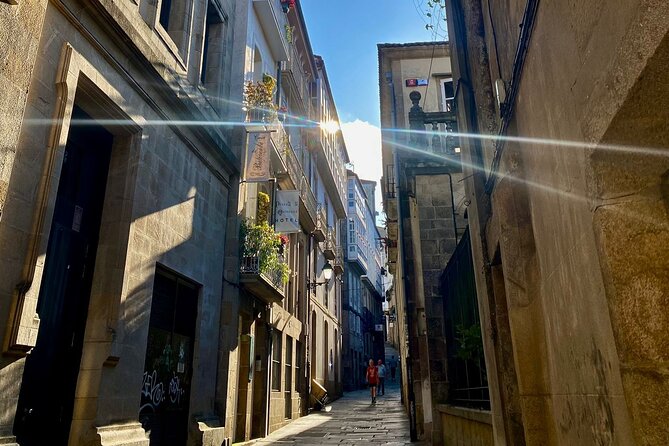
The advertised duration is about one hour and 30 minutes. The route includes five stops, with 20 minutes at Plaza del Obradoiro and roughly 10 minutes at each later location. In practice, the walk may take longer if there are questions or the guide adds extra material.
The maximum group size is 30 people. That is not a tiny private walk, but it is still manageable in the compact old town. Some departures may be much smaller. A group of eight has been described as particularly comfortable, with a good pace and plenty of room for questions.
Because this is an outdoor walking experience, sound matters. Stone streets, open squares, and passing people can make English harder to follow, especially when the guide uses Galician or Spanish names. Headsets have worked well on some departures, but you should still position yourself where you can see and hear the guide.
The walk begins and ends at Praza do Obradoiro. It is near public transportation, and service animals are allowed. Most people can participate. The supplied information does not give a detailed accessibility description, so anyone needing specific help with surfaces, steps, or walking distance should confirm those points before booking.
Is $14.51 a fair price?
At $14.51 per person, this is a strong value if you want orientation and basic context. You are paying for an official tourist guide, not entry to the cathedral, a meal, or a private tour. All scheduled stops have free admission, which keeps the price simple.
The value comes from the time you save. You could stand in each square and read a brochure, but you would need to find the route, sort out which details matter, and connect the buildings yourself. A good guide does that work for a modest fee.
The price is less compelling if you want a long, scholarly explanation or detailed interior visits. The tour is short, and one assessment described it as more of a casual walk-and-talk than a highly detailed history lesson. That is not a flaw if you want a friendly introduction, but it is worth knowing before you book.
For many people, the best use of the price is as a first-day walk. You get the city’s basic structure, then choose later whether to pay for cathedral entry, visit the museum, return to the market, or explore a side street on your own.
Who should book this walk?
I would choose this tour if you are arriving in Santiago for a short stay, finishing a pilgrimage, or visiting the old town for the first time. It is also a good fit if you prefer hearing the story of a place before wandering without a plan.
It suits you especially well if:
- You want an English-speaking guide
- You prefer a short walk to a half-day program
- You want cathedral-area context without paying for entry
- You like mixing architecture with food and local customs
- You appreciate restaurant and activity suggestions
- You want a low-cost introduction before choosing longer visits
I would look elsewhere if you want a private group, a guaranteed named guide, extensive cathedral interiors, or a slow architectural study. The maximum group size is 30, and the outdoor format means the guide’s delivery matters a lot.
The tour is also a sensible choice after a long walk on the Camino. The route is short, the subject is central to why Santiago matters, and you can keep the rest of your day free.
Booking and cancellation basics
You receive confirmation when you book, and the experience uses a mobile ticket. The tour is offered in English and is booked, on average, about seven days ahead, so reserving several days before your visit is sensible if your schedule is fixed.
OptimusTours allows free cancellation up to 24 hours before the experience begins. A cancellation made less than 24 hours before the start time is not refunded, and changes within that same period are not accepted. The cut-off follows local time in Santiago.
Should you book this Santiago tour?
Book it if you want a friendly, inexpensive introduction to Santiago’s old town, especially near the beginning of your visit. The route covers the cathedral squares, San Martín Pinario, azabache, and the food market in a compact 90-minute plan.
Go in with the right expectations. This is a guided orientation, not a cathedral admission ticket or an advanced history seminar. Stay close, ask the guide to slow down when needed, and use the market and restaurant advice to plan what comes next. At $14.51, it offers a lot of useful ground for very little money.
FAQ
How much does the guided tour cost?
The price is $14.51 per person.
How long does the tour last?
The tour lasts approximately one hour and 30 minutes. Some departures may run longer if the guide answers questions or adds extra material.
What language is the tour offered in?
The tour is offered in English.
Where does the tour meet?
The meeting point is Praza do Obradoiro in Santiago de Compostela. The guide will be waiting with an orange umbrella.
Where does the tour finish?
The activity ends back at the meeting point in Praza do Obradoiro.
Is entry to Santiago Cathedral included?
No. Admission to Santiago Cathedral is not included in the tour price.
How large can the group be?
The maximum group size is 30 people.
Can I cancel for a full refund?
Yes. You can cancel at least 24 hours before the experience start time for a full refund. Cancellations or changes made less than 24 hours before the start time are not accepted, and the amount paid is not refunded.
Recently added in Santiago de Compostela
- Guided tour of Bodegas Granbazán★ 5.0 · 101 reviews
- Santiago Complete Tour: City, Portico and Cathedral Tickets★ 4.7 · 108 reviews
- From Santiago: Excursion to Ribeira Sacra and Ourense★ 4.6 · 114 reviews
- Private tours Santiago de Compostela : choose your option★ 5.0 · 120 reviews
- Old town walking tour in a small group★ 4.8 · 149 reviews
- Santiago: Guided Foodie Tour with Drinks, Tapas & Live Music★ 4.7 · 153 reviews
- Excursion From Santiago to: Lugo, Catedrais Beach and Asturias★ 5.0 · 158 reviews
- Santiago de Compostela: Massage Treatment★ 4.8 · 170 reviews
Historical Tours, compared.
Madrid Essential: Historic Center, Plaza Mayor & Royal Palace
Read the review →
Tapas Walking Tour with Food, Wine, and History
Read the review →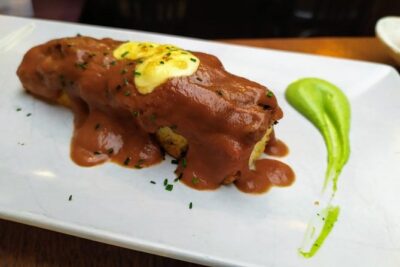
Sevilla Food Tour: Tapas, Wine, History & Traditions
Read the review →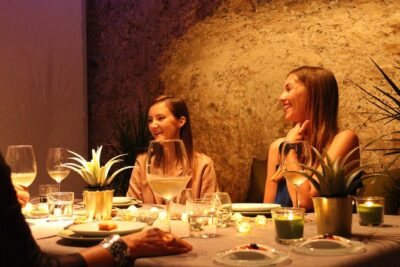
Valencia Old Town Tour with Wine & Tapas in 11th Century Historic Monument
Read the review →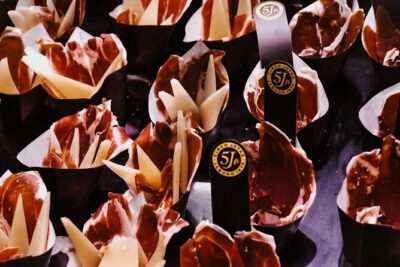
Barcelona Tapas Walking Tour: Food, Wine & History
Read the review →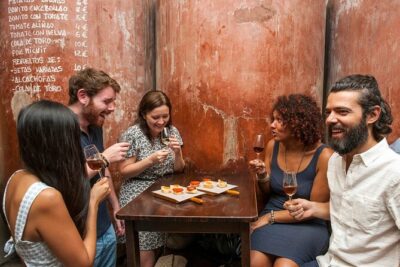
Ultimate Seville Tapas, Wine & History Small Group Tour
Read the review →
Skip-the-Line Great Mosque-Cathedral History Tour
Read the review →
Browse the lists this tour appears in