
Reviewed · VIP
Fuerteventura: The Panoramic VIP island Tour. All HOTSPOTS!
Fuerteventura reveals its best contrasts on this long, road-based day: golden dunes, black volcanic cliffs, old villages, dry mountains, and small green valleys. The Panoramic VIP Island Tour packs those sights into six to seven hours, with local guide Pierre explaining the island as you go.
I like the small maximum group of eight, which makes a big difference in a minibus, and I like the mix of major sights with places many visitors would miss on a beach holiday. The main caution is the ambitious plan. Weather, road conditions, and available time can change which stops you make, and some viewpoints receive only 10 or 15 minutes.
Key points to know before booking
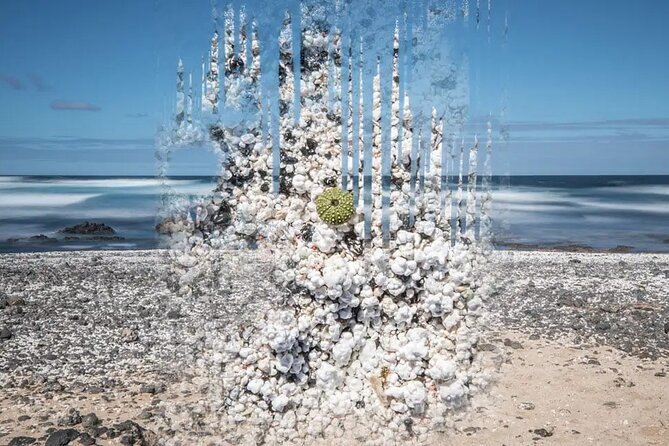
- Corralejo dunes and beaches: The tour aims to show you one of Fuerteventura’s signature coastal scenes, with a possible alternative stop at the popcorn beaches if conditions suit.
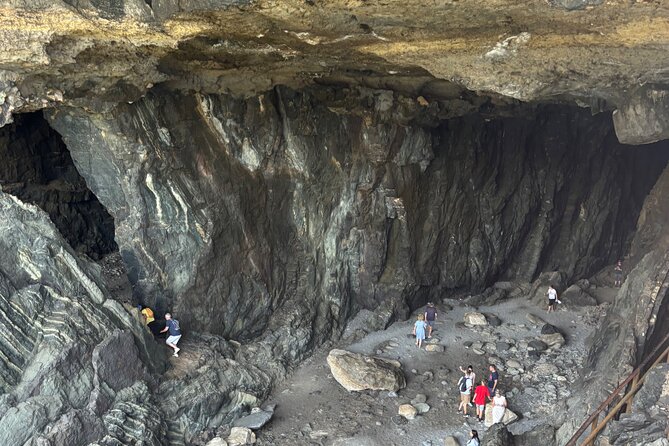
- Ajuy caves: A 45-minute walk takes you along the west coast toward some of the island’s oldest exposed rock formations.
- Eight-person minibus: A small group keeps the day more personal than a large coach outing.
- Betancuria and Pájara: You get a glimpse of Fuerteventura’s former capital, historic churches, farming settlements, and local traditions.
- Many scenic lookouts: Guise y Ayose, Las Peñitas, Sicasumbre, and Vallebrón each show a different side of the island.
- Lunch is extra: The day includes a lunch stop in a Canarian village, but food and drinks are not part of the $95.58 price.
Why this tour gives you the whole island in one day

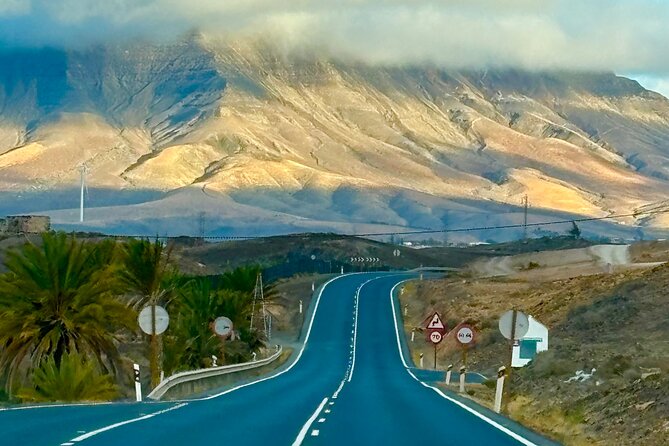
Fuerteventura is not an island you understand from one resort or one beach. Its appeal comes from the change in scenery as you cross it: sand dunes near Corralejo, bare volcanic hills inland, cliffs on the west coast, and small settlements built around scarce water.
This tour is designed as a broad introduction rather than a slow visit to one region. You move between beaches, caves, viewpoints, churches, villages, and historic sites. That makes it useful on a first visit, especially if you do not plan to rent a car.
The price is $95.58 per person. That is fair for a six-to-seven-hour outing in a new air-conditioned minibus, with hotel or cruise pickup offered, a maximum of eight people, and a local guide providing commentary throughout the drive. You still need to budget for lunch and possible entry to the Santa Maria Cathedral in Betancuria, which costs €2 when open.
The tradeoff is pace. This is a lot of island for one day. You will see more than you could easily cover by public transport, but you will not have long, unhurried visits at every location.
A few other Fuerteventura outings to compare
- Fuerteventura: Cofete Beach and “Villa Winter” VIP Tour
★ 5.0 · 111 reviews - Luxury Catamaran sailing with welcome Drinks Tapas Max10-12Person
★ 5.0 · 1,339 reviews - Madrid: Royal Palace VIP Tour with Skip-the-Line Ticket
★ 4.3 · 645 reviews
Corralejo dunes and the northern beaches
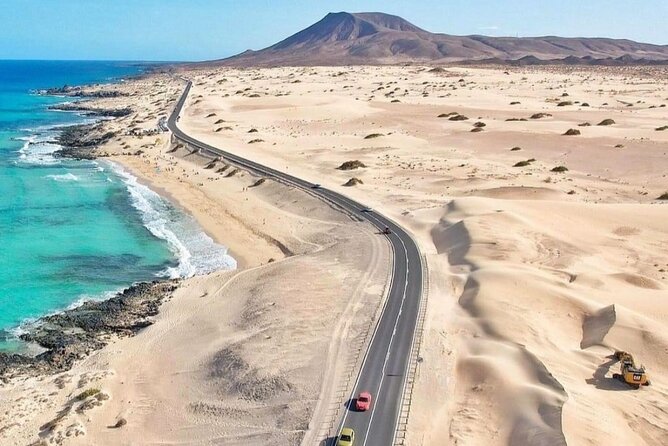
The day may begin with the Dunas de Corralejo, one of Fuerteventura’s most recognizable sights. The broad sand area beside the coast gives you the feeling of a desert reaching the sea. The tour description allows about 10 minutes here, so think of this as a photo stop and first taste of the north, not a beach afternoon.
Corralejo is often praised for its bright sand and clear water, but the point of this tour is the setting rather than swimming. You can take in the open views, feel the scale of the dunes, and hear why the guide calls this area the door to paradise.
Weather affects this part of the route. In good conditions, the stop may be at Corralejo or at the so-called popcorn beaches, where pale coral fragments cover parts of the shore. If this sight matters most to you, confirm the expected plan with Fuertetickets before departure. One practical weakness of the experience is that advertised stops can be adjusted, and at least one past participant expected a longer dunes visit than was provided.
Ajuy caves and Fuerteventura’s oldest rocks
Ajuy offers a sharper, wilder contrast with the soft sand of Corralejo. Here, you walk toward sea caves cut into dark coastal rock. The walk is scheduled for about 45 minutes, making it one of the more substantial stops of the day.
The geology gives Ajuy its weight. These formations belong to Fuerteventura’s basal complex, created by underwater lava and sediment that rose roughly 100 million years ago during the Cretaceous period. The rocks originated deep below the sea, at a depth of about 3,000 metres, before becoming the foundation of Fuerteventura and nearby Lanzarote.
You do not need to be a geology enthusiast to appreciate the place. The cliffs make the island feel older and more dramatic than its resort areas suggest. Your guide can also connect Ajuy with Jean de Béthencourt, the 15th-century conqueror of the Canary Islands, who is said to have landed here.
The cave walk depends on weather and sea conditions. Wear shoes suitable for uneven ground and bring water. If you have trouble walking or need frequent toilet stops, this is not the easiest day out. The tour operator specifically warns that the route is not suitable for people with medical conditions requiring frequent bathroom access.
Betancuria, the old capital in the hills
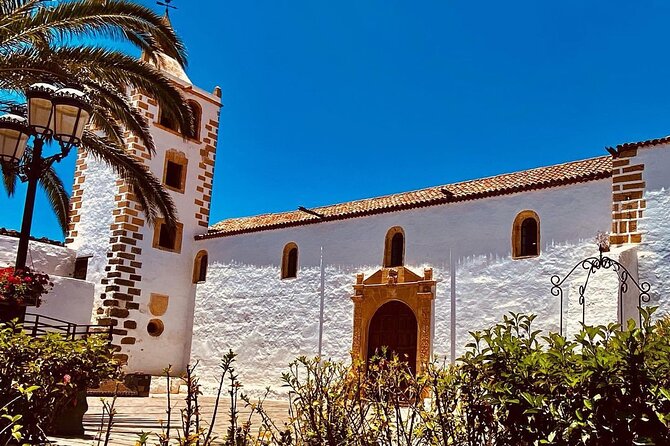
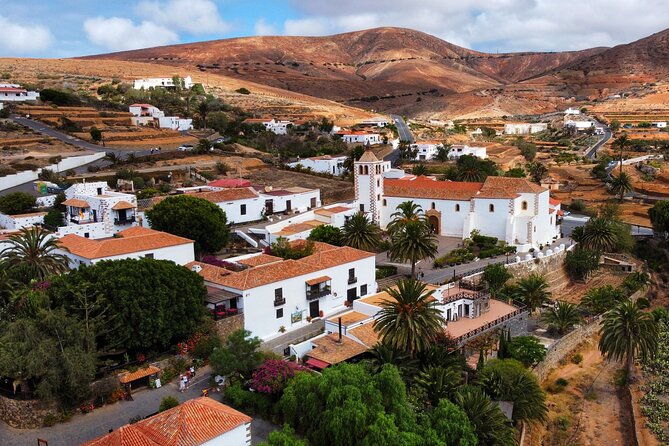
Betancuria is one of the most appealing human stops on the route. Set among the interior hills, this former island capital feels far removed from the beaches. You get around 30 minutes of free time, with the option to stroll, have coffee, shop, or visit the Santa Maria Cathedral if it is open.
The cathedral costs €2, and that fee is not included. This is worth knowing because the tour includes the village visit, but not every possible attraction within it. Thirty minutes is enough to look around the central streets and take a few photographs, but it is short if you want a careful church visit and a relaxed coffee.
Betancuria matters because it shows how people adapted to Fuerteventura before modern tourism. Farming, water, and protection from coastal attacks shaped settlement here. The village also survived the destruction caused by the Arab invasion of 1593, when Betancuria was reduced to ruins.
I would treat this stop as a quick introduction. If you want to study the cathedral, browse shops, and sit down for a drink, you may feel hurried. Still, it is a useful pause after the coastal and mountain roads.
Same city, a completely different evening:
- Morro Jable: Dolphin & Whale Watching Cruise, Drinks & Swim
★ 4.1 · 4,158 reviews - From Morro Jable: Dolphin and Whale Watching and Snorkelling
★ 4.6 · 3,111 reviews - Fuerteventura: Cofete Beach Jeep Safari
★ 4.5 · 1,644 reviews - Fuerteventura: Lobos Island Round-Trip Speedboat Ticket
★ 4.8 · 1,473 reviews
Four viewpoints, four different views of the island
The tour includes several short stops at elevated viewpoints. They are not interchangeable, and together they help explain Fuerteventura’s terrain.
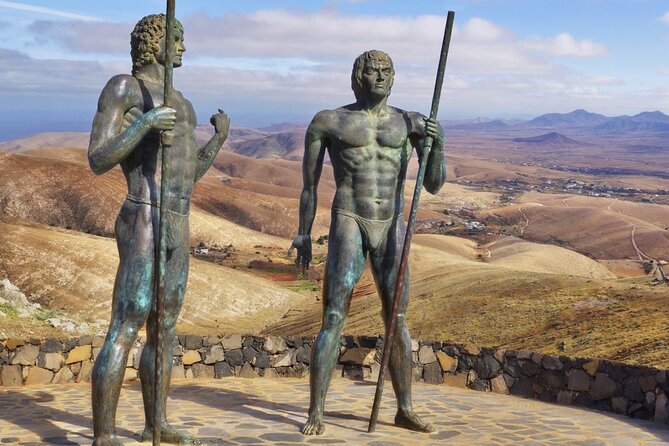
Mirador Guise y Ayose sits about 669 metres high and offers a mountain panorama. The two statues of Guise and Ayose represent the island’s pre-Hispanic kings, adding a cultural layer to what could otherwise be only a photo stop. The planned visit is about 10 minutes.
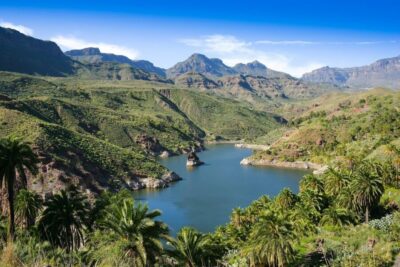
Mirador de las Peñitas looks into the ravine of Las Peñitas, where a small green area appears amid the island’s dry surroundings. A human-made underground river, created in 1937, feeds a small lake and supports native plants. Chipmunks live around the viewpoint, so keep food secured and do not feed them. This stop is also about 10 minutes and may be skipped if conditions are poor or time is tight.
Mirador Sicasumbre lies about 300 metres above sea level and is known as one of the island’s better places for observing the night sky. The facilities include information panels and spaces where you can set up a camera. The planned stop is 15 minutes, weather permitting.
Mirador de Vallebrón gives you a view of a protected area between La Oliva and Puerto del Rosario. The ridge has a narrow, knife-like shape, with two large U-shaped ravines on either side. The protected area covers nearly 1,680 hectares. You may also see the direction of Tindaya and the Montaña de la Muda, where an archaeological site adds historical interest.
These stops are excellent for photographs, but do not expect a long walk or a private visit at each one. Wind and cloud can change the experience quickly. The guide may decide that a viewpoint is not worthwhile if the view has disappeared.
Vega de Río Palmas and the Virgin of La Peña
Vega de Río Palmas brings the route into a quieter village setting. The area is associated with the Church of the Virgin de La Peña, the patron saint of Fuerteventura. The planned stop is around 10 minutes, although the precise time depends on the rest of the day.
This is also the lunch area. Food is not included, and the tour description leaves you time to eat and drink. The recommended Canarian restaurant has received mixed feedback, so you should feel free to ask about alternatives rather than assuming you must eat at one particular place. The practical issue is not simply price, but time: a slow lunch can reduce the time available at later stops.
A short trail leads toward the Ermita de la Peña, the small chapel dedicated to the island’s patron. If the schedule allows and the church is open, Pierre may include a visit. That wording matters. You should see it as a possible addition, not a guaranteed interior visit.
Pájara, Tindaya, and the island’s older stories
Pájara was founded by farmers and fishermen who found better soil and water here than in many other parts of Fuerteventura. The town’s name may relate to birds, and its coat of arms features a hen pheasant.
The Hermitage of Nuestra Señora de la Caridad is the most notable monument in the village. It is a small temple protected as an Asset of Cultural Interest. The route through Pájara is accompanied by explanations from the guide, so even a brief stop can give you useful context about rural life and settlement.
Tindaya brings a different kind of history. Mount Tindaya is protected for both its unusual geological form and its archaeological importance. The pre-Hispanic Majos left podomorphic petroglyphs there, and the mountain held a sacred role in their culture.
The nearby Casa Alta, or High House, is an 18th-century example of civil architecture. Local legends link it with witches who were said to descend from Tindaya at night and return to the house at sunrise. You should take these stories as part of the island’s folklore, not as literal history, but they make the brief five-minute stop more memorable.
The route also passes places connected with Miguel de Unamuno, who lived in exile on Fuerteventura. About three kilometres south of Pájara, at the foot of Montaña Quemada, a monument honors the writer.
Tefía and Puerto del Rosario on the return route
The drive through Tefía carries a more difficult historical subject. The former agricultural prison colony operated from 1954 to 1966 during the Franco dictatorship. It held ordinary and political prisoners, as well as men imprisoned for being homosexual and subjected to re-education.
This is not a cheerful sightseeing stop, but it is an important reminder that Fuerteventura’s past includes repression as well as churches, legends, and scenic roads. The same area also relates to the island’s early aviation history. Fuerteventura’s first airport opened there in 1930, bringing the first tourists to the island.
Near Puerto del Rosario, the route passes through the young capital and along the island’s main port. If time allows, you may stop for photographs at the port and Playa Chica. At high tide, the El Charco neighborhood can show a natural swimming pool effect.
The tour may also pass through or near the municipality of La Oliva, which includes Lobos island and was the island capital from 1834 until the capital moved to Puerto del Rosario in 1860. A large golf resort is another possible point of explanation along the route.
These pass-by sights help fill in the story of modern Fuerteventura, but they are not all formal stops. Ask Pierre at the start which locations are planned for the day.
What the small minibus changes
The group limit is eight people, and the vehicle is an air-conditioned minibus. That is a strong advantage on narrow mountain roads and at small villages where a large coach would feel awkward.
You also get more direct contact with the guide. Pierre is the named local guide, and his appeal is clearly tied to his love of the island and his habit of explaining its history, geology, villages, and customs. A dog named Kenzo may also accompany the outing, which some families have found charming.
The small vehicle requires a little cooperation. The guide may open doors at roadside stops for safety, ask you to use the overhead grab handle, and remind you to release the seat belt carefully so it does not strike the window. Those instructions can feel fussy, but they relate to the vehicle and to windy roadside locations.
A past complaint also described the guide as abrupt and overly controlling, while other accounts praised Pierre as caring, funny, and willing to answer questions. My advice is simple: expect a direct local manner, not polished hotel-service performance. If you value safety, information, and a personal guide more than a soft-spoken style, you are more likely to enjoy the fit.
Timing, comfort, and who should book
The advertised start is 9:15 a.m., but Fuertetickets confirms the exact pickup time and place by email or WhatsApp. Keep your phone switched on that morning, especially if you are coming from a cruise ship. Cruise pickup is adjusted to the ship’s arrival, with enough time allowed for disembarkation.
Pickup and drop-off are offered for hotel and cruise passengers, but not in the southern Jandía area, including Costa Calma and Morro Jable. Check your accommodation before paying.
This is not a good choice if you suffer badly from motion sickness, have animal allergies, or need frequent toilet access. The route includes many hours in a vehicle and mountain roads. Most participants can take part, and service animals are allowed, but the operator specifically flags these concerns.
Bring water, sun protection, comfortable walking shoes, and a light layer for exposed viewpoints. Lunch and drinks are extra. The tour requires good weather, and if conditions force cancellation, you are offered another date or a full refund.
Free cancellation is available up to 24 hours before the start time. Changes or cancellations inside that window are not refunded.
Should you book the Panoramic VIP Island Tour?
Book it if you want a fast, well-rounded first look at Fuerteventura without renting a car. The strongest parts are the eight-person group, the range of scenery, the Ajuy cave walk, the old villages, and Pierre’s detailed local commentary.
Do not book it if your priority is a relaxed beach day, long visits at museums, or guaranteed time at every named viewpoint. The schedule is ambitious, and weather or timing may remove some stops. You may also find that 10 minutes at a major viewpoint feels too short.
At $95.58, I consider it good value for a visitor who wants orientation and variety in one day. It is less suitable for anyone who prefers to linger. Confirm the day’s likely stops at pickup, accept that the route may change, and you will get a useful, scenic introduction to the island’s coast, mountains, villages, geology, and difficult past.
FAQ
How long does the Fuerteventura Panoramic VIP Island Tour last?
The tour lasts approximately six to seven hours. The listed start time is 9:15 a.m., while the exact pickup time is confirmed by Fuertetickets.
How much does the tour cost?
The listed price is $95.58 per person.
Is hotel pickup available?
Yes. Pickup and drop-off are offered for hotel and cruise passengers. Pickup is not offered in southern Jandía, including Costa Calma and Morro Jable.
Is lunch included?
No. The tour includes a lunch stop in a local Canarian village, but you pay separately for food and drinks.
Is the Santa Maria Cathedral entrance included?
No. If the cathedral in Betancuria is open, entry costs €2.
How many people can join the tour?
The vehicle carries a maximum of eight participants.
Is the tour available in English?
Yes. English is one of the offered languages, and a local multilingual guide leads the tour.
What happens if bad weather cancels the tour?
If poor weather causes cancellation, you are offered a different date or a full refund. You can also cancel for a full refund up to 24 hours before the start time.
Recently added in Fuerteventura
- Fuerteventura: Discover Fuerteventura Tour max 8pax★ 5.0 · 106 reviews
- Fuerteventura: Cofete Beach and “Villa Winter” VIP Tour★ 5.0 · 111 reviews
- Jet Ski Activity to Lobos Island from Corralejo★ 5.0 · 112 reviews
- Lobos Island Ferry with Snorkel from Corralejo, Fuerteventura★ 4.5 · 113 reviews
- Fuerteventura: Sunset boat trip with DJ, Food & Drinks★ 4.9 · 114 reviews
- From Fuerteventura: Sunset Hike at Volcano with Scenic Views★ 4.7 · 122 reviews
- Surf Class at Corralejo★ 4.5 · 122 reviews
- Fuerteventura: Can am buggy experience Costa Calma★ 4.7 · 130 reviews
VIP, compared.

Luxury Catamaran sailing with welcome Drinks Tapas Max10-12Person
Read the review →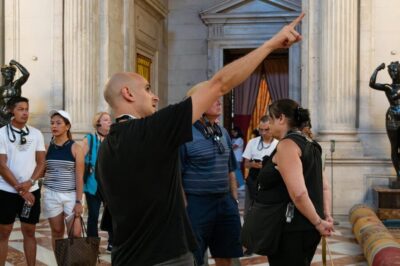
Royal Palace VIP Tour with Skip-the-Line Ticket
Read the review →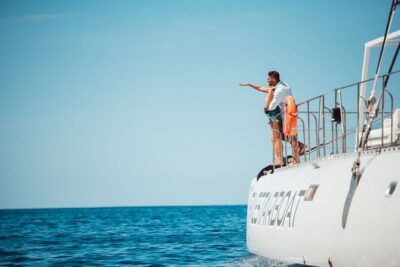
Luxury Catamaran Cruise with Brunch and Unlimited Drinks
Read the review →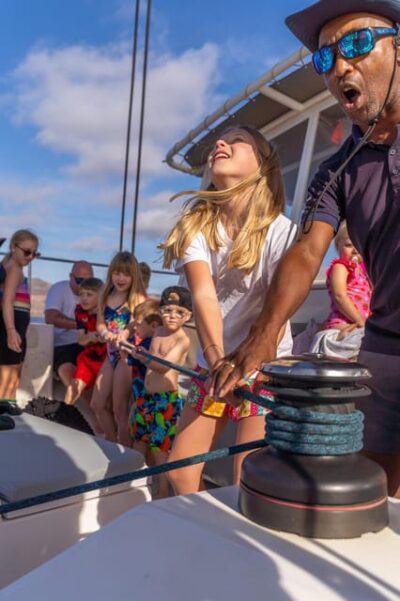
Private Alhambra Tour + Nazaries Palaces (VIP)
Read the review →
VIP Exclusive Early Access Tour of The Alcazar
Read the review →Browse the lists this tour appears in