
Reviewed · MUSEUMS
Cartagena : Roman Theatre Museum Entry Ticket
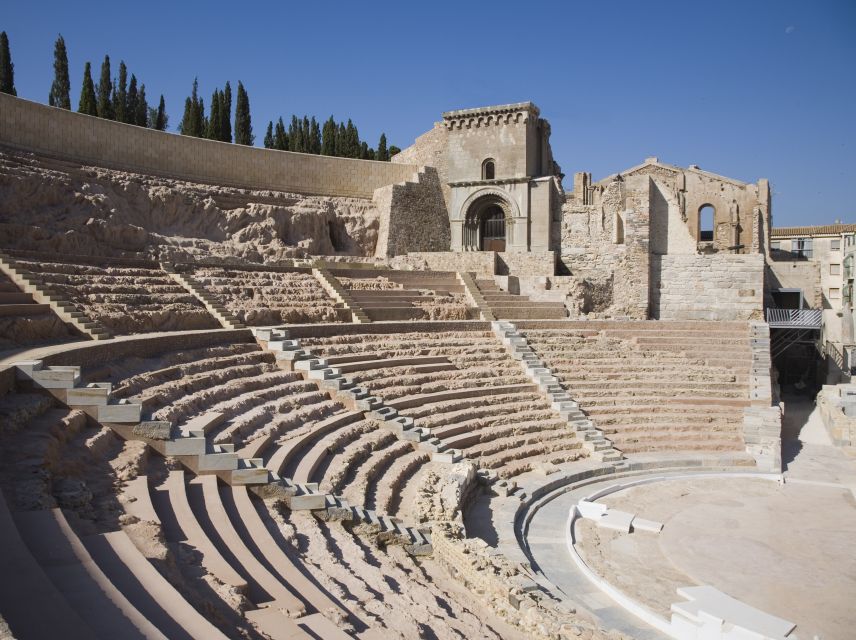
Cartagena’s Roman Theatre is a remarkable surprise: much of a 7,000-seat Roman theater lay buried beneath the modern city until archaeologists uncovered it. Your visit begins in Rafael Moneo’s handsome museum, then leads through the site and out into the theater itself.
I like the clear museum-to-ruins sequence and the chance to see the remains at your own pace. I also like the low $8 price, especially when you add the optional audio guide, which helps explain the mosaics, Roman performances, and political messages behind the theater. The main caution is practical: open steps and limited handrails can make the lowest parts difficult to reach, and the entrance is not always easy to find.
Key points to know before you go
- The museum comes first: You enter the theater through the museum, not directly from the street-side ruins.
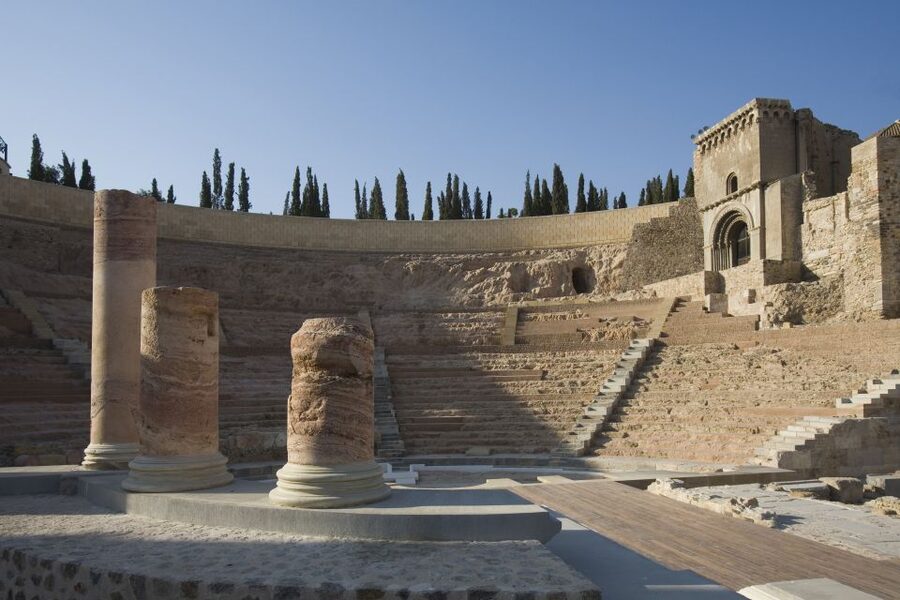
- The site is large: The theater could hold about 7,000 spectators, making its scale easy to appreciate from the viewing areas.
- Rafael Moneo designed the museum: Modern architecture frames the ancient remains without pretending the new building is Roman.
- The audio guide is worth considering: It is available in Spanish, English, French, German, and Russian, and helps explain what you are seeing.
- Allow more than a quick photo stop: The museum has several floors, artifacts, a Roman house mosaic, and the theater remains.
- Check the route if mobility matters: The site is wheelchair accessible, but some open steps lack handrails, electric wheelchairs are not allowed, and lower areas may be difficult to reach.
Why Cartagena’s Roman theater is such an unexpected find
The theater was built in the 1st century BC, when Cartagena was an important Roman city. It was designed for about 7,000 spectators, a figure that gives you a useful sense of its public role. This was not a small neighborhood performance space. It was a major civic building where entertainment, status, and politics met.
The striking part is what happened afterward. The theater was buried and forgotten beneath later layers of Cartagena. Modern buildings eventually covered parts of the site, including the remains of a Roman house that was destroyed when the theater was constructed.
That layering gives the visit more meaning than a simple look at old stone. You see how one city was repeatedly rebuilt, altered, and hidden. The museum explains this process before you step into the open theater, so the ruins make more sense when you reach them.
More museums in Spain:
- Madrid: Prado Museum Entry Ticket
★ 4.6 · 17,509 reviews - Barcelona: FC Barcelona Museum “Barça Immersive Tour” Ticket
★ 4.4 · 10,944 reviews - Madrid: Reina Sofía Museum Entrance Ticket
★ 4.5 · 6,889 reviews
Start with Rafael Moneo’s museum
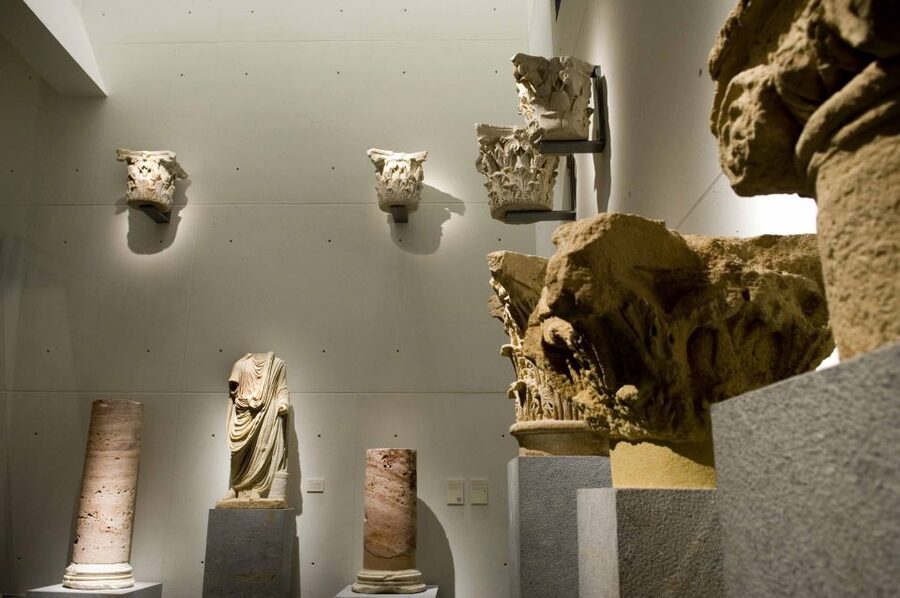
Your route begins inside the Roman Theatre Museum, designed by the Spanish architect Rafael Moneo. The building is modern, but its purpose is clear: it guides you toward the ancient site while presenting the finds in a controlled order.
The museum is arranged over several floors. Lifts and escalators are available, which helps you move through the indoor sections without treating the visit as a race from one display to the next.
I would give the museum proper time. It is easy to hurry toward the theater, but the artifacts and explanations answer basic questions that the ruins alone cannot. You learn how the site was found, why it disappeared, and how archaeologists pieced together its earlier form.
The museum also contains remains of a Roman house with mosaic tiles. That house was destroyed when the theater was built, a small but powerful detail. It shows that ancient city planning involved demolition and change, just as modern construction does.
Follow the Passageway of History
A central part of the visit is the Passageway of History. This section explains the development of the site from the 1st century BC through its later burial and rediscovery.
The passage is useful because Roman ruins can otherwise feel like disconnected walls. Here, you get a clearer sequence: a Roman theater was built, the surrounding city changed, later structures covered the area, and archaeological work gradually brought the theater back into view.
You also learn how Roman plays were performed. The theater was built for public entertainment, but performances had a political side too. Roman art and theater could reflect power, civic identity, and the values that leaders wanted the public to see.
That context gives the building a human scale. Imagine the theater not simply as an arrangement of seats and stone, but as a place where thousands gathered to watch performances and take part in public life.
Enter the 7,000-seat theater
After the museum and the indoor displays, you reach the Roman theater. This transition is one of the strongest parts of the visit. The museum prepares you for the site, then the open ruins give you the physical scale.
From the viewing areas, you can look across the seating and toward the stage area. The theater’s size is easier to grasp once you see how the seating rises and how the different sections fit together.
Some of the original steps and open stairways remain part of the route. They help you understand how people moved through the theater, but they are not always comfortable or easy by modern standards. Several parts lack handrails, and the lower stage area may not be reachable for anyone who is unsteady on steps.
If you have limited mobility, ask about the accessible route before you begin. The site is listed as wheelchair accessible, and the museum has lifts and escalators, but the ancient theater itself has uneven sections and open stairs. Wheelchairs may be restricted from some areas, and electric wheelchairs are specifically not allowed.
A few other Spain outings to compare
- Barcelona: Sagrada Familia Entry Ticket with Audio Guide
★ 4.6 · 105,312 reviews - Barcelona: Park Güell Admission Ticket
★ 4.4 · 76,534 reviews - Seville: Royal Alcázar Entry Ticket
★ 4.6 · 28,378 reviews - Seville: Cathedral and La Giralda Entry Ticket
★ 4.5 · 24,592 reviews
What the audio guide adds
The optional audio guide is available in Spanish, English, French, German, and Russian. I recommend adding it if you want more than a quick look at the stones.
The museum already gives you the basic story, but an audio guide can connect the objects to the building. It can help you understand why the Roman house matters, how the theater was used, and what the political side of Roman performances meant.
You can move at your own pace rather than follow a fixed group. That works well if one person in your party wants to read every panel while another prefers to get outside sooner.
A live guide is not part of this standard entry ticket. One separate experience mentioned a guide named Bruno, but you should not assume he is included with this museum admission. For this ticket, plan on a self-guided visit, with the audio guide available only if you select that option.
How long should you allow?
The ticket is valid for one day, but the visit itself is not described as a fixed-length tour. You can expect to spend time in the museum before reaching the theater, and the number of floors and archaeological displays makes this more than a five-minute stop.
I would avoid squeezing it into a narrow gap between other plans. The museum explains the site’s story, while the theater rewards time to look at the seating, stage area, and surviving architectural details.
A city visit can easily become a series of quick photographs. This site works better when you pause at the points where the modern museum meets the ancient remains. If you have children, the visit can also work well as a compact lesson in archaeology, construction, and daily life. The 7,000-person capacity gives younger visitors an easy way to picture how many people once gathered here.
Finding the entrance in Cartagena
The entrance can be confusing. The museum and theater are connected, and you must go through the museum to reach the theater. Do not assume that the visible ruins or an aerial viewing point is the ticket entrance.
Some navigation directions have led people to the museum exit rather than the entrance. Look carefully for the museum entry and allow a few extra minutes to get oriented.
The meeting point can vary depending on the option you book. Check your confirmation before setting out, and keep the required voucher available. A screenshot of the QR code is not accepted, so bring the valid voucher in the required form.
Once inside, the route is much easier to follow. The museum leads you through the archaeological material and onward to the theater, but clear signs outside would make the first step less frustrating.
Best time to visit
The Roman Theatre Museum closes at 2:00 PM on Sundays. That is the most important timing detail, especially if you are planning a relaxed afternoon in Cartagena.
A morning visit makes sense on Sunday, and it also helps if you want to avoid arriving at the end of the opening period. The theater is an outdoor archaeological site, so hot weather can make the exposed sections tiring, particularly for small children.
There is no food or drink service inside, and food and drinks are not allowed on the site. Plan your snack or coffee break before or after the visit. Alcohol and drugs are prohibited, as are pets, except assistance dogs.
Is $8 good value?
At $8 per person, this is an easy ticket to recommend for anyone interested in Roman Spain. You are not paying only to look at a ruined theater. The price includes the museum and the archaeological site, with several floors of displays, the Passageway of History, Roman artifacts, and the remains of the theater.
The optional audio guide may improve the value for you, particularly if you do not already know much about Roman theater or Cartagena’s ancient past. Without context, the open ruins can be hard to read. With explanations, the site becomes a story about urban change, public entertainment, power, and archaeology.
The price is also modest enough that you do not need to build your whole day around it. Still, do not book it simply because it is cheap. If you have limited time and want only a quick exterior photograph, you can see an elevated view without paying. The ticket earns its keep when you enter the museum and follow the full route.
Who will enjoy this visit most?
I would recommend the Roman Theatre Museum to:
- Anyone interested in ancient Rome and Roman Spain
- Families looking for a manageable cultural stop
- Visitors who prefer self-paced sightseeing
- Architecture fans interested in Rafael Moneo’s modern museum
- People who want a short, affordable indoor and outdoor activity
- Anyone who likes seeing how archaeology reconstructs a lost site
It is especially useful for families because the museum gives children several kinds of things to look at, from mosaics to the large open theater. The theater’s size also makes the ancient world easier to picture.
You may want to choose another activity, or plan carefully, if stairs are a serious concern. The museum has lifts and escalators, but the original theater route includes open steps and limited handrails. You may see the site well from the upper viewing area without reaching the lowest sections, but that is worth knowing before you pay.
Small details that make the visit better
Bring comfortable shoes. The route includes museum floors and ancient outdoor surfaces, and the steps are not built to modern comfort standards.
Add the audio guide if you want a fuller explanation. It is offered in five languages and lets you stop and start at your own pace.
Keep your ticket voucher ready, and do not rely on a QR screenshot. Also, confirm the entrance location rather than following map directions blindly, since the exit can be easier to find than the entry.
If you are visiting on Sunday, go early. The 2:00 PM closing time leaves less room for a slow museum visit and a separate stop at the theater.
Finally, save time for the museum itself. The open theater is the obvious attraction, but the artifacts, mosaic house, and excavation story are what turn the visit into a useful account of Cartagena’s past.
Should you book the Roman Theatre Museum ticket?
Yes, if you are spending time in Cartagena and want a low-cost cultural stop with real substance. The combination of Rafael Moneo’s museum, Roman artifacts, a mosaic house, and the large theater makes this one of the city’s most worthwhile ancient sites.
Book ahead if you can, especially on busy days when buying at the entrance may mean a long wait. Choose the audio guide if you want clear explanations in your language, and plan for a morning visit on Sunday.
I would hesitate only if you need full access to every level of the theater or dislike uneven steps. For most people, though, the $8 admission offers a well-organized look at an important Roman building and the surprising story of how Cartagena found it again.
FAQ
Where is the Roman Theatre Museum?
It is in Cartagena, in the Region of Murcia, Spain. The exact meeting point can vary according to the option booked, so check the information attached to your reservation.
Does the ticket include the museum and the theater?
Yes. The admission includes entry to the Roman Theatre Museum and the Roman Theatre archaeological site.
Is an audio guide included?
An audio guide is available if you select that option when booking. Languages include Spanish, English, French, German, and Russian.
What time does the museum close on Sundays?
The Roman Theatre Museum closes at 2:00 PM on Sundays.
Is the site wheelchair accessible?
The site is listed as wheelchair accessible, and the museum has lifts and escalators. However, some open theater steps lack handrails, lower areas may be difficult to reach, and electric wheelchairs are not allowed.
Can I use a screenshot of my QR voucher?
No. A valid voucher is mandatory, and a voucher or QR screenshot is not accepted.
Recently added in Spain
- From Andratx: Formula Sunset Driving Tour★ 4.8 · 176 reviews
- Barcelona: Catamaran Cruise w/ Sailing, Wine, & Tapa★ 4.7 · 176 reviews
- Entrance to the Flamenco Temple Room in Madrid with Tapas Option★ 5.0 · 176 reviews
- Fuerteventura: Round-Trip or 1-Way Ferry Ticket to Lanzarote★ 4.7 · 176 reviews
- Mallorca Sailing Adventure with Snorkeling, Snacks & Drinks★ 5.0 · 176 reviews
- Valencia Private Walking Tour with Official Valencian Guide★ 5.0 · 176 reviews
- Benahavís: Canyoning Guided Tour at Guadalmina River★ 5.0 · 177 reviews
- Guided Gaudí Trencadís Mosaic Workshop in Barcelona 2 Hours★ 5.0 · 176 reviews
Museums, compared.

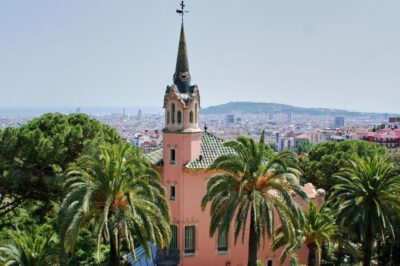
Park Güell and Gaudí House Museum Entry Ticket
Read the review →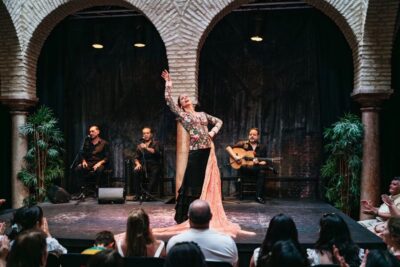
Puro Flamenco Show with Optional Museum Ticket
Read the review →
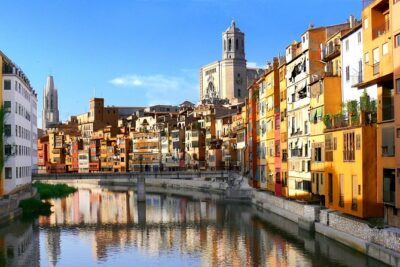
Girona & Dali Museum Small Group Tour with Pick-up from Barcelona
Read the review →
Oceanogràfic, Hemisfèric & Science Museum Combo
Read the review →
Small Group of Prado Museum Tour & Optional Tapas
Read the review →Browse the lists this tour appears in