
Reviewed · ALMERIA TOURS
Almería: Visit to the shelters of the Spanish Civil War
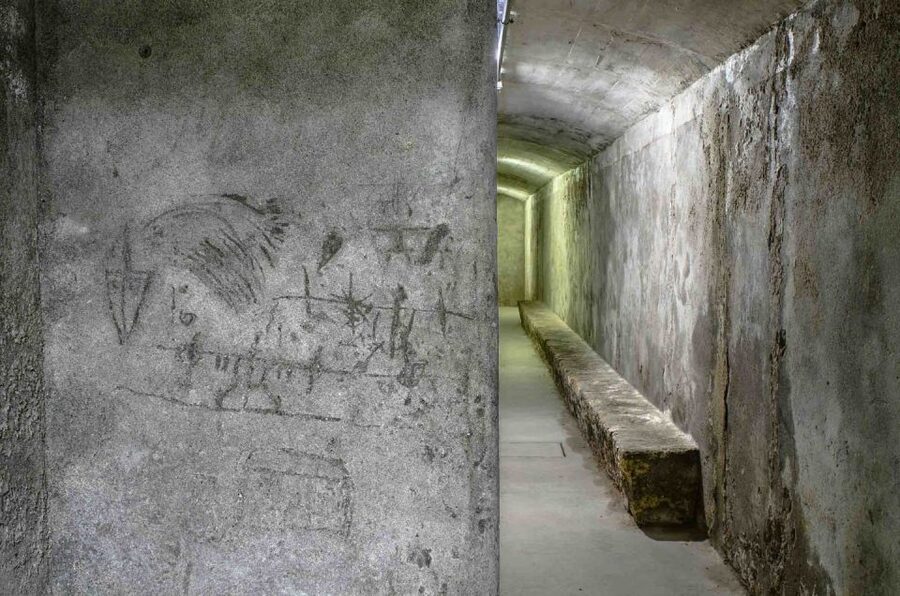
Almería’s Spanish Civil War shelters take you below the city into a place built for survival. The network once stretched about 4.5 kilometers and sheltered roughly 40,000 people during air raids. This visit covers nearly one kilometer of those underground galleries, including a small hospital and operating room.
I like the mix of engineering and human detail here. You see how the tunnels were made, then notice children’s drawings left on the walls of a private room. I also like the short, focused format: 75 minutes gives you a serious look without swallowing your whole day. The main drawback is that the tour is in Spanish, though English information boards and some guides’ English skills can help.
Key points to know before you go
- Nearly one kilometer underground: Walk through part of a much larger 4.5-kilometer shelter system.
- Built for about 40,000 people: The galleries show the scale of Almería’s need during wartime bombing.
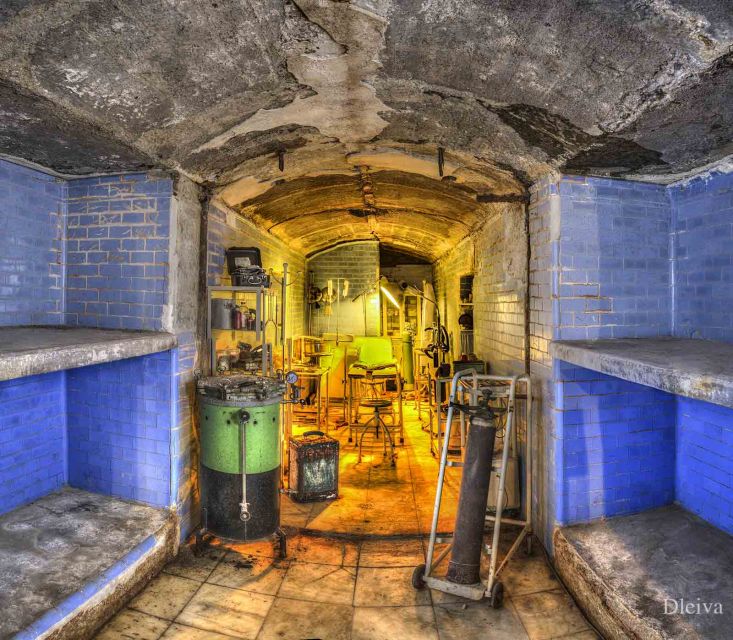
- A hospital beneath the city: See a small medical area with an operating room and private room.
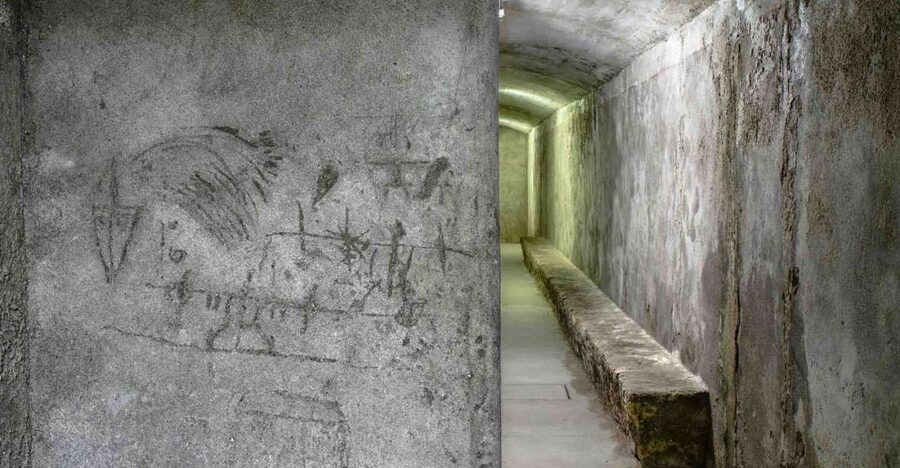
- Children’s drawings remain on the walls: These small marks add a personal side to the site.
- Spanish-led, with English support: The tour is conducted in Spanish, while information boards are also available in English.
- A 75-minute visit for $14: The price is modest for a guided historic monument visit, but transport and food are not included.
Entering Almería’s underground refuge
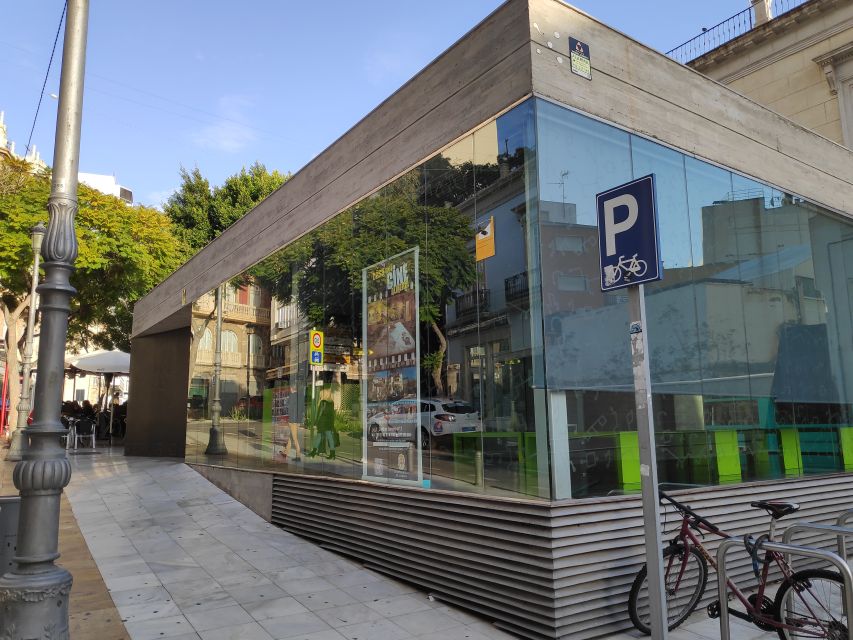
The meeting point is at the entrance to the monument beside Plaza Manuel Pérez García. You should arrive 10 minutes before the starting time, since the tour begins underground and late arrivals may have trouble joining the group.
From the start, the setting does much of the talking. You leave the bright streets of central Almería and enter galleries built to protect civilians from bombing. The basic fact is striking: about 4.5 kilometers of underground passageways were constructed for around 40,000 people.
You will not walk the full network. The visit covers nearly one kilometer, which is enough to give you a clear sense of the shelter’s scale without turning the outing into a long underground march. The route ends back at the same meeting point, so you do not need to arrange a separate pickup or find your way through unfamiliar streets afterward.
The tour includes a local guide, admission to the remaining Civil War structures, and insurance. You arrange your own transport to the square, and food and drink are not included. For a 75-minute city-center activity, that simple arrangement works well.
A few other Spain outings to compare
- Cabo de Gata Active. Guided kayak and snorkel route through coves of the Natural Park
★ 5.0 · 1,531 reviews - From Almeria: Tabernas Desert 4WD Joyriding Tour
★ 4.9 · 1,344 reviews - Fort Bravo Entrance Ticket
★ 4.0 · 470 reviews
What the 4.5-kilometer network tells you
The tunnels are not simply an old passageway. They were an emergency answer to a very direct danger: bombing during the Spanish Civil War. The shelter system was built below the city so people could get out of danger quickly and remain protected underground.
As you walk, try to picture the numbers rather than treating them as a dry fact. A refuge for 40,000 people needed more than a few rooms. It required an extended network, places to move people through, and areas that could serve different needs during an attack.
The guide explains events connected with the shelters and adds anecdotes about their less visible stories. Since the tour is in Spanish, you will get the clearest experience if you understand Spanish. English information boards in the tunnels provide useful help, and the experience can still work for English speakers when the guide has strong English skills.
Several people who booked the tour found that the guide could provide extra information in English, sometimes offering a near-bilingual explanation. That is not guaranteed, so I would treat it as a welcome possibility rather than a promised feature. If the historical detail matters greatly to you, read the English boards carefully and ask politely if the guide can clarify key points.
The hospital, operating room, and private room
The most memorable part for many people will likely be the hospital area. The shelter includes a small hospital with an operating room, a reminder that the refuge was designed for more than hiding during a short raid.
This detail changes how you read the tunnels. The galleries were not only a place where people waited for danger to pass. They also had to cope with injury and medical need. The hospital gives the site a practical, almost stark quality. You can see how wartime protection depended on basic underground services as well as thick walls.
You also visit one of the private rooms. Look closely at the walls, where children left behind works of art. These drawings provide a rare personal trace in a place otherwise defined by fear, construction, and military danger.
I like this contrast. The hospital explains the emergency system, while the children’s marks show how ordinary life continued in an extraordinary setting. They are small details, but they make the shelter easier to understand as a lived place rather than an empty monument.
Do not expect a polished museum full of objects in every room. The appeal is the surviving structure, the underground setting, and the guide’s explanation. If you prefer grand architecture or a large collection of exhibits, this may feel restrained. If you value places where the setting itself carries the story, it offers much more.
Descending nine or sixteen meters below the city
The route takes you down around 9 meters underground, with a full 16-meter descent mentioned for visitors who are brave enough. The exact experience depends on the route and the part of the monument you enter, but the key point is that this is a genuine underground visit, not a surface museum with a few steps below street level.
There is no natural light in the galleries. That makes the shelter feel more real, but it also matters for comfort. People with claustrophobia should think carefully before booking. The absence of daylight, the enclosed passageways, and the underground depth can make the visit stressful rather than interesting.
Wear comfortable shoes. You will be walking through the galleries, and practical footwear is more useful than anything stylish. Pets, luggage, and large bags are not allowed, so arrive with only what you need for the 75-minute visit.
The site is not suitable for wheelchair users or people with mobility impairments. This is important to check before paying, since underground historic structures often have steps and narrow areas. The provided information does not give a detailed step count or surface description, so anyone with limited mobility should ask the operator before booking.
Same city, a completely different evening:
- Barcelona: Sagrada Familia Entry Ticket with Audio Guide
★ 4.6 · 105,312 reviews - Barcelona: Park Güell Admission Ticket
★ 4.4 · 76,534 reviews - Seville: Royal Alcázar Entry Ticket
★ 4.6 · 28,378 reviews - Barcelona: Casa Batlló Entry with Self-Audioguide Tour
★ 4.7 · 25,359 reviews
A Spanish tour with useful English help
The official tour language is Spanish. That is not a minor detail, since the guide’s stories and explanations form a large part of the visit. If you understand Spanish, you will get the fullest version of the tour.
English speakers are not necessarily left on their own. The information boards in the tunnels include English, and some guides have been able to speak very good English or give extra explanations in English during the tour. One guide even helped make the visit feel almost like a personal English tour for an English-speaking participant.
Still, you should book with realistic expectations. You are not guaranteed an English-language guide, and the activity description identifies Spanish as the tour language. I would choose this experience if you are comfortable reading signs and picking up the main story from a Spanish-led explanation, especially if the site itself interests you more than receiving every historical detail in English.
A useful approach is to arrive early, read the English material at the entrance if available, and tell the guide that you speak English. A friendly request may lead to extra help, but it is best not to hold up a Spanish-speaking group or expect a full translation of every sentence.
Is $14 a fair price for 75 minutes?
At $14 per person, this is a reasonably priced historic visit. Your fee covers admission, a local guide, and insurance. You are paying for access to a substantial underground monument and for the context that makes the galleries meaningful.
The value is strongest if you already plan to spend time in central Almería. The meeting point is easy to identify beside Plaza Manuel Pérez García, and the activity returns you there after 75 minutes. You do not lose half a day to transport, and you can fit the visit around other city sightseeing.
The price does not cover transport, food, or drinks. That is not a major issue for a short central activity, but you should plan your route to the square yourself and eat before or after the tour if needed.
The tour also offers free cancellation up to 24 hours before the start time, and you can reserve now while paying later. Those terms help if your Andalusia itinerary is still shifting. Check the available starting times before booking, since the schedule is not fixed in the information provided.
Who will enjoy this visit most?
I would recommend the shelters to anyone interested in the Spanish Civil War, wartime history, civil defense, or unusual city monuments. The hospital, operating room, and children’s wall art give the visit several points of interest, so it is not only for people who already know the history.
It also suits curious visitors who want a different side of Almería. Instead of another open-air plaza or grand church, you spend time below the city in a place shaped by danger and necessity. That change of setting makes it a useful break from standard sightseeing.
Families with older children may find the drawings and underground setting engaging, but the tour’s historical subject and lack of natural light may not suit very young children. The supplied information does not give a minimum age, so check the booking details if age rules matter to your group.
I would be more cautious if you dislike enclosed spaces, have trouble with steps, use a wheelchair, or need a fully English-speaking guide. In those cases, the practical limits are more important than the low price.
Small details that make the visit better
Plan to arrive at least 10 minutes early. The entrance is located beside Plaza Manuel Pérez García, and finding the exact monument entrance is easier when you are not rushing.
Wear shoes you can walk in comfortably. The route is underground and includes descents, so this is not the place for flimsy sandals or hard-soled dress shoes.
Bring your interest in detail. The largest number attached to the site is the 4.5-kilometer network, but the small details are just as useful: the hospital, the operating room, the private room, and the children’s drawings.
If you speak English, use the information boards and ask the guide whether English clarification is possible. Several guides have been able to communicate well in English, but the scheduled language remains Spanish.
Keep your bag small. Large bags and luggage are not allowed, and pets cannot enter. Since the tour lasts only 75 minutes, there is little reason to carry more than the basics.
Should you book the Almería Civil War shelters?
I would book this tour if you want a compact, affordable history experience with a real sense of place. The underground galleries, the hospital, and the children’s drawings offer more substance than a quick photo stop, while the 75-minute length fits neatly into a day in Almería.
Book with care if you need wheelchair access, dislike enclosed spaces, or require a fully English-language tour. For everyone else, $14 is a fair price for entry and a guided look at one of Almería’s most unusual monuments. Arrive early, wear comfortable shoes, and give the small details time to register.
FAQ
Where does the tour start?
The tour starts at the entrance to the monument next to Plaza Manuel Pérez García in Almería.
How early should I arrive?
You should arrive 10 minutes before the scheduled starting time.
How long does the activity last?
The visit lasts 75 minutes.
What language is the tour in?
The live tour guide speaks Spanish. Information boards in the tunnels include English, and some guides may be able to provide additional explanations in English.
How much of the shelter network will I see?
The full shelter system covered about 4.5 kilometers. This visit includes nearly one kilometer of underground galleries.
Is the site suitable for wheelchair users?
No. The activity is not suitable for wheelchair users or people with mobility impairments.
Can I cancel for a refund?
Yes. You can cancel up to 24 hours in advance for a full refund.
Recently added in Spain
- From Andratx: Formula Sunset Driving Tour★ 4.8 · 176 reviews
- Barcelona: Catamaran Cruise w/ Sailing, Wine, & Tapa★ 4.7 · 176 reviews
- Entrance to the Flamenco Temple Room in Madrid with Tapas Option★ 5.0 · 176 reviews
- Fuerteventura: Round-Trip or 1-Way Ferry Ticket to Lanzarote★ 4.7 · 176 reviews
- Mallorca Sailing Adventure with Snorkeling, Snacks & Drinks★ 5.0 · 176 reviews
- Valencia Private Walking Tour with Official Valencian Guide★ 5.0 · 176 reviews
- Benahavís: Canyoning Guided Tour at Guadalmina River★ 5.0 · 177 reviews
- Guided Gaudí Trencadís Mosaic Workshop in Barcelona 2 Hours★ 5.0 · 176 reviews
Almeria Tours, compared.
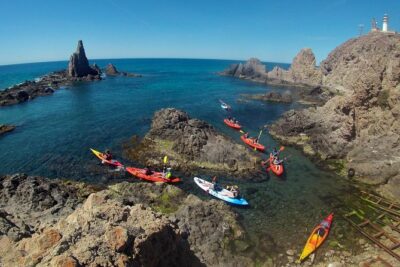
Cabo de Gata Active. Guided kayak and snorkel route through coves of the Natural Park
Read the review →
Browse the lists this tour appears in