
Reviewed · CORDOBA TOURS
Cordoba: Medina Azahara 3–Hour Guided Tour
Medina Azahara is the rare archaeological site where a ruined city and its museum work together to explain the same vanished world. Built by Abderramán III in the 10th century, this former seat of power shows you how Córdoba reached its greatest splendor. I like the clear historical storytelling and the chance to see more than 160 original pieces in the museum. I also like the closing video, which gives shape to walls and foundations that can otherwise feel hard to read.
The main drawback is practical: the site is not suitable for people with mobility impairments, and much of the visit takes place outdoors. Bring water, a sun hat, and firm walking shoes. The tour is in Spanish, so you will get the most from it if you understand the language well enough to follow a detailed explanation.
Key points at a glance
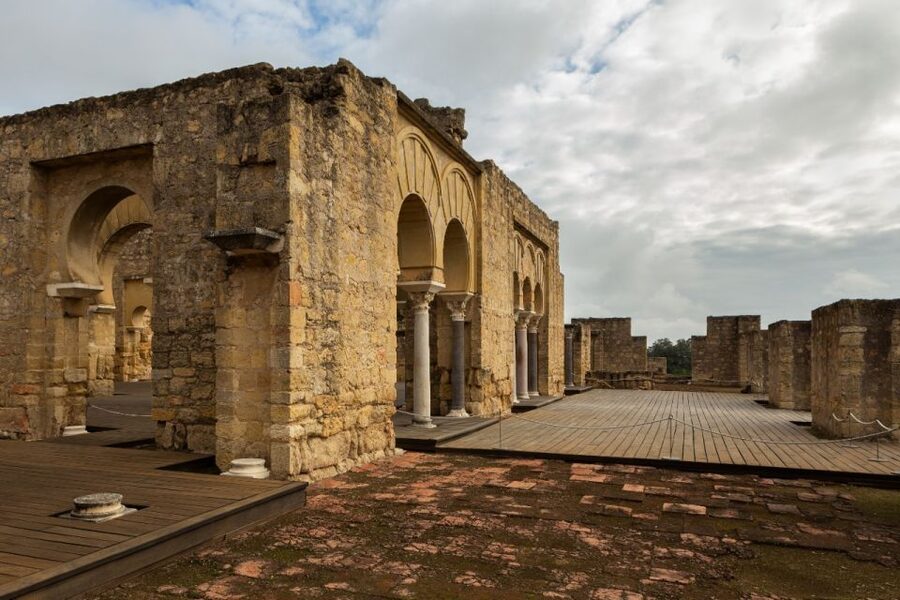
- A 10th century palace city: Learn why Abderramán III created Medina Azahara and how it reflected Córdoba’s power.
- A guided walk through the ruins: Your guide explains the corners and sections open to the public rather than leaving you to guess at their purpose.
- More than 160 original objects: The visitor center museum adds physical detail to the stone remains.
- A useful final reconstruction video: See the city represented as it may have appeared in the 10th century.
- Three hours for $18: The price includes the local guide and monument entrance for European Union citizens, with a Córdoba bus included only on the transport option.
- Strong guide-led experience: Carmen, Mamen, and María del Carmen Moreno Gayoso are among the guides praised for clear, engaging explanations.
Why Medina Azahara matters to Córdoba
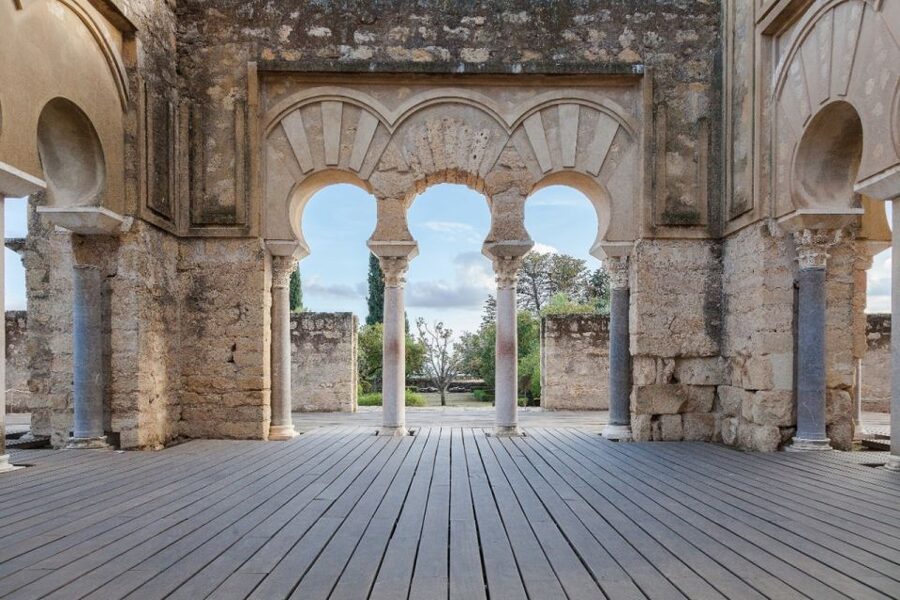
Córdoba is often introduced through its great mosque-cathedral, Roman bridge, and old lanes. Medina Azahara gives you another side of the city: the political and ceremonial center created during the height of the Córdoba caliphate.
Abderramán III built this city in the 10th century. The point was not simply to add another settlement outside Córdoba. Medina Azahara expressed authority, wealth, and order. Its name is commonly translated as the Shining City, a fitting title for a place meant to project the power of the caliph and his court.
I find the site valuable because it turns an abstract period into a physical place. You are not only hearing that Córdoba was important. You are seeing the remains of a planned city with spaces arranged for government, ceremony, and life at the top of society.
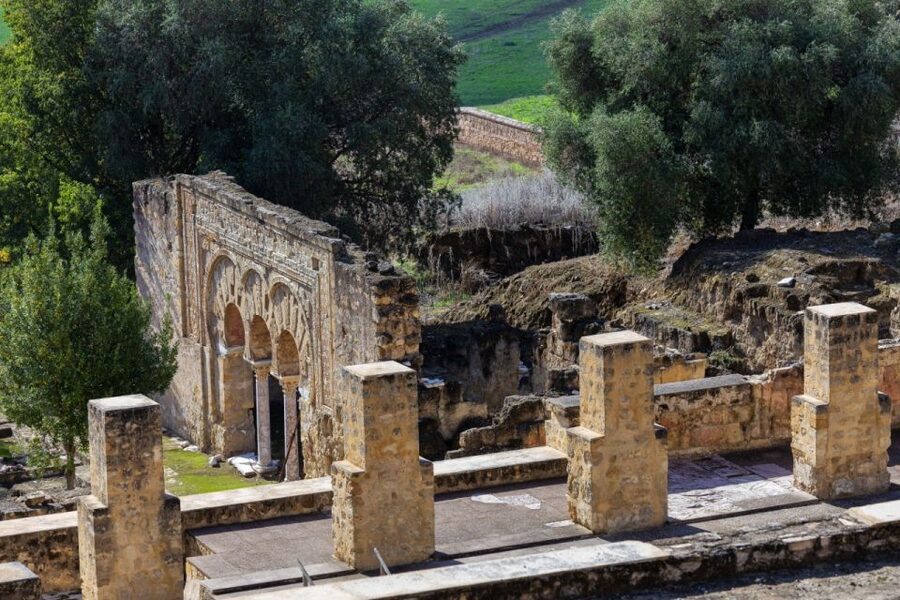
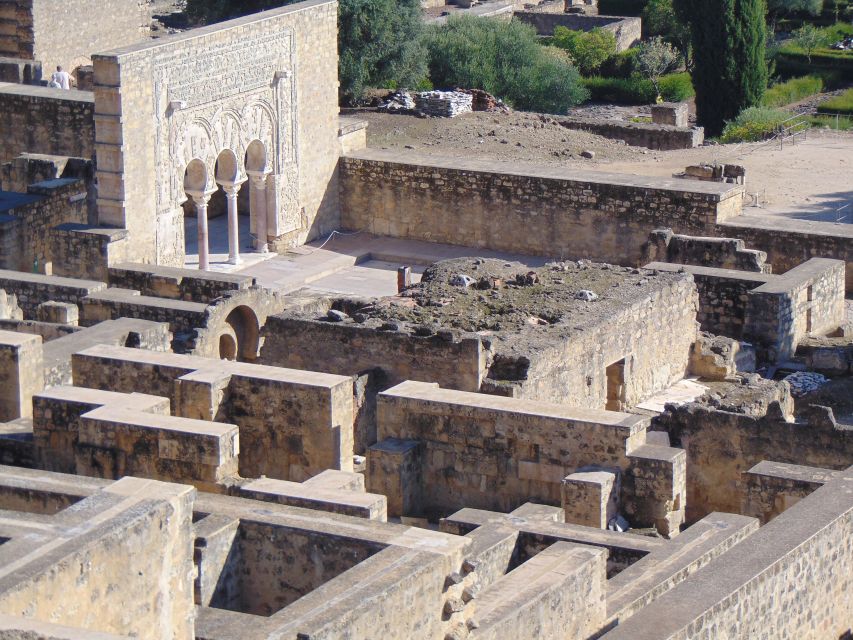
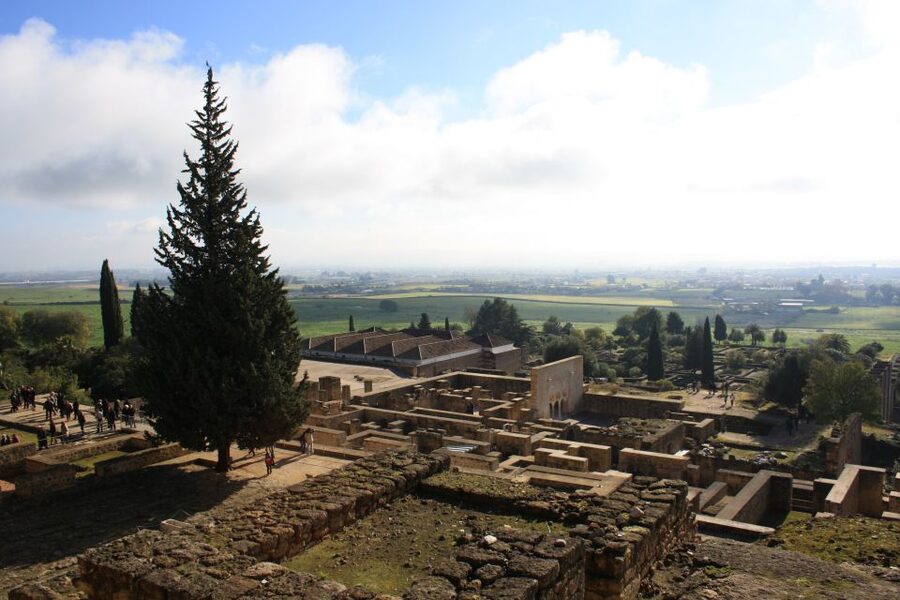
Still, you should set your expectations correctly. This is an archaeological site, not a restored palace. You will see foundations, walls, partial rooms, and open areas rather than complete interiors. A guide makes a big difference here, since the meaning of a low wall or empty platform is not always obvious on its own.
A few other Cordoba outings to compare
- Córdoba: Skip-the-Ticket-Line Mosque-Cathedral Guided Tour
★ 4.6 · 9,634 reviews - Cordoba Mosque-Cathedral: Skip-the-Line Guided Tour
★ 4.7 · 6,610 reviews - Cordoba: Mosque-Cathedral E-Ticket with Audio Guide
★ 4.1 · 2,124 reviews
Starting from Córdoba or meeting at the site
You can choose an option that includes transport from Córdoba, or arrange to meet the group directly at Medina Azahara. Check the exact meeting instructions when you book, since the meeting point depends on the option you select.
The Córdoba departure is the simpler choice if you do not already have transport arranged. It keeps the visit connected to your time in the city and removes one planning task. I would choose it if you want an easy half-day outing and prefer not to work out the journey separately.
The direct meeting option can make sense if you are already near the archaeological site or have your own way there. Just pay close attention to the instructions. The two options are not interchangeable at the last minute because the meeting point and included transport differ.
The bus from Córdoba is included only if you select the transport option. Food and drinks are not included, so pack water before setting out. That small preparation matters, especially since the visit includes time outside and the instructions specifically recommend a sun hat and comfortable clothing.
Walking through the Shining City
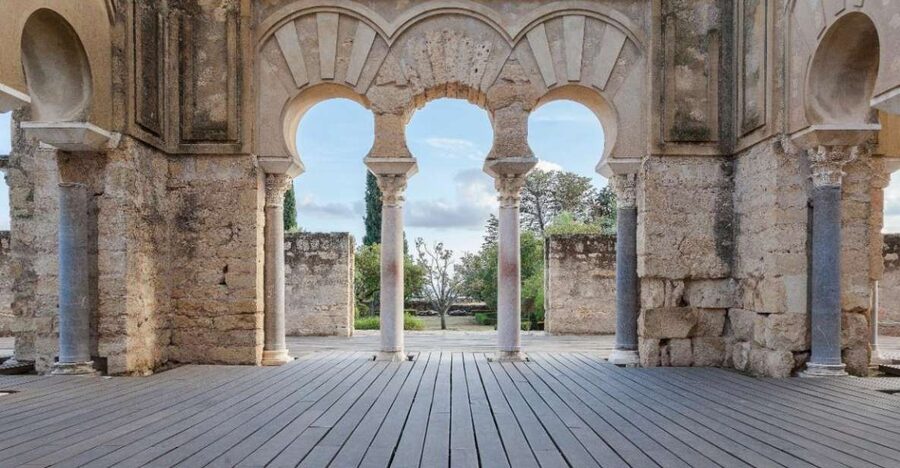
The first main part of the tour takes you into the archaeological site. Your guide sets out the historical setting and then leads you through the sections that can be visited, explaining the corners and remains as you go.
This is where Carmen’s style has received particularly strong praise. She is described as explaining the subject with both command of the history and affection for the period, and as holding attention from the first minute. That combination matters at Medina Azahara. You need facts, but you also need someone who can help you picture why the city mattered.
Mamen is another guide associated with a very effective visit. Her explanations focus on the city’s role and how it functioned, not just on isolated stones. That practical approach can help you understand Medina Azahara as a working center of government rather than a collection of ruins.
María del Carmen Moreno Gayoso is also praised for a professional, polished presentation. Guide assignments can vary, so you should not assume a particular person will lead your tour. Still, these names give you a useful sense of the standard of explanation you can expect from the local guiding team.
The visit is called a three-hour tour, but that time includes the archaeological site, museum, and final video. You are not spending all three hours walking among the ruins. That balance is helpful because the outdoor section can be tiring, while the museum gives you a cooler, more focused setting for the second part.
Reading ruins that no longer look like a city
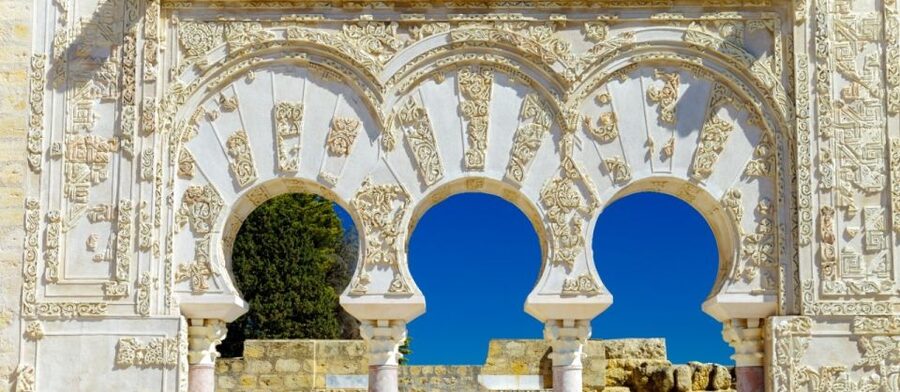
One of the hardest parts of any archaeological site is understanding scale. A foundation may have been part of an important building, but without context it can look like a simple line of stone. A guide helps connect the remains to the city that once occupied the site.
At Medina Azahara, pay attention to how your guide describes the sections and their purpose. The tour promises a look at every accessible corner and nook, along with the legends and stories tied to the place. That storytelling is not decorative. It helps you grasp how a city could earn the name Shining City even when only parts of it survive.
I like this guided approach for first-time visitors because it prevents the site from becoming a quick photo stop. You get a framework for what you are seeing, then the museum and video reinforce it. If you already have a strong background in Andalusian history, you may find the pace and level of explanation more basic than a specialist lecture. For most people, though, the added context is the point of booking a guide.
Wear comfortable shoes with good support. The activity is specifically not suitable for people with mobility impairments, and the outdoor archaeological visit may involve uneven surfaces or walking between sections. The supplied information does not give a detailed route or step count, so anyone with a concern should ask the provider before booking rather than assume the site will be easy.
Same city, a completely different evening:
- Córdoba: Jewish Quarter, Mosque, and Alcázar Tour
★ 4.7 · 4,279 reviews - Cordoba: Equestrian Show General Entry
★ 4.5 · 2,333 reviews - Cordoba Mosque & Jewish Quarter Tour with Tickets
★ 4.6 · 1,996 reviews - Cordoba: Alcazar Guided Tour and Skip-the-Line Ticket
★ 4.2 · 1,792 reviews
The visitor center museum and its 160 original pieces
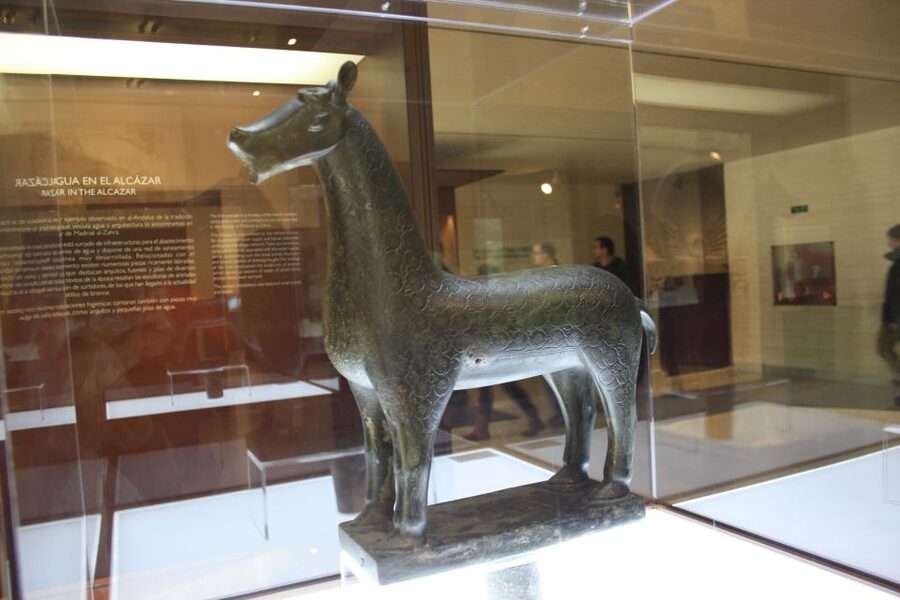
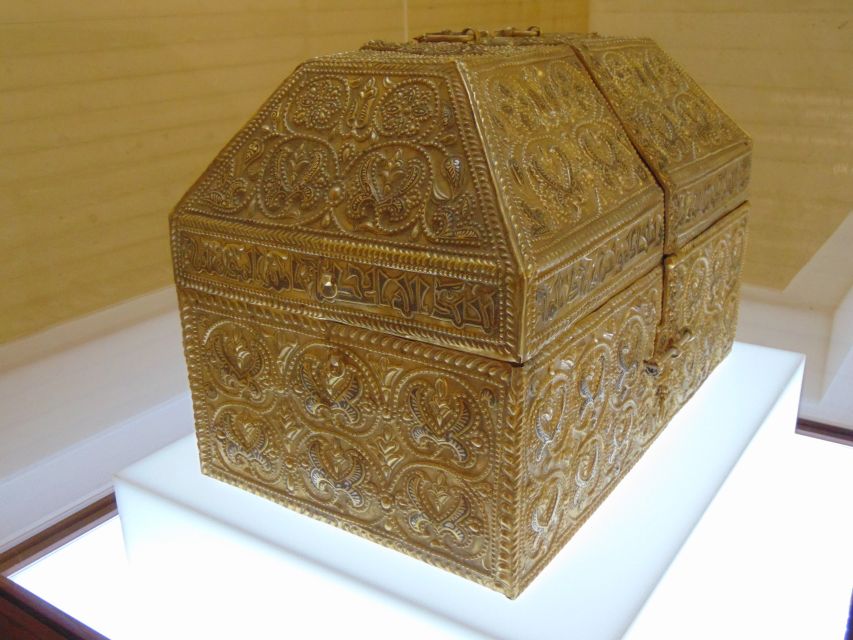
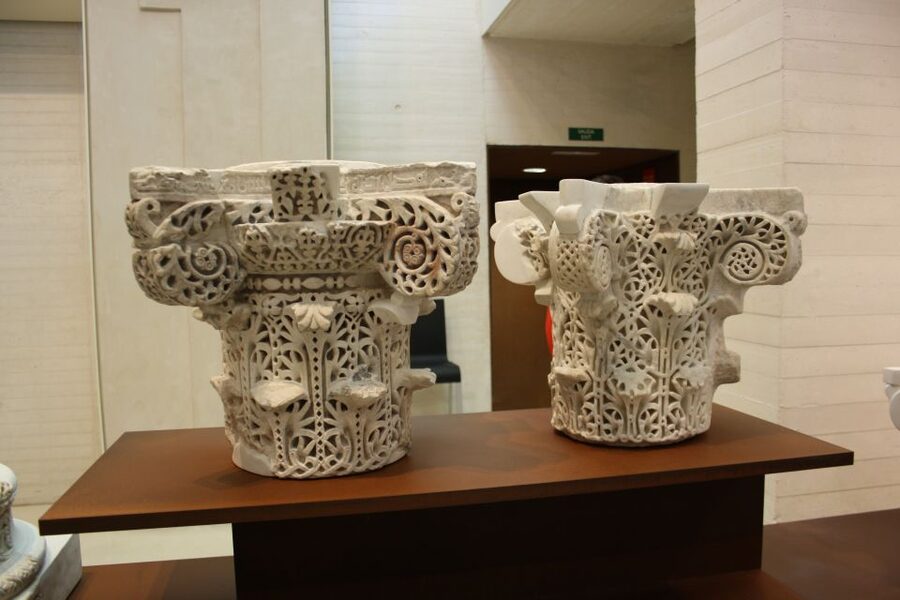
After the outdoor visit, the group continues to the visitor center. Here, the museum adds an important second layer: more than 160 original pieces from Medina Azahara are displayed inside.
I value this part because artifacts can answer questions that ruins cannot. A wall tells you where a room was, but an original object can suggest how that room was used, decorated, or connected to daily and ceremonial life. Your guide points out the most important elements, helping you focus instead of rushing past the collection.
The museum also gives your legs a break after time outside. That makes the overall three-hour format more manageable. You move from broad views and architectural remains to smaller objects and specific details, then finish with a visual reconstruction.
Do not treat the museum as an optional add-on. It is included in the tour’s design for a reason. Without it, you might leave with an impression of grand ruins but fewer concrete details. With it, the story becomes easier to remember.
The final video brings back the missing buildings
The visit ends with a video showing Medina Azahara as it would have appeared in the 10th century. This is especially useful after walking through the remains, since you have already seen the actual site and can compare the reconstruction with what survives.
A reconstruction video cannot replace the archaeological evidence, and you should view it as an interpretation rather than a time machine. Its value is visual clarity. It helps you imagine the scale, arrangement, and appearance of a city that is now incomplete.
I like ending here rather than beginning with a presentation. First you see the site, then original objects, and finally a version of the complete city. That sequence lets you build the picture step by step. It is a simple teaching method, but it works.
Is $18 a fair price?
At $18 per person, this is a good-value cultural tour if you want an explanation rather than independent access alone. The price includes a local guide and the monument entrance fee, including VAT, for European Union citizens. If you select the Córdoba transport option, the bus is included as well.
The value is strongest for visitors who would otherwise arrive without knowing how to interpret the ruins. You are paying for a three-hour visit that combines the archaeological site, museum, and video, not just a short walk around the remains.
There is one important qualification. The entrance fee information applies to European Union citizens, so check how admission is handled for your nationality before you book. The supplied details do not state an additional non-EU entrance price.
Food and drinks are not included. That is normal for a short cultural excursion, but it means you should carry water and plan any snack or meal yourself. With a price this modest, I would not expect refreshments to be part of the package.
What the Spanish language format means
The live guide language is Spanish. The strongest positive feedback centers on guides who explain clearly, hold attention, and connect the facts to the period. If you understand Spanish comfortably, this format can give you a direct and detailed visit without the distance of an audio recording.
If you do not speak Spanish, this is probably not the right tour unless you have a strong reason to attend with someone who can translate. The information provided does not promise English or another language, and you should not assume one will be available.
The guide quality appears to be a major part of the experience. Carmen is praised for her enthusiasm and command of the subject. Mamen is noted for explaining how the city functioned and for adding useful information. María del Carmen Moreno Gayoso is praised for a professional presentation. Since the exact guide is not guaranteed, book this for the Spanish guided format rather than for one named individual.
Who will get the most from this tour
I would recommend this experience to you if you want to understand Córdoba’s caliphate period through a real place, not only through city-center monuments. It suits first-time visitors who appreciate a clear route and an expert explanation at an archaeological site.
It is also a good fit if you have three hours available and want a focused half-day activity. The museum and closing video make the visit more complete than a site-only walk, while the modest price keeps it accessible.
You may want to choose another option if you need an English language guide, have limited mobility, or dislike outdoor archaeological sites. You might also prefer an independent visit if you want to set your own pace and already know the site well.
Book the Córdoba transport option if convenience is your priority. Choose the direct meeting option only if you are confident about reaching Medina Azahara and have checked the exact meeting point.
The activity offers free cancellation up to 24 hours before the start time, with a full refund, and you can reserve now and pay later. Those terms are useful if your Córdoba schedule is still changing, but they do not remove the need to check the selected start time and meeting instructions.
What to bring for a comfortable visit
Keep your packing simple:
- Comfortable walking shoes
- Water or another drink
- A sun hat
- Comfortable clothing
The advice to carry water is worth taking seriously. The site visit takes place partly outdoors, and the information does not mention food or drink stops. You will be more comfortable if you arrive prepared rather than hoping to buy something during the tour.
Allow yourself enough time to reach the correct meeting point. It may be in Córdoba or at Medina Azahara, depending on your booking choice. A late arrival could be especially awkward if the group has already begun the guided section.
Should you book Medina Azahara?
Book it if you want a well-priced, Spanish language introduction to one of Córdoba’s most important archaeological sites. The combination of a guided outdoor visit, more than 160 original museum pieces, and a 10th century reconstruction video gives you a fuller understanding than the ruins alone.
I would make this a particularly strong choice for visitors who enjoy history but do not want to spend hours reading labels or trying to decode foundations without help. The guide’s role is central, and the praise for Carmen, Mamen, and María del Carmen Moreno Gayoso suggests that clear explanation is one of the tour’s greatest strengths.
Skip it if mobility is a concern, if you need a language other than Spanish, or if you prefer a completely independent visit. For everyone else, $18 for three hours of site access, museum interpretation, and local guidance is a sensible way to add the Shining City to your Córdoba plans.
FAQ
How long does the Medina Azahara tour last?
The tour lasts three hours, including the archaeological site, visitor center museum, and final video.
Is the tour offered in English?
The live tour guide language is Spanish. No English guide is specified.
Can I travel from Córdoba to Medina Azahara with the group?
Yes, but only if you choose the option that includes the bus from Córdoba.
Can I meet the group directly at Medina Azahara?
Yes. A direct meeting option is available, depending on the choice you make when booking.
Is the monument entrance fee included?
The monument entrance fee, including VAT, is included for European Union citizens.
Is transportation included in the price?
Transportation is included only with the option that provides the bus from Córdoba.
Are food and drinks included?
No. Food and drinks are not included, so you should bring water and plan refreshments yourself.
What should I bring?
Bring comfortable shoes, comfortable clothing, water or another drink, and a sun hat.
Is the tour suitable for people with mobility impairments?
No. The activity is listed as unsuitable for people with mobility impairments.
Can I cancel for a full refund?
Yes. You can cancel up to 24 hours in advance for a full refund.
Can I reserve now and pay later?
Yes. The activity offers a reserve now and pay later option.
Recently added in Cordoba
- Córdoba: Tablao Flamenco at Doble de Cepa with Optional Meal★ 4.4 · 197 reviews
- Patios of Cordoba Walking Tour★ 4.4 · 199 reviews
- Cordoba: Medina Azahara Museum and Archaeological Site Tour★ 4.8 · 199 reviews
- Cordoba Flamenco Show at Tablao El Cardenal with a Drink★ 4.5 · 210 reviews
- City Sightseeing Cordoba Hop-On Hop-Off Bus Tour★ 4.0 · 213 reviews
- Cordoba Monuments Intensive Tour in English Tickets included★ 4.5 · 214 reviews
- Guided visit to Medina Azahara★ 5.0 · 229 reviews
- Córdoba: Local Wine Tasting Evening★ 4.9 · 234 reviews
Cordoba Tours, compared.
Skip-the-Ticket-Line Mosque-Cathedral Guided Tour
Read the review →
Cordoba Mosque-Cathedral: Skip-the-Line Guided Tour
Read the review →
Cordoba Mosque & Jewish Quarter Tour with Tickets
Read the review →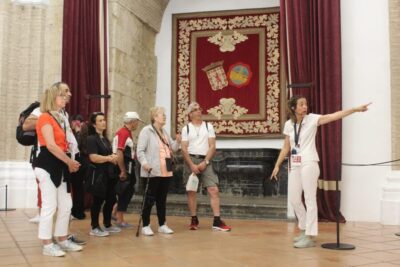
Skip-the-Line Great Mosque-Cathedral History Tour
Read the review →Browse the lists this tour appears in