
Reviewed · CORDOBA TOURS
Cordoba: Alcazar Guided Tour and Skip-the-Line Ticket
Cordoba’s Alcazar is less about a long list of grand rooms than about the stories packed into its walls. This former palace of the Catholic monarchs rises from a Moorish palace site, and a good guide helps you connect Roman, Islamic, Christian, royal, and Inquisition-era chapters that are easy to miss on your own. The Hall of Mosaics and the Royal Baths give the interior its strongest moments.
I like the quick skip-the-line entry, especially when the entrance area is crowded, and I like that the tour includes the gardens rather than treating them as an afterthought. Guides such as Maria, Emilio, Patricia, and Saray have been praised for clear English, lively storytelling, and useful context. The tradeoff is simple: one hour is short, and the $23 price is much higher than entering without a guide.
Key points to know before booking
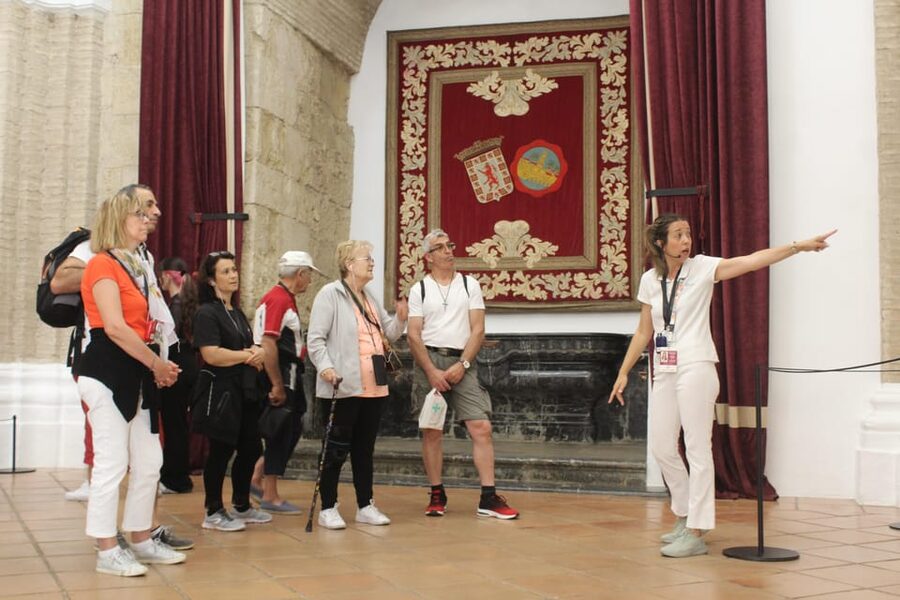
- See the Alcazar’s essential rooms in one hour: The route focuses on the Hall of Mosaics, Royal Baths, towers, and gardens.
- Skip the ticket line: Your admission is included, so you do not need to buy a separate entry ticket.
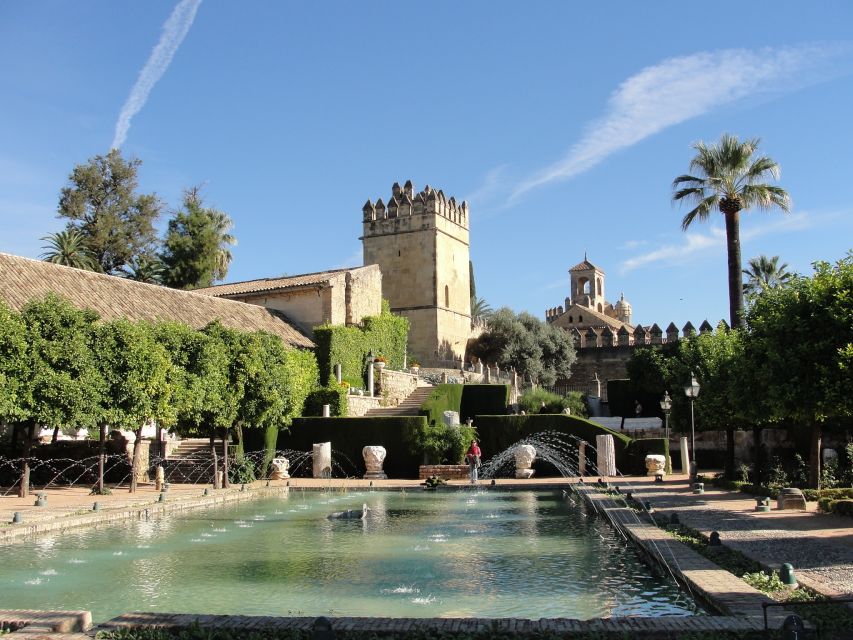
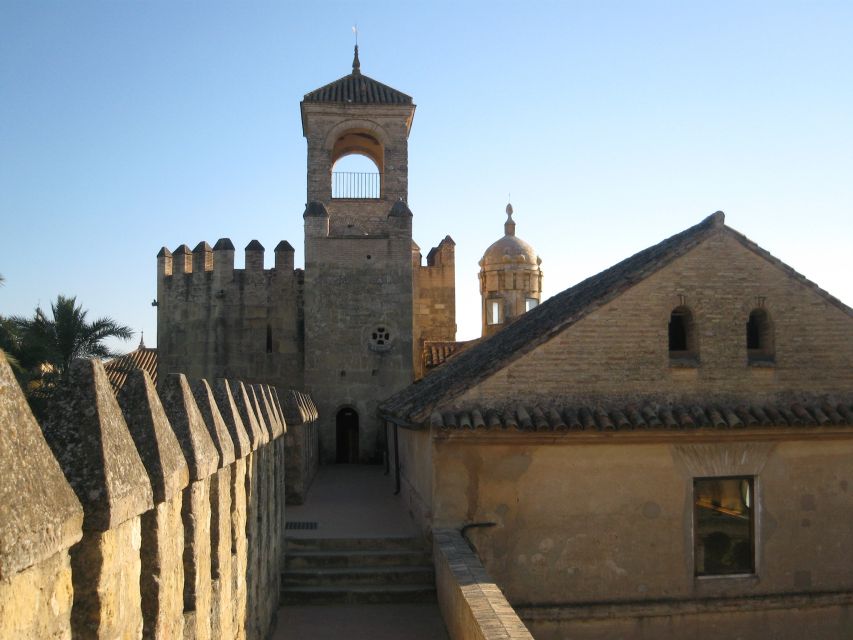
- Climb for Cordoba views: The crenellated tower looks over the gardens and gives the tour a welcome change of angle.
- Expect history, not a palace packed with furniture: Much of the site’s interest comes from its architecture, changing uses, and stories.
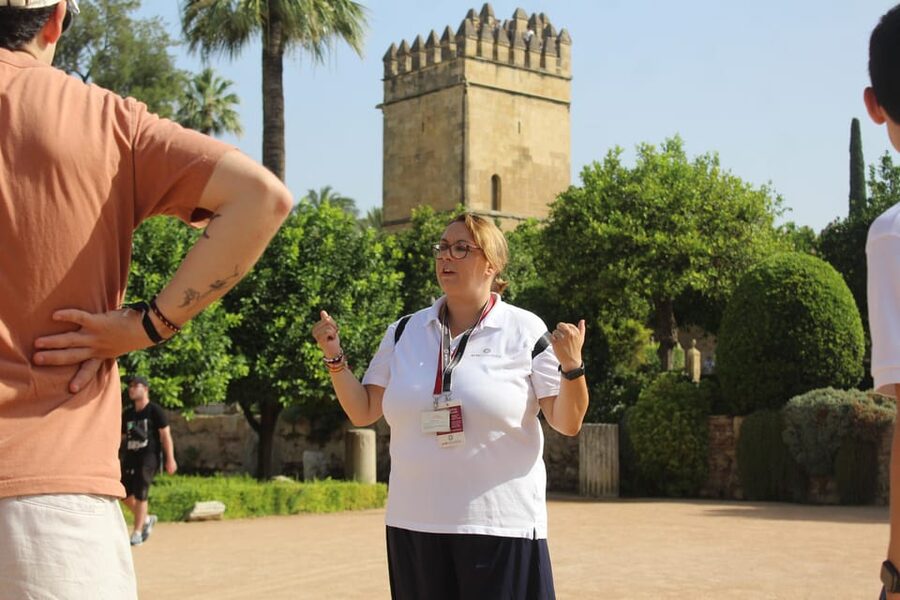
- Guides make a real difference: Maria, Emilio, Patricia, Fatima, and Saray are among the guides praised for strong explanations and an engaging style.
- Plan time afterward: Once the guided hour ends, you can continue looking around the Alcazar and gardens on your own.
Why the Alcazar makes more sense with a guide
The Alcazar of Cordoba is a fort and palace, but it does not present itself like a perfectly preserved royal residence. It was built over the remains of a Moorish palace and later served different rulers and institutions. That layered past is the point, yet it can also make the site feel spare if you simply walk from room to room without context.
A guide gives you a framework. You learn how the building was tied to the Catholic monarchs, how Christopher Columbus met Fernando and Isabel here in 1486, and how the complex later became a headquarters of the Spanish Inquisition. Those details turn plain walls, towers, and courtyards into evidence of changing power.
I would especially consider the tour if you cannot read Spanish comfortably. Some of the site’s written information is in Spanish, so an English-speaking guide can explain details you might otherwise pass without noticing. A strong guide also helps you focus on what remains, rather than expecting a fully furnished royal palace.
The guiding style varies by person, but the most praised names include Maria, Emilio, Patricia, Fatima, Saray, and Alvaro. Maria is noted for keeping the hour lively, while Emilio is praised for concise and memorable explanations. Saray, an archaeologist, is especially valued for linking the Alcazar to earlier Roman-era history. Your guide will depend on the departure you book, but the experience clearly benefits from someone who can tell the story well.
A few other Cordoba outings to compare
- Córdoba: Skip-the-Ticket-Line Mosque-Cathedral Guided Tour
★ 4.6 · 9,634 reviews - Cordoba: Mosque-Cathedral E-Ticket with Audio Guide
★ 4.1 · 2,124 reviews - Cordoba Mosque & Jewish Quarter Tour with Tickets
★ 4.6 · 1,996 reviews
Entering the Catholic monarchs’ former palace
The tour begins with the Alcazar’s role as a royal stronghold. The Catholic monarchs, Fernando and Isabel, used the palace during the period when Christian rule was being consolidated in southern Spain. The building’s defensive character remains visible in its towers and crenellated upper edges.
This is not a site where every room is filled with objects. Instead, you move through a compact set of architectural spaces and learn how the complex changed over time. The guide’s narration supplies the missing pieces, including the palace’s connection to Columbus and its later use by the Spanish Inquisition.
That historical range is one of the best reasons to choose a guided visit. You are not hearing only a single story of Christian Cordoba or Moorish Cordoba. You are seeing how several periods overlapped, sometimes uneasily, within the same walls.
The route is short enough to suit a morning packed with other sights. One hour can also feel brisk, particularly if you want to stop for photographs or ask many questions. Guides are generally able to answer questions, but the schedule may not allow for a long discussion at every stop.
The Hall of Mosaics and the interior rooms
The Salón de los Mosaicos, or Hall of Mosaics, is one of the clearest interior highlights. The mosaics provide a burst of decoration inside a building whose appeal often comes from its sturdy stonework and open spaces. Your guide can explain the room’s place in the palace and point out details that might look like simple ornament at first glance.
The interior portion is also where expectations matter most. If you are hoping for a large sequence of richly furnished royal chambers, this visit may feel limited. One of the recurring practical observations about the Alcazar is that there are not many rooms open for viewing.
That does not make the interior uninteresting. It means the value lies in the explanation and in the way the rooms relate to the rest of the complex. A guide can show you why the Hall of Mosaics matters, describe the building’s former functions, and help you understand what has disappeared.
I would listen closely here rather than rush toward the gardens. The gardens are beautiful, but the indoor rooms carry much of the site’s political story. Without the guide, you may enjoy the architecture while missing why the Alcazar was such an important place.
The Moorish Royal Baths
The Patio Morisco baths offer a different mood. Their Moorish motifs and water-related design recall the palace that occupied this site before the Catholic monarchs’ period. The baths help you picture the complex not simply as a fortress, but as a place built for court life, ceremony, and comfort.
This stop is valuable because it links the Alcazar to Cordoba’s Islamic architectural past. The guide can explain how the baths fit into the earlier palace setting and contrast that use with the building’s later royal and institutional roles.
The baths may not take long to see, and the route does not turn them into a separate extended visit. Still, they are an important part of the hour. If you like architecture, look for the Moorish decorative touches and the way the space feels different from the more formal Christian rooms.
As with the Hall of Mosaics, the guide’s interpretation matters. The Alcazar is not covered with large signs in several languages, so a live explanation gives you a clearer way into the site.
Same city, a completely different evening:
- Cordoba Mosque-Cathedral: Skip-the-Line Guided Tour
★ 4.7 · 6,610 reviews - Córdoba: Jewish Quarter, Mosque, and Alcázar Tour
★ 4.7 · 4,279 reviews - Cordoba: Equestrian Show General Entry
★ 4.5 · 2,333 reviews - Córdoba: Skip-the-Line Great Mosque-Cathedral History Tour
★ 4.7 · 1,690 reviews
Climbing the crenellated tower
The tower climb adds a physical element to what could otherwise be a room-and-courtyard tour. From above, you look across the gardens and gain a sense of the Alcazar’s defensive design. The crenellations make more sense when seen from the tower rather than only from ground level.
The view is directed toward the gardens and the surrounding Cordoba setting. It is not presented as a long independent lookout visit, so allow time for the climb within the one-hour schedule. If you move slowly on stairs or prefer to spend more time taking photographs, you may feel pressed.
Still, this is one of the tour’s most satisfying stops. You see the palace from a new angle, and the climb breaks up the historical narration. It also shows why the Alcazar was both a residence and a fortified complex.
Your guide will organize the movement through the tower and other spaces, but the group size may affect how quickly everyone moves. Some departures are intimate, while others can be larger. A larger group may make it harder to hear or linger, so stand close to the guide when possible.
Orange trees, pools, and fountains in the gardens
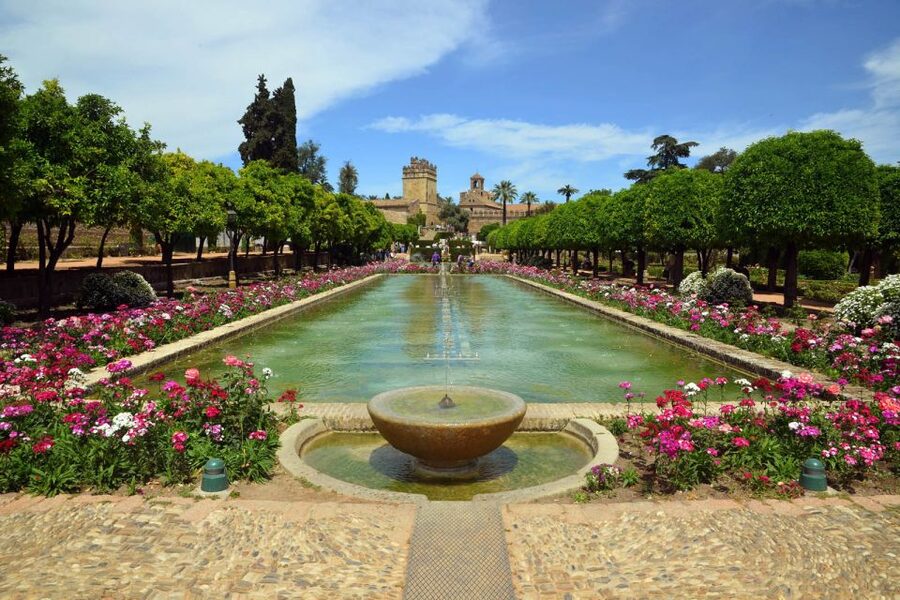
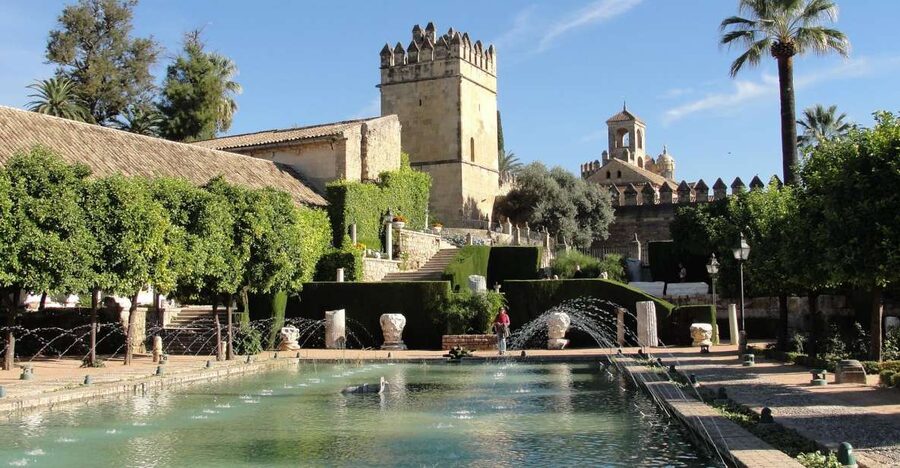
The gardens are the visual payoff. After the enclosed rooms, you walk among orange trees, pools, fish ponds, and fountains. The formal planting and water features create a calmer setting than the palace interiors, and the gardens are often the part you will want to revisit after the guided hour.
The orange trees add a distinctly Andalusian touch, especially when the paths are bright with sun and the fountains provide a little movement. The gardens also help explain the Alcazar as a royal residence. A palace needs more than defensive walls, and these planted spaces show the courtly side of the complex.
Do not treat the garden portion as a rushed walk-through. If the guide is explaining the pools and fountains, stay with the group, then use the remaining time afterward to return to the areas you liked. The tour ends with the option to explore more on your own, which is useful because one hour cannot cover every corner at a leisurely pace.
The weather matters here. Tours operate in rain or sunshine, and weather conditions do not cancel the visit. Bring what you need for the forecast, since parts of the experience take place outdoors.
Is $23 a fair price?
At $23 per person, this is not the cheapest way to enter the Alcazar. The admission itself costs less than the tour price, so a self-guided visit can save money if you are comfortable reading the available information and building your own route.
The extra cost pays for three things: a live guide, skip-the-line entry, and a focused explanation of the site. The line-saving benefit matters most at busy times, when waiting outside can eat into a short Cordoba visit. The guide matters most if you want the political and architectural story rather than a quick look at attractive rooms and gardens.
I think the price is fair for first-time visitors who value context and have limited time. It is less compelling for repeat visitors, independent history buffs who already know the Alcazar, or anyone mainly interested in wandering the gardens at their own pace.
The tour can also be good value at the start of your Cordoba stay. A concise introduction gives you a better sense of the city’s overlapping Roman, Moorish, and Christian past. If you plan to visit other historic sites afterward, the background can help you notice connections.
Timing, languages, and the pace of the visit
The advertised duration is one hour, with starting times depending on availability. That makes it easy to fit into a morning or afternoon schedule, but you should not expect a slow, detailed examination of every room.
Tours are offered in English, Spanish, and French. If you choose English, guides such as Patricia and Fatima have been praised for clear explanations, while Maria and Emilio are noted for making the material engaging rather than dry. Saray’s archaeological background has also added useful depth for some visitors.
Arrive 10 to 15 minutes early. The entrance area can be crowded, and arriving ahead of time gives you a better chance of finding the meeting point without a frantic start. The meeting location can vary by booking option, so check your confirmation carefully.
Group size can vary too. A small group allows more questions and makes it easier to hear. A larger group may be less personal, especially in tight interior spaces. The tour still follows the same basic highlights, but your experience of the pace will depend partly on how many people are moving through the site.
After the guided portion, take your time if the rules and opening arrangements allow you to continue inside the complex. Several people have found this useful, since the guide provides the essential story while the extra time lets you enjoy the gardens or revisit a room without trying to keep up.
Who should book this Alcazar tour?
I would recommend it to a first-time visitor to Cordoba, especially if you have only a few hours in the city. It is also a good fit if you prefer history explained aloud, want skip-the-line entry, or cannot get much from Spanish-only signs.
Families and mixed-age groups may appreciate the one-hour format. The tour is short enough to hold attention, and the gardens provide a change of pace after the indoor rooms. The tower climb and open courtyards add variety.
You may want to skip the guide if your main goal is saving money or spending a long, quiet stretch in the gardens. Independent visitors who already understand the site’s history can buy entry separately and set their own pace.
The tour is not ideal if you want an exhaustive palace visit. The Alcazar has fewer accessible rooms than you may expect, and one hour leaves little room for extended photography or detailed questions. Think of it as a sharp introduction followed by optional independent time, not a full-day archaeological study.
Practical details that affect your decision
Your ticket and guide are included, and you skip the ticket line. The meeting point depends on the option booked, so confirm it before setting out. The guide speaks French, Spanish, or English, again depending on your selected option.
You can cancel up to 24 hours before the tour for a full refund. The reserve-now, pay-later option lets you hold a place without paying immediately, which is useful when your Cordoba plans are still changing.
The tour runs rain or shine. Since you will spend time in the gardens and may climb a tower, dress for the day’s conditions and wear shoes you are happy using on stairs and paved paths.
Should you book the Cordoba Alcazar guided tour?
Book it if you want the Alcazar’s story, not just its prettiest photographs. At $23, you are paying a premium over basic admission, but the best guides turn a relatively compact site into a clear lesson in Cordoba’s changing rulers, architecture, and royal life.
Skip it if you are determined to keep costs low, already know the history, or want complete control over your pace. For most first visits, though, the combination of skip-the-line entry, a one-hour route, tower views, and time to continue on your own makes this a practical choice. Arrive early, stay close to the guide, and save time afterward for the orange-tree gardens.
FAQ
How long does the Alcazar guided tour last?
The tour lasts one hour. Starting times depend on availability.
What does the tour include?
It includes skip-the-line tickets and a live guide.
Which languages are available?
Tours are available in French, Spanish, and English.
Can I see the gardens during the tour?
Yes. The route includes the landscaped gardens, with orange trees, pools, fish ponds, and fountains.
Does the tour include the tower?
The highlights include climbing a crenellated tower for panoramic views of the gardens.
Can I explore the Alcazar after the guided tour?
Yes. You can take additional time to explore more of the Alcazar and its gardens after the guided portion.
What happens if it rains?
Tours run rain or shine. Weather conditions are not a reason for cancellation.
More Skip the Line in Cordoba
- Barcelona: Park Guell Guided Tour with Skip The Line Entry
★ 4.7 · 17,563 reviews - Palma: Cathedral of Mallorca Skip-the-Line Entry Ticket
★ 4.6 · 14,386 reviews - Barcelona: Sagrada Familia Skip-the-Line Entry Ticket & Tour
★ 4.8 · 12,789 reviews - Park Guell Guided Tour with Skip the Line Ticket
★ 4.5 · 6,996 reviews
Recently added in Cordoba
- Córdoba: Tablao Flamenco at Doble de Cepa with Optional Meal★ 4.4 · 197 reviews
- Patios of Cordoba Walking Tour★ 4.4 · 199 reviews
- Cordoba: Medina Azahara Museum and Archaeological Site Tour★ 4.8 · 199 reviews
- Cordoba Flamenco Show at Tablao El Cardenal with a Drink★ 4.5 · 210 reviews
- City Sightseeing Cordoba Hop-On Hop-Off Bus Tour★ 4.0 · 213 reviews
- Cordoba Monuments Intensive Tour in English Tickets included★ 4.5 · 214 reviews
- Guided visit to Medina Azahara★ 5.0 · 229 reviews
- Córdoba: Local Wine Tasting Evening★ 4.9 · 234 reviews
Cordoba Tours, compared.
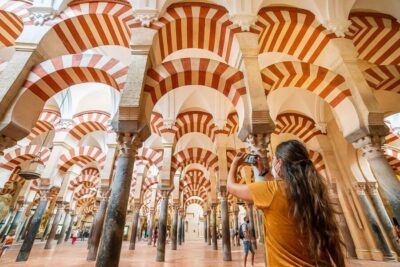
Skip-the-Ticket-Line Mosque-Cathedral Guided Tour
Read the review →
Cordoba Mosque-Cathedral: Skip-the-Line Guided Tour
Read the review →

Cordoba Mosque & Jewish Quarter Tour with Tickets
Read the review →
Skip-the-Line Great Mosque-Cathedral History Tour
Read the review →
Mosque-Cathedral of Córdoba Guided Tour with Tickets
Read the review →Browse the lists this tour appears in