
Reviewed · 2-HOUR EXPERIENCES
Cordoba’s Authentic Patios: 2-Hour Tour with Tickets
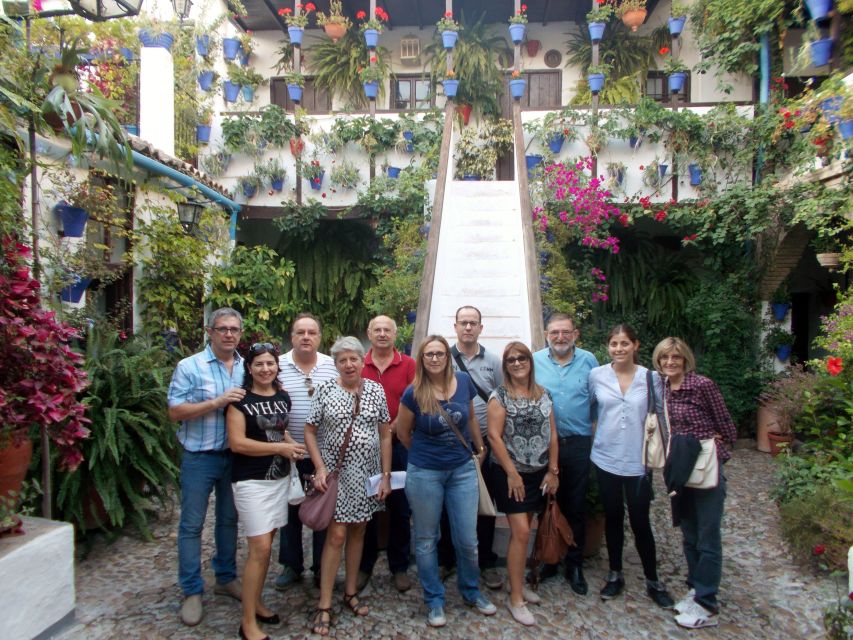
Cordoba’s patios are more than pretty courtyards. They are private homes opened to the public, and the best part of this tour is hearing owners explain how they care for the flowers, pots, walls, and shaded corners that make each patio different. You walk through the old Alcazar Viejo neighborhood, enter five courtyards, and see a quieter side of the city.
I like the direct contact with patio owners and the way the guides connect flowers to Cordoba’s history and daily life. I also like the practical route planning: your guide leads you through narrow lanes and handles the patio entrances, so you are not stopping at every corner to study a map.
The main drawback is timing. The patios can be crowded, especially during the first half of May, and a larger group may wait outside or run short on time at the final courtyard. The patios are worth seeing year-round, but spring gives you the best flower display.
Key points to know before booking
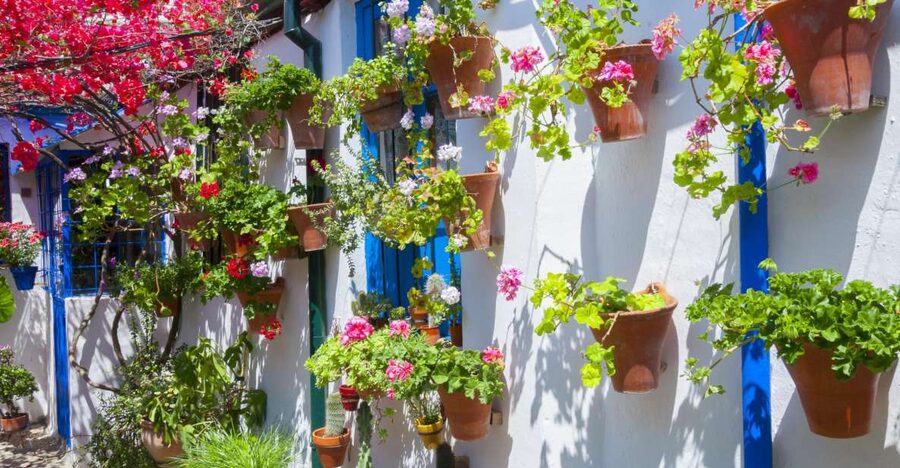
- Five private courtyards in two hours: The tour enters five patios in the Alcazar Viejo area, with tickets included.
- Local owners explain the details: You learn how the flowers are cared for and why each courtyard reflects its household.
- Spring is the prime season: March, April, and May usually offer the strongest display, with the Patio Festival held during the first half of May.
- The route changes during the festival: Festival visits take place in the San Francisco and Santiago neighborhoods instead of the usual San Basilio area.
- Guides add real local context: Sergio, Samuel, Christina, Lucia, and others have been praised for their English, warmth, flower knowledge, and Cordoban stories.
- It is a walking tour with no transport: Meet at the OWAY Tours office at Plaza del Triunfo and finish near the Guadalquivir River.
Why Cordoba’s patios matter
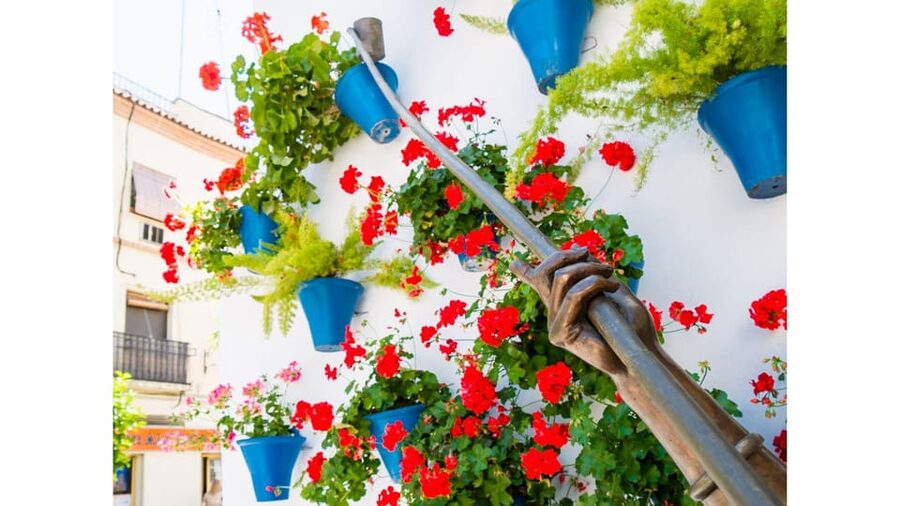
A patio is the central courtyard of a traditional Cordoban home. It offers light, air, shade, and a shared outdoor space in the middle of the old city. In Cordoba, this basic feature became a living art form, with whitewashed walls, tiled floors, ceramic pots, climbing plants, and carefully placed flowers.
The courtyards also tell you something about local life. These are not simply public gardens built for tourists. Many are private homes, and the owners spend much of the year watering plants, replacing pots, pruning vines, and keeping the walls bright. During the tour, you get a look at that personal work rather than only a polished photo stop.
UNESCO recognized the courtyard tradition in 2012. The annual Patio Festival in May brings extra attention to the custom, when owners open their courtyards and compete in different categories. A guide helps explain what you are seeing, including the difference between a home patio, a restored historic courtyard, and an entry prepared for the competition.
I find this context useful because the courtyards can look similar at first glance. After a few stops, you begin to notice how much changes from one patio to the next: the arrangement of pots, the height of the plants, the use of tile, the amount of shade, and the way a family has adapted the space over time.
A few other Cordoba outings to compare
- Barcelona: Two-Hour Midday or Sunset Sailing Cruise
★ 4.8 · 1,732 reviews - Bilbao: 1- or 2-Hour Sightseeing Boat Tour
★ 4.2 · 1,723 reviews - Mallorca: 2-Hour Dolphin Watching Cruise & Glass-Bottom Boat
★ 4.5 · 1,395 reviews
Starting at Plaza del Triunfo
The meeting point is the OWAY Tours office at Plaza del Triunfo, in the red building. This is a handy place to begin if you are already visiting the old city, but arrive with enough time to find the office. The tour does not include transportation, and the route continues on foot through narrow streets.
A passport or identity card is required. Leave large luggage elsewhere, since oversize bags are not allowed. Comfortable walking shoes make sense because the tour moves through old lanes and courtyards rather than along a single broad street.
The guide leads the group from the meeting point toward the patio district. Depending on the season and the day’s conditions, the exact order of the stops may change. That flexibility is useful because patio access depends on opening arrangements, other groups, and the number of people waiting at each entrance.
Walking through Alcazar Viejo and San Basilio
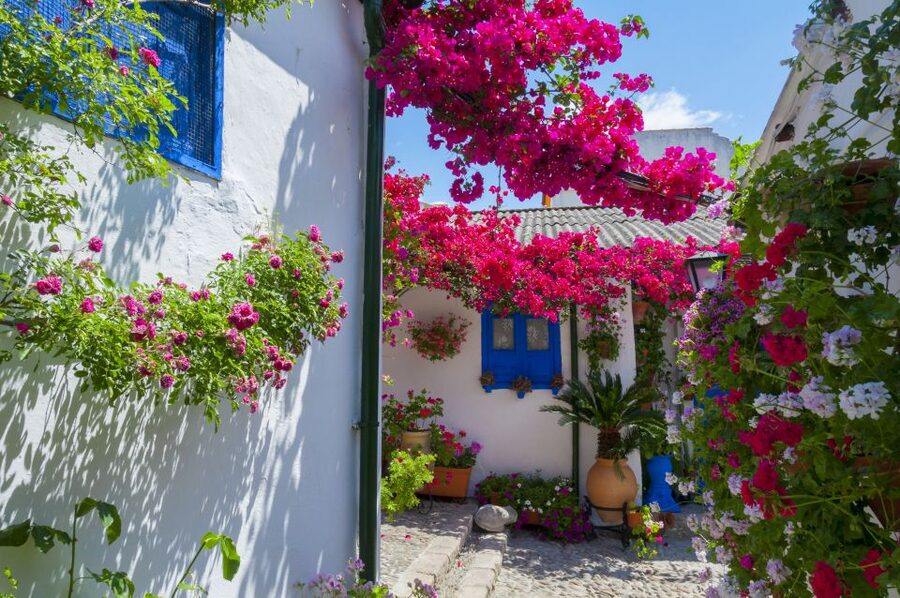
Most of the year, the tour focuses on the Alcazar Viejo neighborhood, especially the San Basilio area. This part of Cordoba sits near the Alcazar and the river, but its narrow streets can feel removed from the main sightseeing flow.
The walk between patios is part of the experience. Your guide can point out details about the quarter, Cordoban customs, and the way the courtyards fit into the old city. Guides have also used waiting time well, filling pauses with short explanations about the neighborhood, the city, patio competitions, and local stories.
That matters because entrances are not always instant. At quieter times, you may walk straight in. During busy spring dates, you might wait briefly while another group finishes. A good guide keeps the delay useful instead of leaving you standing in silence.
The area is fairly easy to cover in two hours, but it is not a sightseeing bus tour. You will walk, stop, listen, and look closely. If you prefer a fast checklist of major monuments, this may feel slow. If you want to understand a small part of Cordoba at street level, the pace works well.
Five courtyards, five different personalities
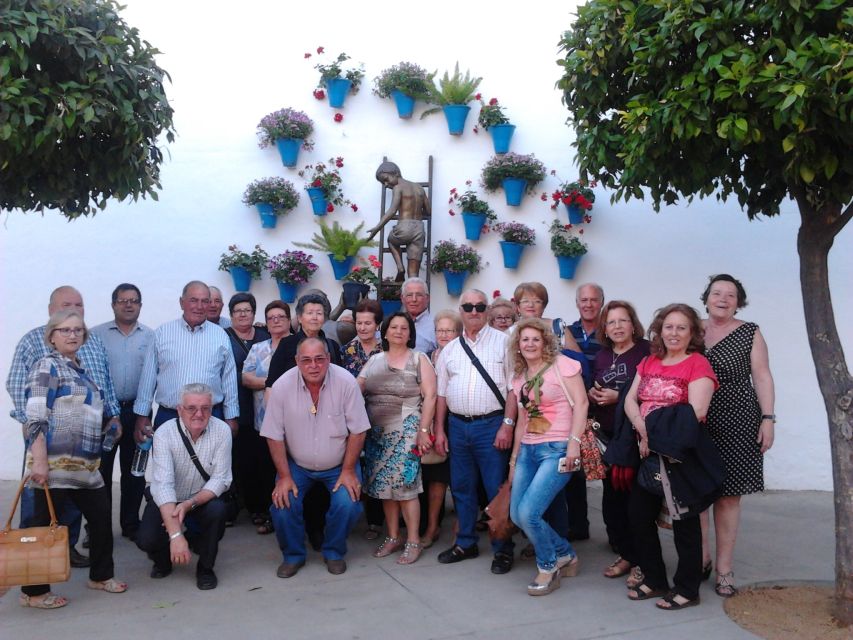
The advertised route includes entrance to five patios. Each stop gives you time to look around while the guide explains the space, its decoration, and its plants. In some cases, an owner or local host provides the explanation directly. That personal voice is one of the strongest reasons to book rather than simply follow a self-guided map.
One courtyard may focus on rows of ceramic pots and dense flowers. Another may use arches, tiles, or a small fountain to create a cooler central space. You might find a patio that feels carefully arranged for the festival, followed by one that remains closely tied to ordinary home life.
The guide’s job is not only to point out the prettiest blooms. You learn how owners keep plants alive through Cordoba’s hot weather, why pots are placed at different heights, and how decoration supports the architecture. Guides such as Sergio have explained both the patio competition and the plants, while Christina has been praised for making the gardens feel personal and lively.
Lucia’s route has been noted for threading the group through narrow lanes and presenting information in short sections at sensible stopping points. That is a good approach here. Long lectures would distract from the courtyards, while small pieces of history let you keep looking.
Do not expect every patio to be large. Some of the appeal comes from seeing how much character can fit into a limited space. You are looking at a working tradition shaped by household choices, not a grand palace garden.
Same city, a completely different evening:
- Córdoba: Skip-the-Ticket-Line Mosque-Cathedral Guided Tour
★ 4.6 · 9,634 reviews - Cordoba Mosque-Cathedral: Skip-the-Line Guided Tour
★ 4.7 · 6,610 reviews - Córdoba: Jewish Quarter, Mosque, and Alcázar Tour
★ 4.7 · 4,279 reviews - Cordoba: Equestrian Show General Entry
★ 4.5 · 2,333 reviews
Meeting the people behind the flowers
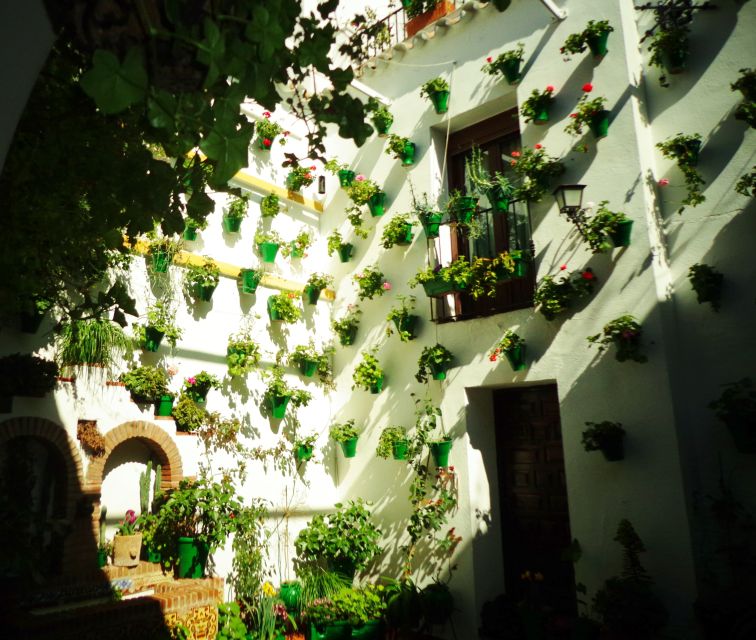
The owner connection changes the tone of the visit. You are not only seeing a decorated courtyard; you are hearing about the care needed to maintain it. The flowers are attractive, but the conversation explains why they are there and what the space means to the people who live with it.
This is also where the tour feels most authentic. A map can tell you where patios are located, but it cannot easily explain why one family prefers a certain style of pot or how a courtyard has been maintained across generations. The official guide adds the wider city context, while the owners give the smaller domestic details.
The quality of this part depends partly on the guide assigned to your departure. Several guides have been praised for clear English and an easy manner. Samuel, Sergio, Christina, and Lucia are among the names associated with especially warm and informative tours, but guide availability can vary.
Group size also affects the exchange. Some departures feel small enough for questions and conversation. Other departures may reach around two dozen people, which can make it harder to hear or keep everyone together in narrow lanes. The tour has still been described as relaxed on many dates, with enough time at each patio, but you should expect some variation.
Visiting during the May Patio Festival
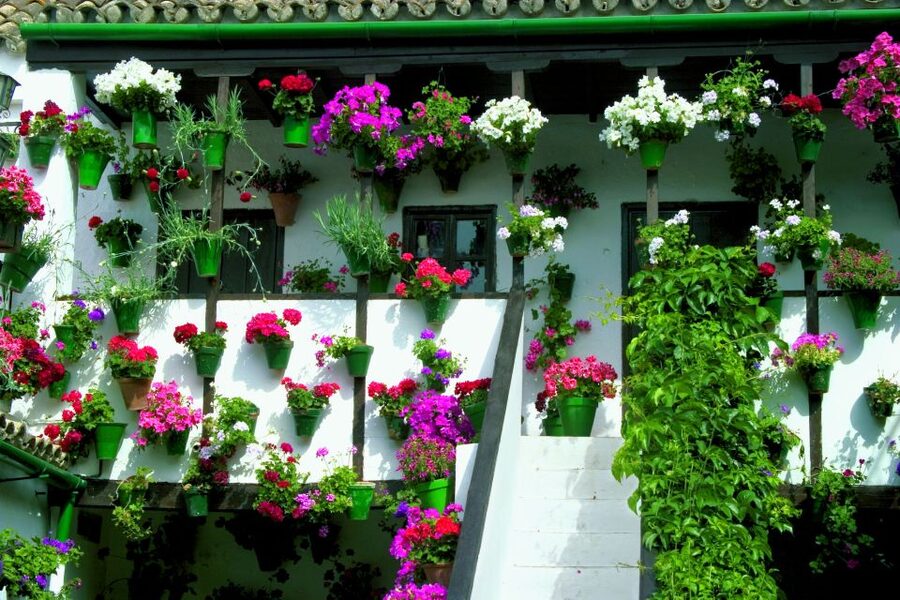
The first half of May is the famous time to visit. During the festival, many courtyards open for competition, and the city draws large crowds. The flowers can be at their finest, but the narrow entrances and small interiors also become much busier.
During this festival period, the tour changes neighborhoods. Instead of the usual San Basilio route, it visits patios in San Francisco and Santiago, two areas known for strong festival displays. This is important when planning your day, since the meeting point and finishing point remain the same while the patio stops shift.
The advantage of booking a guided walk in May is that you do not have to work out the route alone. Your guide can steer you toward selected courtyards and explain how the competition works. The downside is that no guide can remove every queue. A busy patio may be full when your group arrives, and you may have to wait or move on.
If you have only one day in Cordoba, the tour gives you a structured introduction to the festival. If patios are your main reason for coming, you may want extra time to visit independently as well. A public map can help you see additional courtyards after the two-hour tour.
The best season for flowers
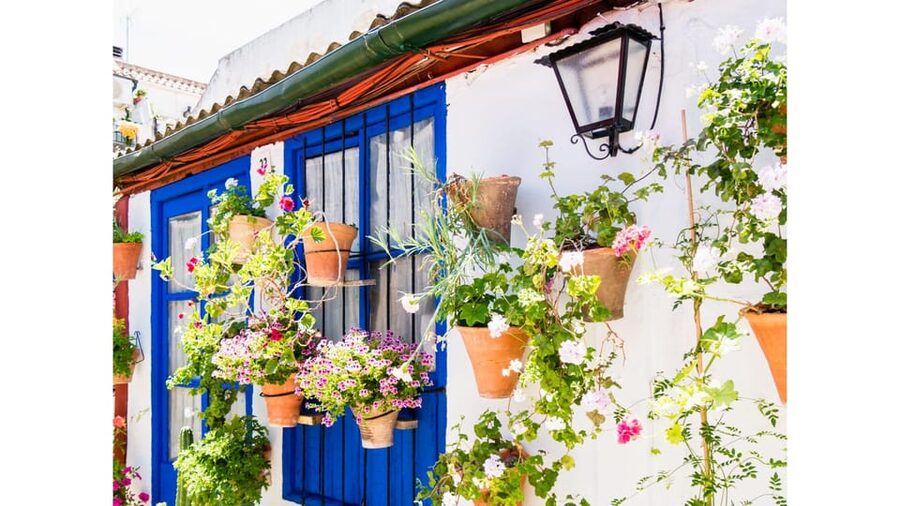
March, April, and May offer the safest bet for a strong floral display. April gives you pleasant spring appeal without always reaching the festival crowds, though conditions and opening schedules vary. The first half of May adds the competition atmosphere but also brings queues and packed courtyards.
Summer can still work, especially if you care more about the architecture and tradition than peak blooms. In late summer, some flowers may have faded after the heat. The patios remain attractive, but you should not expect the same fullness you would see earlier in the year.
Autumn departures can be enjoyable for the quieter streets and cooler feel. One October visit included healthy plants despite warm weather, and the patios still made a strong impression. Winter offers a different look and may be calmer, though the courtyards will not necessarily have their spring color.
The tour runs rain or shine. Cordoba can be hot, so carry water and protect yourself from the sun, especially when walking between courtyards. The patios themselves provide shade, but the route is outdoors and weather still affects comfort.
Is five patios enough in two hours?
For most people, yes. Five entrances give you a useful range without turning the visit into a blur. You have time to listen, take photographs, inspect the flowers, and ask questions.
The exact experience can be less predictable during high season. Crowds may prevent entry at one stop, or a large group may spend too much time at earlier courtyards. Some departures have visited more than the promised five, but you should plan around five rather than expect extra stops.
A two-hour format works especially well as an introduction. You learn what to look for, then decide if you want to return to a favorite area on your own. It also fits neatly beside Cordoba’s other major sights.
The ending point is the Ermita de los Santos Mártires, next to the Guadalquivir River. That is useful for continuing a walk along the river or heading back toward the old city, but it is not the same as returning to the starting office. Plan your next stop from the finish rather than assuming you will be dropped back at Plaza del Triunfo.
What the $21 price buys you
At $21 per person, the tour is reasonably priced if you value access and explanation. Your fee covers the official guide and admission to five patios. Buying five separate entrances may not be difficult during the festival, but the organized route saves you from searching for each courtyard and deciding which ones are open.
The real value is the interpretation. Without a guide, you can admire the white walls and flowers, but you may miss the connection between patio design, household care, local identity, and the May competition. The owner conversations add something a simple entrance ticket cannot provide.
The value drops slightly if your group is too large or if queues prevent you from entering every planned stop. That is most likely during the first half of May, when demand is highest. Still, a well-run departure can keep moving and use waiting periods for useful stories.
Free cancellation up to 24 hours before the tour and a reserve-now, pay-later option make it easier to fit the walk into a changing Cordoba schedule. These terms are helpful if your day depends on train times, weather, or a crowded monument itinerary.
Who should book this patio walk?
I would choose this tour if you want more than photographs. It suits first-time visitors, garden lovers, architecture fans, and anyone curious about how people use historic homes today.
It is also a smart choice for a short stay. If you have only one night in Cordoba, the route gives you a quick look at a distinctive local tradition without spending half a day finding courtyards on your own.
Families and mixed-interest groups may enjoy it because the tour combines flowers, history, local stories, and a gentle neighborhood walk. You do not need to be an expert in plants. One visitor who was not especially interested in flowers found the courtyards persuasive enough to reconsider that opinion.
I would think twice if you dislike walking, waiting, or small enclosed spaces. The tour takes place in old lanes and compact courtyards, and a May departure can feel crowded. People who prefer complete independence can use a patio map instead, then visit at their own pace.
Should you book it?
Book this tour if you want a human introduction to Cordoba’s patio tradition, especially in March, April, or early May. The combination of five entrances, owner explanations, and guides who can discuss flowers as well as city history gives the visit more meaning than a quick courtyard photo stop.
For the calmest experience, avoid the busiest festival hours if your schedule allows. If you visit during the festival, accept that queues are part of the deal and consider adding independent patio visits afterward.
At $21, this is a fair and useful two-hour experience. It will not show every courtyard in Cordoba, and a large group can affect the pace, but it gives you a well-planned route and the background needed to appreciate what you see. For most visitors, that makes it a worthwhile addition to a Cordoba itinerary.
FAQ
How long does the Cordoba patios tour last?
The tour lasts two hours.
How many patios are included?
Entrance to five patios is included in the tour price.
Where does the tour meet?
Meet at the OWAY Tours office in the red building at Plaza del Triunfo.
Where does the tour finish?
The tour ends at the Ermita de los Santos Mártires, next to the banks of the Guadalquivir River.
Which languages are available?
The live guide is available in English or Spanish.
Does the route change during the Patio Festival?
Yes. During the first half of May, the tour visits patios in the San Francisco and Santiago neighborhoods instead of the usual San Basilio area.
Recently added in Cordoba
- Córdoba: Tablao Flamenco at Doble de Cepa with Optional Meal★ 4.4 · 197 reviews
- Patios of Cordoba Walking Tour★ 4.4 · 199 reviews
- Cordoba: Medina Azahara Museum and Archaeological Site Tour★ 4.8 · 199 reviews
- Cordoba Flamenco Show at Tablao El Cardenal with a Drink★ 4.5 · 210 reviews
- City Sightseeing Cordoba Hop-On Hop-Off Bus Tour★ 4.0 · 213 reviews
- Cordoba Monuments Intensive Tour in English Tickets included★ 4.5 · 214 reviews
- Guided visit to Medina Azahara★ 5.0 · 229 reviews
- Córdoba: Local Wine Tasting Evening★ 4.9 · 234 reviews
2-Hour Experiences, compared.



2-Hour Dolphin Watching Cruise & Glass-Bottom Boat
Read the review →

2-Hour Coastline & Malgrat Islands Catamaran Tour
Read the review →

Malaga City Tour 2 Hours Monumental Segway Tour
Read the review →
Morro Jable: 2 Hours Magic Dolphin & Whale watching with Drinks & Swim Stop.
Read the review →Browse the lists this tour appears in