
Reviewed · HISTORICAL TOURS
Vigo: Walking Tour with local History & Culture
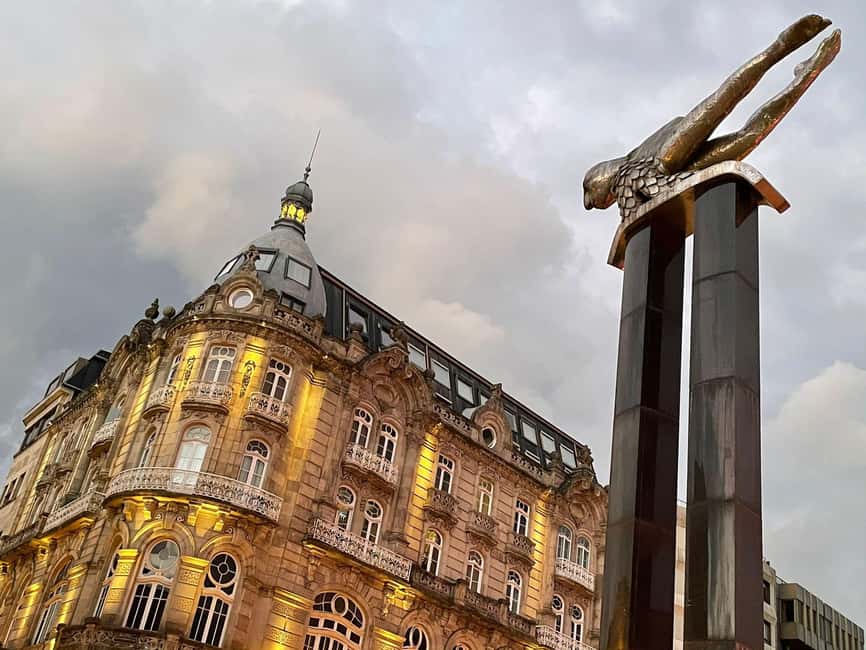
Vigo’s best surprise is how quickly a simple stroll turns into a story about fortresses, ocean trade, migration, and lost treasure. This two-hour route links the old town with the port, while O Sireno, the city’s strange man-fish sculpture, provides a memorable starting point.
I like the wide views over the Ría de Vigo and the practical local advice at the end, especially food suggestions such as O Porco. I also like that guides such as José Manuel, Jorge, Pedro, and Omar have earned praise for humor, patience, and clear explanations. The main caution is the route’s hills and uneven sections. It is listed as wheelchair accessible, but a companion is required, and some travelers with walking difficulties may find it tiring.
Key points to know before you book
- Meet at O Sireno: Find the guide with a red umbrella in Porta do Sol. The statue is raised high above the square, so look upward.
- See Vigo from several angles: The route combines old-town streets, San Sebastián Castle, the nautical area, and port views across the estuary.
- Hear the Rande treasure story: The guide explains the legends surrounding sunken treasure and the strategic role of Vigo’s harbor.
- Expect local recommendations: Food, drinks, shopping, and nearby activities are part of the practical advice.
- Plan for slopes: The walk includes hills and some rocky ground, so sturdy shoes and a steady pace help.
- Tip-based format: The tour is paid at the end according to your satisfaction, although the advertised price is about $22 per person.
Why this Vigo walk is a smart first look at the city
Vigo can be hard to read at first. It is a working Galician port, a modern city climbing the hills above the estuary, and a place with an older core that is easy to pass through without understanding. This walk gives you a useful framework before you set off on your own.
The route is not built around long interior visits. Instead, it focuses on streets, squares, viewpoints, monuments, and the harbor. That makes the two-hour schedule efficient, particularly if you have only a day in Vigo or are visiting from a cruise ship.
I would choose this tour early in a stay. You get a basic map of the center, hear about the city’s past, and receive suggestions for eating and sightseeing while the information can still shape the rest of your visit.
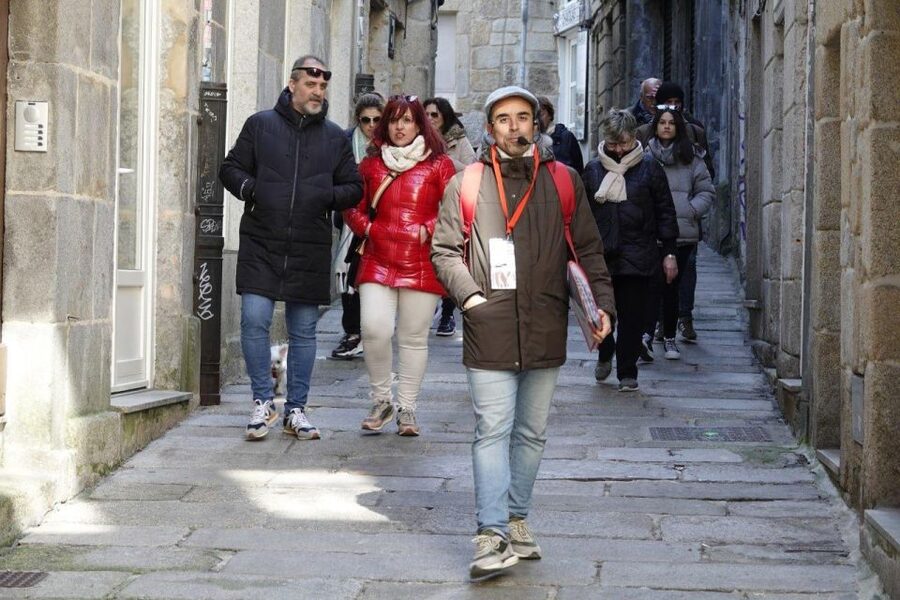
The guides vary. Names praised for English-language tours include José Manuel, Jorge, Pedro, Omar, Borja, and Miguel. The strongest recurring qualities are warmth, humor, and a real attachment to Vigo. Jorge, in particular, has been praised for adapting his pace, answering questions, and helping a participant with arthritic knees. José Manuel has also been singled out for combining history with humor.
The experience is offered in English and Spanish. In a large mixed-language group, the guide may alternate between both languages. That can work well, but it may take longer and make it harder to hear every explanation. A microphone is used when groups are large, though you will still want to stay near the guide.
More historic sites in Spain:
- Madrid Essential: Historic Center, Plaza Mayor & Royal Palace
★ 5.0 · 6,416 reviews - Barcelona: Tapas Walking Tour with Food, Wine, and History
★ 4.8 · 4,261 reviews - Sevilla Food Tour: Tapas, Wine, History & Traditions
★ 5.0 · 3,468 reviews
Starting beneath Vigo’s O Sireno sculpture
The meeting point is Porta do Sol, one of the clearest central landmarks in Vigo. Look for the red umbrella near O Sireno, the tall man-fish sculpture that has become a symbol of the city.
This is a practical meeting point because it places you right in the middle of Vigo’s urban center. The only small trap is the sculpture’s height. It is not at eye level, so do not search for a statue standing beside the guide.
The opening stop lasts about 15 minutes. Your guide introduces the sculpture and begins placing Vigo in its Galician setting. This is more useful than it may sound. A city symbol often tells you how a place sees itself, and O Sireno gives Vigo a quirky, slightly surreal welcome.
From here, the group moves toward a lesser-known viewpoint. The route description promises striking views of Vigo and its estuary, and that promise is one of the walk’s strongest features. You get a sense of the city’s steep position above the water rather than seeing only its shop-lined streets.
Policarpo Sanz and the García Barbón Theatre
The walk through Rúa Policarpo Sanz takes only about five minutes before reaching the García Barbón Theatre. The theater stop is brief, around five minutes, but it adds an architectural and cultural note to a tour that could otherwise focus only on military history and the harbor.
This part of Vigo shows how the city developed beyond its older defensive core. The guide discusses the buildings and people connected with Vigo’s rise, helping you see the center as a place shaped by commerce, civic ambition, and cultural life.
Do not expect a theater performance or an extended building visit. Entrance fees are not included, and the emphasis is on the exterior and its place in the city. I see this as a quick orientation stop rather than a major attraction in its own right.
Rúa do Príncipe and the Celta connection
Rúa do Príncipe is one of the main central streets. The group walks along it for about five minutes and pauses at the Tenda RC Celta, the official shop connected with Real Club Celta de Vigo.
This is an unusual choice for a historical walking route, and that is part of its value. Football is a major piece of local identity, and the stop gives the guide a natural way to explain modern Vigo and the loyalty surrounding its club.
The visit lasts around five minutes, so it will not feel like a shopping stop. You may enjoy it most if you follow football or want a glimpse of local life beyond monuments. If your interest is strictly architectural, this will be one of the lighter moments of the tour.
More walking tours in Spain:
- Barcelona Tapas and Wine Experience Small-Group Walking Tour
★ 5.0 · 5,804 reviews - Granada: Albaicín and Sacromonte Guided Sunset Walking Tour
★ 4.9 · 2,962 reviews - Toledo Tour & Vineyard Walk with Wine Tasting from Madrid
★ 5.0 · 2,546 reviews - Madrid Walking Tour from Puerta del Sol to Retiro Park
★ 5.0 · 2,285 reviews
San Sebastián Castle and the city’s defensive past
The route then heads to Castelo de San Sebastián. The walk takes about five minutes, but this is one of the sections where the terrain matters. Vigo rises sharply from the water, and the tour includes hills. Some ground can also be rocky.
At the castle, the guide spends about 15 minutes explaining its role and the threats that shaped Vigo. The tour’s promise to show streets that survived serious danger becomes clearer here. Vigo’s position on the Atlantic made it valuable, but that same position exposed it to conflict and attack.
The castle also gives you another chance to look outward across the estuary. The views help connect the city’s defensive story to its geography. From high ground, the port is not just a pleasant backdrop. It becomes the reason Vigo grew, prospered, and needed protection.
This stop may be tiring for anyone with balance problems, sore knees, or limited stamina. A guide can adjust the pace, as Jorge has done for participants who needed more time, but you should still arrive prepared for uphill walking.
Ferrería Street and Constitution Square
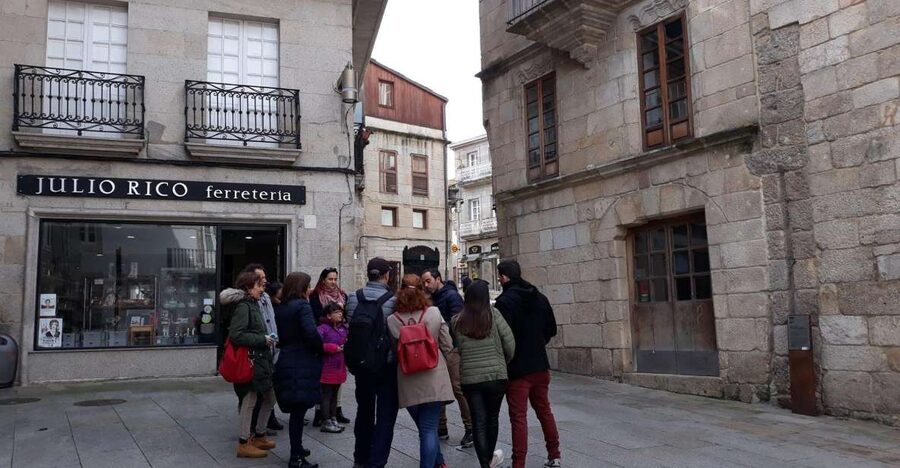
After San Sebastián Castle, the group walks along Rúa Ferrería for about five minutes before reaching Praza da Constitución. The square receives roughly 10 minutes of explanation.
Praza da Constitución is a good place to pause and understand the old town’s shape. The guide discusses the square, nearby buildings, and the way Vigo changed over time. You are not simply being led from one photo stop to another. The sequence links the high defensive area with the streets where civic and commercial life took place.
This is also a useful point for learning how old Vigo survived pressure from war, changing trade, and urban growth. The route keeps the history tied to visible places, which makes the information easier to remember later.
The square is one of the more comfortable places to listen, though seating is not guaranteed at every stop. One participant specifically wished for a chair and table at each explanation. That is a fair concern for anyone who cannot stand for long periods.
Praza da Igrexa and the old-town atmosphere
A five-minute walk leads to Praza da Igrexa, followed by a longer 15-minute guided stop. This section brings the walk into the older heart of Vigo, where narrow streets and small squares reveal a different side of the port city.
The guide discusses the square, local customs, and important figures linked with Vigo. You may also hear stories that show how Galicia’s identity differs from a generic idea of Spain. The tour’s focus is not just on dates and names. It aims to explain how the city relates to its sea, its language, its food, and its connections beyond Spain.
The old town is where the walking format works best. You can watch the city move around you while the guide points out details that are easy to miss alone. The route does not require you to spend time inside a museum, so you keep moving through the streets rather than stopping for long blocks of formal information.
At the same time, the old town is not a perfectly flat open-air museum. Hills and uneven paving remain part of the experience. Comfortable shoes will do more for you here than dress shoes or thin sandals.
Rúa Pescadería and the route toward the water
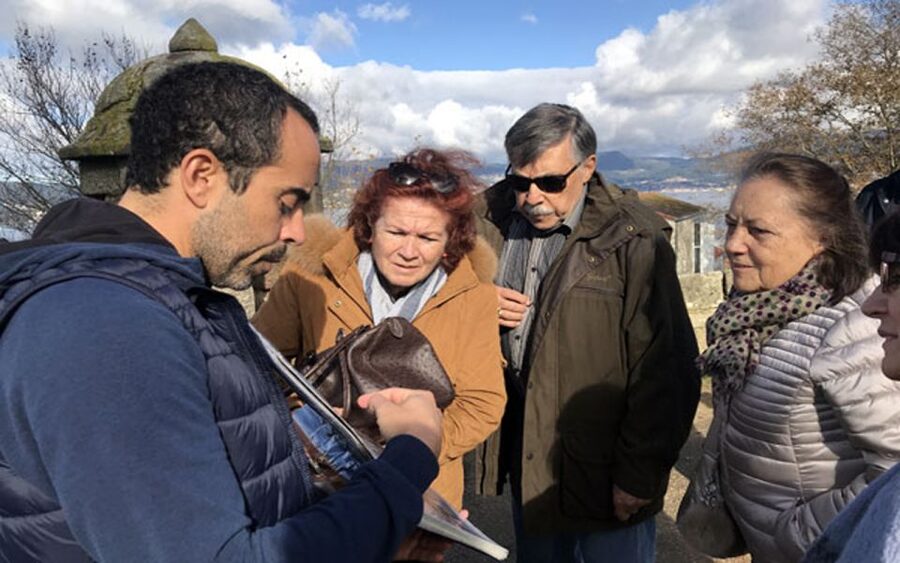
The walk continues down Rúa Pescadería for about five minutes. This street helps bridge the older center and the harbor, and it brings the tour closer to Vigo’s food and fishing identity.
The transition is important. Vigo is not only a city with views of the water. Its relationship with the sea has shaped work, migration, trade, and what appears on local menus. The guide uses this part of the route to prepare you for the port and for the stories connected with the estuary.
You will not be stopping for a meal as part of the tour. That is where the recommendations at the end become useful. Guides have offered suggestions for restaurants, drinks, souvenirs, and later activities. José Manuel’s recommendation of O Porco was especially practical for one participant, who found the welcome and food worthwhile.
Because restaurant advice can depend on the day and your budget, use the guide’s suggestions as a starting point and ask specific questions. You can request help choosing between seafood, casual food, or a place closer to your next stop.
The Port of Vigo and the Rande treasure story
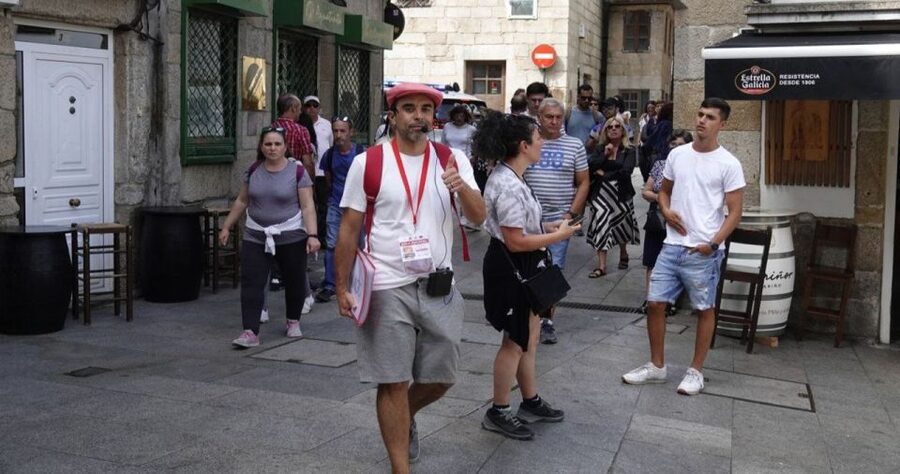
The final guided section lasts about 20 minutes at the Port of Vigo. This is where the separate threads of the walk come together: geography, commerce, migration, naval conflict, and legend.
The guide explains how Vigo developed as a port and why its position connected it with Britain, France, and other parts of Europe. One useful theme is the city’s migratory past. Vigo was not isolated at the edge of Spain. Its harbor tied it to movement across the Atlantic and to wider European networks.
Then comes the story of the Treasure of Rande, the sunken riches linked with the waters near Vigo. Treat this as a local legend and historical mystery rather than a promise of buried gold. Its value is the way it shows how Vigo’s estuary has collected stories of war, shipping, wealth, and danger.
The port also gives you a good final view across the Ría de Vigo. After walking through streets and squares, you can look back at the city from the water’s edge and understand its shape more clearly.
A port is an active place, not a preserved monument. You may find the surroundings more open and modern than the old town. That contrast is useful. It shows Vigo as a living working city rather than a stage set built only for sightseeing.
How much value do you get for about $22?
At about $22 per person, this is a reasonable way to get two hours of orientation, especially if you use the food and sightseeing advice afterward. You are paying for a local guide, a planned route, historical photographs and maps, and the time saved by learning where the main areas fit together.
It is also a tip-based tour, with payment made at the end according to your satisfaction. That format gives you some flexibility, but you should understand the payment arrangement before booking because the advertised price and the tip-based structure may not feel identical in practice.
The tour does not include entrance tickets. Since the main experience takes place outdoors, there is no added admission cost along the route itself. If you want to enter other attractions later, plan for those separately.
The value is strongest for a first visit, a short port call, or anyone who wants help choosing restaurants and local plans. It is less suited to someone seeking long interior visits, specialist architecture, or a full-day exploration outside Vigo.
Pace, group size, language, and access
The stated duration is two hours, but one participant reported that the walk ran about 30 minutes longer. Allow extra time if you have a fixed lunch reservation, train, shore excursion, or ship departure.
Group size can change the feel of the experience. A small group may allow more questions and a more personal pace. One tour became almost private with just two participants. A larger group can still work, particularly with the microphone, but you should stay close enough to hear and see the guide.
English and Spanish are available. Most of the English-language feedback praises guides for clear speech, with Jorge and several others singled out for strong English. Still, if the group includes both languages, explanations may alternate between Spanish and English. A past participant found that a guide could not fully provide both languages within the allotted time, so this is worth clarifying when you book.
The walk is marked wheelchair accessible, but an accompanying person is required. I would also contact the provider in advance if hills, rocky surfaces, or standing for long periods are a concern. The route can be adapted in pace, but the city’s terrain cannot be removed.
Who should take this walking tour?
I would recommend it to you if:
- You have only a few hours in Vigo.
- You want the old town, castle, port, and main city symbols in one route.
- You enjoy local stories more than formal museum lectures.
- You want food and activity suggestions from someone who lives in the city.
- You are visiting Galicia for the first time and want context before exploring alone.
- You enjoy a walk with viewpoints and do not mind hills.
I would think twice if you need a completely flat route, guaranteed seating, or a highly detailed specialist tour. The 15-minute and 20-minute stops provide a good overview, but they cannot cover every monument or historical period in depth.
Bring water, wear shoes with a good grip, and allow more than two hours in your schedule. In wet or windy weather, the views and outdoor explanations can still be worthwhile, but a rain jacket will make the day much easier.
Should you book the Vigo walking tour?
Book it if you want a friendly introduction to Vigo that combines the old town with the harbor rather than treating them as separate places. The best parts are the estuary views, San Sebastián Castle, the port’s links with migration and trade, and the Rande treasure story. The final restaurant advice can also save you from choosing dinner at random.
This is a broad first look, not a deep historical course. The hills, uneven ground, possible language alternation, and occasional large group are the tradeoffs. For most visitors, especially those with limited time, the route offers solid value at about $22 and gives you a much better sense of what to do next in Vigo.
FAQ
Where does the Vigo walking tour meet?
Meet in Porta do Sol square near O Sireno, Vigo’s man-fish statue. The statue is high above the ground, so look up for the guide carrying a red umbrella.
How long does the tour last?
The advertised duration is two hours. You should allow extra time, since one reported tour continued about 30 minutes beyond the stated finish.
Is the tour available in English?
Yes. The tour is offered in English and Spanish. In mixed-language or large groups, the guide may alternate between the two languages.
Is the route wheelchair accessible?
The tour is listed as wheelchair accessible, but an accompanying person is required. Hills and some rocky terrain may still make parts of the route difficult.
Are entrance fees included?
No. Entrance fees are not included. The route mainly covers outdoor streets, squares, viewpoints, the castle area, and the port.
How does the tip-based payment work?
The tour is paid at the end based on your satisfaction. The advertised price is about $22 per person, so check the booking details for the current payment terms.
Recently added in Spain
- Tenerife: Hiking Tour in Anaga Mountains & Enchanted Forest★ 5.0 · 193 reviews
- Sagrada Familia Guided Tour with Skip-the-Line Entry Ticket★ 4.9 · 193 reviews
- Entrance to the Mirador Torre Glories Barcelona★ 4.5 · 193 reviews
- Barcelona to Montserrat Monastery: Tour, Transfers & Basilica★ 4.5 · 193 reviews
- Watching and Listening Whales visiting Los Gigantes&Masca. Food&drinks included★ 5.0 · 193 reviews
- Mallorca: Drach and Hams Caves, and Porto Cristo Day Tour★ 4.3 · 194 reviews
- Barcelona Paella Cooking Class & Boqueria & Hofmann-Trained Chefs★ 5.0 · 194 reviews
- Mallorca: Hot Air Balloon Flight with Private Options★ 4.8 · 195 reviews
Historical Tours, compared.
Madrid Essential: Historic Center, Plaza Mayor & Royal Palace
Read the review →
Tapas Walking Tour with Food, Wine, and History
Read the review →
Sevilla Food Tour: Tapas, Wine, History & Traditions
Read the review →
Valencia Old Town Tour with Wine & Tapas in 11th Century Historic Monument
Read the review →
Barcelona Tapas Walking Tour: Food, Wine & History
Read the review →
Ultimate Seville Tapas, Wine & History Small Group Tour
Read the review →
Skip-the-Line Great Mosque-Cathedral History Tour
Read the review →
Browse the lists this tour appears in