
Reviewed · HISTORICAL TOURS
Essentials of Valencia and its World Heritage Sites
Valencia’s historic center is compact, but its story is not. This two-hour walk links the grand railway station, flower-filled squares, the Central Market, the Silk Exchange, and the Water Tribunal into one clear route. You can put away your map and focus on the city’s architecture, food traditions, medieval trade, and famous Fallas festival.
I especially like the Silk Exchange admission, since the interior is the tour’s finest payoff. I also like the guides’ local advice. Sara and María are often praised for answering questions and sharing restaurant suggestions, while Gabor brings an obvious passion for Valencia’s past.
The main consideration is pace and timing. Two hours gives you a useful introduction, not a full visit to every building. City Hall access depends on working days and events, and evening departures in August and September do not include entry to the Market or Silk Exchange.
Key things to know before you book
- Three forms of world heritage: See the Lonja de la Seda, the Fallas tradition, and the Water Tribunal in one walk.
- The Silk Exchange is the interior highlight: Your admission includes the grand Contract Hall, with its twisting columns and Gothic vaults.
- A strong first-day orientation: The route introduces the old center and helps you decide where to return later.
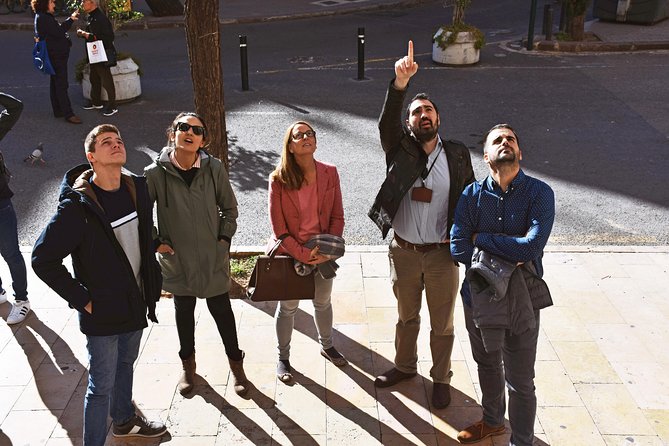
- Local guides shape the experience: Guides including Sara, María, and Gabor are known for clear explanations, warmth, humor, and practical suggestions.
- A small-group format: The group can include up to 25 people, large enough for energy but not a private tour.
- Plan for a walking route: Transport to and from the meeting and ending points is not included.
Why this two-hour route works in Valencia
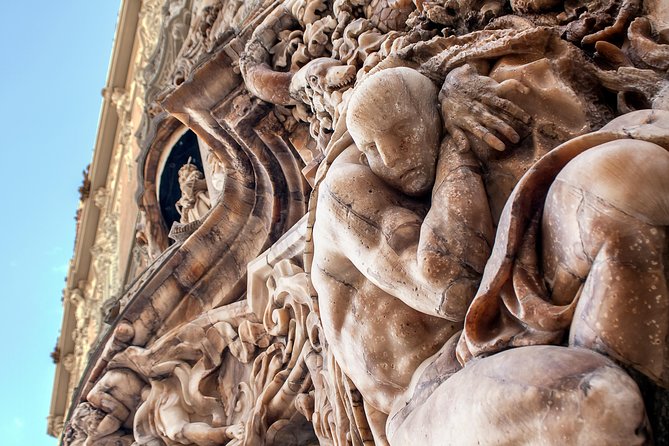
Valencia rewards a walking introduction. The old center contains layers from the medieval silk trade to modern civic life, but the important sights are spread across streets and squares rather than gathered in one museum. A guide helps you connect the pieces.
This tour begins at Bailén by Estació del Nord and finishes on Carrer del Micalet near Plaza de la Virgen. That direction makes practical sense. You start near one of the city’s major transport points and finish in the heart of the old quarter, where you can continue on foot to the cathedral area, find lunch, or return to a sight that caught your attention.
The route is not a museum marathon. You will spend time outside, listen to explanations in public squares, and enter selected buildings when conditions allow. That makes it a good choice for your first morning or afternoon in Valencia, especially if you want a broad orientation before choosing which places deserve a longer visit.
At $20.85 per person, the tour is priced below many longer guided walks. The value comes from the combination of a professional guide and admission to the Silk Exchange. You also see several major exteriors without paying separate entrance fees.
The group limit of 25 matters. This is not a private experience, so you should expect other people around you and occasional pauses while everyone gathers. Still, the size is controlled enough to keep the walk manageable. The pace is generally comfortable, based on the tour’s structure and comments about not being rushed.
More historic sites in Valencia:
- Valencia Old Town Tour with Wine & Tapas in 11th Century Historic Monument
★ 5.0 · 3,234 reviews - Valencia: Historical Walking Tour
★ 4.6 · 390 reviews - Madrid Essential: Historic Center, Plaza Mayor & Royal Palace
★ 5.0 · 6,416 reviews
Estació del Nord, Valencia’s decorative railway welcome
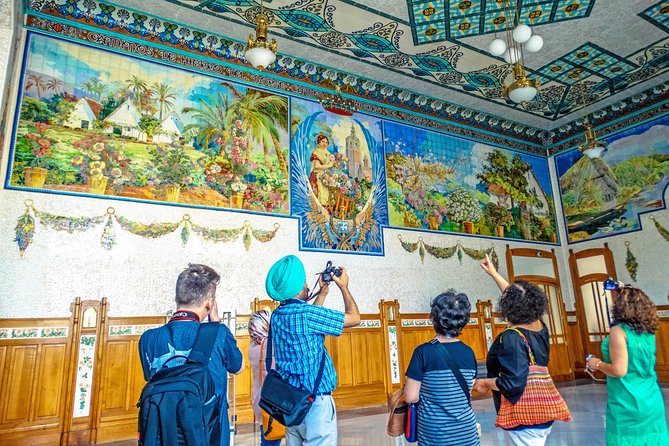
The first stop is Estació del Nord, with about 20 minutes devoted to the station. Even if you arrive in Valencia by another route, this is a useful opening sight.
The station is more than a place to catch a train. Its exterior and interior decoration introduce the local character of Valencia before you reach the medieval center. Your guide can point out details that are easy to miss when you are hurrying toward the old town.
Starting here also gives you an immediate sense of location. The station sits close to the main square and the historic center, so you are not spending the opening section of the tour on a long transfer. If you arrive by train, the meeting point is especially convenient.
The drawback is simple: 20 minutes is enough for an explanation and a look around, not an exhaustive architectural visit. If the station interests you, plan to return independently when you have more time.
Plaza del Ayuntamiento and the story of Fallas
From the station, the walk continues to Plaça de l’Ajuntament, Valencia’s main civic square. Here the focus shifts from buildings to one of the city’s best-known traditions, Las Fallas.
Fallas takes place from March 15 through 19. During the festival, Valencia fills with enormous temporary monuments, music, traditional dress, and the sharp smell of gunpowder. The monuments are eventually burned, which gives the celebration its unusual character: it is an art event designed to disappear.
The guide explains why Fallas is recognized as intangible world heritage, with its inscription added in 2016. That distinction is useful. You are not simply looking at an old building. You are learning how a living local tradition, with its craft, performance, ritual, and community life, earned international recognition.
The 15-minute stop is brief but well chosen. It gives you cultural context before the route moves into Valencia’s civic and commercial past. If your visit happens during Fallas, the square may feel very different from an ordinary day. The tour does not promise a full festival program, so treat this stop as an introduction rather than a substitute for attending the celebrations.
Valencia City Hall and the city’s public face
The next stop is Ajuntament de València, the City Hall. The scheduled visit lasts about 20 minutes, though entry is conditional.
Access is available on working days except when official events or holidays affect the building. Evening tours are also excluded from this visit. In August and September, the 6:30 p.m. departure does not include the City Hall stop as an interior visit.
This condition is worth checking before you book. City Hall adds a useful civic layer to the walk, but you should not assume that every departure enters. If you care especially about the interior, choose a daytime tour on a working day and understand that official events can still change access.
Even without entry, the building and square remain important parts of the route. Your guide places the city’s government, public ceremonies, and urban design in context. This is one of the places where the guide’s value is greater than simply following a route on your phone.
A few other Valencia outings to compare
- Valencia: Oceanogràfic Entry Ticket
★ 4.7 · 9,893 reviews - Valencia: 24 or 48-Hour Hop-on Hop-off Bus Ticket
★ 3.9 · 5,611 reviews - Valencia: Palosanto Flamenco Show Ticket
★ 4.8 · 3,876 reviews - Valencia: Catamaran Cruise with Sunset Option
★ 4.0 · 3,566 reviews
Central Market and Valencia’s food traditions
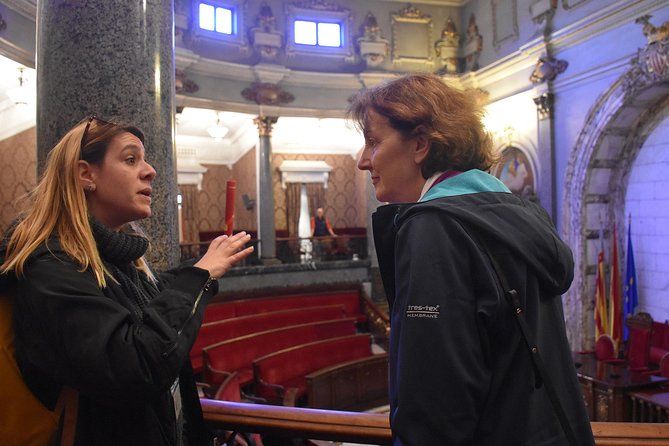
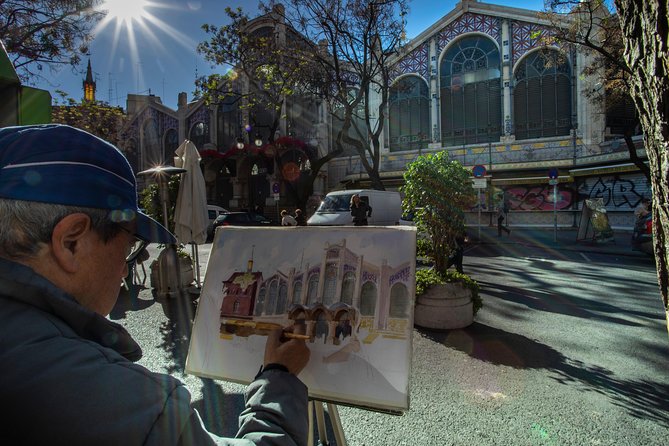
The Central Market receives about 10 minutes. The guide explains the building and connects it with the Mediterranean diet.
That short stop is best viewed as an orientation to Valencia’s food culture rather than a market-shopping session. You can learn what makes the market important, then decide if you want to return for a slower look at the stalls and local products.
The schedule has a clear limitation. The evening tours at 6:30 p.m. in August and September do not include entrance to the market. You may still receive an explanation from outside, but the interior visit is not part of that departure.
For most people, this is a sensible place to gather ideas for eating later. Several guides, especially María, have been praised for offering restaurant suggestions in different parts of the city and pointing people toward local favorites. Those recommendations are a welcome extra, but they are informal guidance, not a planned food tasting.
Ten minutes passes quickly. If food is one of your main reasons for visiting Valencia, return independently and give the market more time.
Inside La Lonja de la Seda, the tour’s main payoff
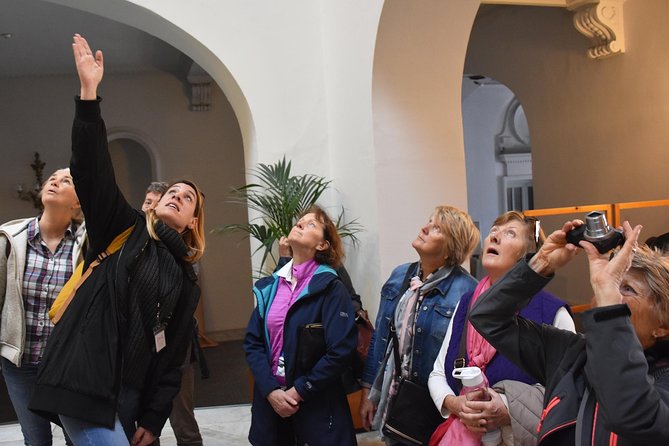
The Silk Exchange, or La Lonja de la Seda, is the centerpiece of the route. The tour includes admission and allows about 30 minutes inside.
La Lonja was declared a World Heritage Site in 1996. Its importance comes from Valencia’s medieval commercial power, but the building itself is the immediate reason to visit. The Contract Hall, known as the Sala de Contratación, is filled with tall, twisting columns that branch into ribs and vaults overhead.
This is civil Gothic architecture, built for business rather than worship. That makes the visit especially useful. You see how trade, contracts, and money shaped the city, and you do it in a building designed to impress merchants and visitors alike.
A guide adds scale and meaning to the room. Without context, the columns are striking but easy to treat as a photo backdrop. With an explanation of the Valencian Golden Age and the silk trade, the architecture becomes a record of confidence and commercial ambition.
The 30-minute visit is enough to understand the building’s main spaces and hear the central story. It is not enough for a slow architectural study or a quiet photography session. You will also need to stay with the group, so save extra pictures for the end if the guide allows time.
The evening restriction matters here too. In August and September, the 6:30 p.m. tour does not include admission to La Lonja de la Seda. That changes the value calculation. A daytime booking is the better choice if the Silk Exchange is your main reason for taking the tour.
Plaza de la Virgen and the Water Tribunal
The final stop is Plaza de la Virgen, a handsome square near the cathedral area. The planned visit lasts about 15 minutes and focuses on the Water Tribunal.
The Tribunal of the Waters has been recognized as intangible world heritage since 2008. It meets every Thursday at noon at the Apostles’ Gate of Valencia Cathedral. The institution is linked to the management of irrigation water, a subject with real importance in the agricultural region around Valencia.
This is a fine example of how the tour uses the term world heritage in more than one way. The Lonja is a physical building. Fallas and the Water Tribunal are traditions and practices. Seeing all three in one morning or afternoon gives you a broader idea of what Valencia values and how its past remains part of city life.
The timing is crucial. The tour explains the tribunal, but the itinerary does not promise that you will witness its Thursday session. If you want to see the meeting itself, you need to arrange your schedule around Thursday at 12:00 noon and confirm how that fits with your tour departure.
Finishing near Carrer del Micalet is convenient. You are close to the cathedral and several old-town streets, with no return transport included. Bring your own plan for the next stop, or simply follow the guide’s suggestions.
The guides make the history easier to follow
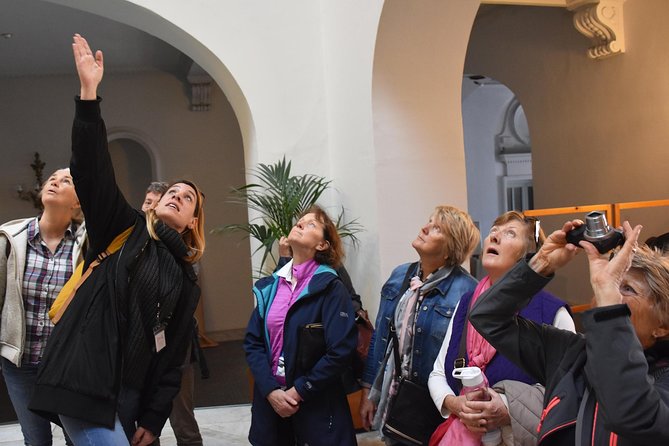
This experience depends heavily on the person leading it. The named guides include Sara, María, and Gabor, and the tour may also be operated by a multilingual guide.
The strongest guide qualities are clear explanations, comfort with questions, and enthusiasm for Valencia. Sara is described as articulate, well prepared, humorous, and easy to listen to. María is noted for her historical explanations and detailed restaurant advice. Gabor brings a strong interest in Valencia and its past.
That range matters because the route covers several subjects in a short time: railway architecture, Fallas, city government, food, medieval commerce, and irrigation law. A guide who can connect those subjects keeps the walk from feeling like a list of unrelated stops.
You should also be ready for differences in presentation. A multilingual tour may involve more than one language, and the group size can reach 25 people. If you prefer a quiet, highly personal discussion, this may feel less intimate than a private guide. If you want an efficient overview and the chance to ask questions, it is a good fit.
Timing, meeting point, and practical planning
The tour lasts about two hours. It begins at Bailén by Estació del Nord, at Extramurs, 46007 Valencia, and ends on Carrer del Micalet, 7, in Ciutat Vella.
Transportation to and from the meeting and ending points is not included. You are responsible for reaching the start and continuing from the finish. Since the route begins near the train station and ends in the old center, the arrangement is useful for people already staying or sightseeing in central Valencia.
The tour uses a mobile ticket, and confirmation is issued when you book. Children must be accompanied by an adult, and most people can participate.
Wear shoes suited to city walking. The supplied details do not specify an accessibility plan, so you should contact the provider directly if you have mobility needs or require a particular accommodation. Public squares, city streets, and building access can vary by date and event.
Free cancellation is available if you cancel at least 24 hours before the start time. Changes or cancellations made within 24 hours are not refunded or accepted. The tour also requires a minimum number of participants, and if that minimum is not reached, you will be offered another date, another experience, or a full refund.
Who will get the most from this Valencia tour
I would choose this walk for a first visit, especially if you have only a few days in Valencia. It gives you a map in your head without asking you to study one, and it shows you where to return for a longer visit.
It also suits anyone interested in architecture and civic history. The Silk Exchange is the clear highlight, while the station, City Hall, and Central Market show different sides of the city.
Food-focused visitors will find the market explanation and restaurant advice useful, but this is not a tasting tour. You will not spend the morning eating your way through Valencia.
The tour is less suitable if you want long interior visits, a private guide, or a complete account of every historic building in the center. It is a well-planned introduction, not a substitute for visiting the cathedral, market, or Silk Exchange independently at a slower pace.
Should you book Essentials of Valencia and its World Heritage Sites?
Yes, if you want a reasonably priced first look at central Valencia and you can book a daytime departure that includes the Silk Exchange. The $20.85 price is fair because it combines a professional guide, a compact route, and admission to La Lonja de la Seda.
Book it early in your stay so you can use the guide’s orientation and local restaurant suggestions for the days ahead. Choose a Thursday at noon only if you specifically want to see the Water Tribunal in session, and remember that the tour itself does not guarantee that timing.
I would skip it only if you have already explored the old center carefully or want a slower, building-by-building tour. For most first-time visitors, this is a practical way to meet Valencia’s major sights and understand why three very different parts of its culture carry world heritage status.
FAQ
How long does the tour last?
The tour lasts approximately two hours.
Where does the tour begin?
It begins at Bailén by Estació del Nord, Extramurs, 46007 Valencia, Spain.
Where does the tour end?
It ends at Carrer del Micalet, 7, in Ciutat Vella, Valencia.
Is admission to the Silk Exchange included?
Yes. Admission to La Lonja de la Seda is included on the tour, except for the 6:30 p.m. evening tours in August and September, which do not include entry.
Can I enter Valencia City Hall?
City Hall entry is available on working days, except when official events or holidays prevent access. It is not included on evening tours, and access may change.
Can I cancel for a full refund?
Yes, if you cancel at least 24 hours before the experience starts. Cancellations or changes made less than 24 hours in advance are not accepted for a refund.
Recently added in Valencia
- Valencian Paella Cooking Class, Tapas & Sangria – Evening★ 5.0 · 303 reviews
- Montanejos Thermal Springs and Waterfall, food included★ 4.7 · 316 reviews
- Valencia: Evening Guided Paella Workshop, Tapas, and Drinks★ 4.9 · 326 reviews
- Valencia: Historical Walking Tour★ 4.6 · 390 reviews
- Valencia: San Nicolas, Silk Museum and Santos Juanes Church★ 4.3 · 391 reviews
- Valencia: Catamaran Cruise, Paella Lunch and Swim Stop★ 4.0 · 445 reviews
- Valencia Bike Tours: City Highlights★ 4.9 · 450 reviews
- Adventures day: Thermal Springs and Waterfalls★ 5.0 · 521 reviews
Historical Tours, compared.
Madrid Essential: Historic Center, Plaza Mayor & Royal Palace
Read the review →
Tapas Walking Tour with Food, Wine, and History
Read the review →
Sevilla Food Tour: Tapas, Wine, History & Traditions
Read the review →
Valencia Old Town Tour with Wine & Tapas in 11th Century Historic Monument
Read the review →
Barcelona Tapas Walking Tour: Food, Wine & History
Read the review →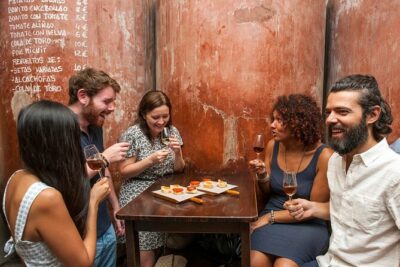
Ultimate Seville Tapas, Wine & History Small Group Tour
Read the review →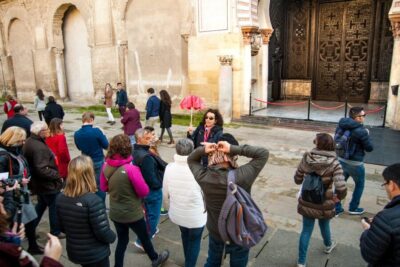
Skip-the-Line Great Mosque-Cathedral History Tour
Read the review →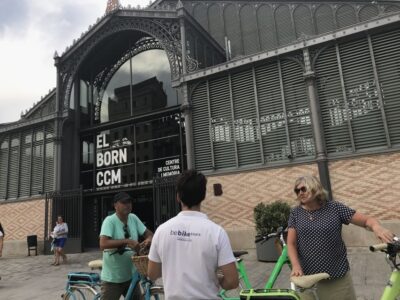
Browse the lists this tour appears in