
Reviewed · WALKING TOURS
Seville Small-Group Monumental Highlights Walking Tour
Seville’s story is easiest to grasp when you walk through it in order. This tour links City Hall, the former mosque and Giralda, the Port of the Indies, the Alcázar, Torre del Oro, the old Tobacco Factory, and Plaza de España in about two hours. It is a brisk orientation walk, not an inside visit to the monuments.
I like the genuinely small group, capped at 10, and the way the route connects Muslim, Christian, imperial, and industrial Seville. I also like the strong guide focus: Carmen, Carlos, Laura, Miguel, Cristina, Marta, Manuel, Barbara, and Valentín are praised for clear explanations, humor, patience, and good pacing. The main drawback is simple: tickets are not included, so you’ll need separate time and reservations if you want to enter the Cathedral, Giralda, or Alcázar.
Key points to know before you book
- A compact route with a big historical arc: Follow Seville from mosque to cathedral, royal palace, overseas trade center, industrial building, and grand exhibition square.
- A true small-group format: The maximum is 10 people, making it easier to hear the guide and ask questions.
- Outdoor sightseeing only: The major monuments are explained from outside, with no entry tickets included.
- A useful first-day walk: The tour ends at Plaza de España, giving you a strong sense of where Seville’s major sights fit together.
- English with a licensed guide: Guides such as Carlos, Carmen, Laura, Cristina, and Valentín are singled out for history, humor, and group care.
- Good value at $30.25: You are paying for a focused city introduction, not monument admission or a full-day tour.
Why this two-hour walk works so well in Seville
Seville can feel like several cities layered on top of one another. The streets around the Cathedral carry traces of the mosque that came before it. The Alcázar reflects centuries of Muslim and Christian rule. The riverfront points toward Seville’s role in trade with the Americas. Plaza de España belongs to a much later period, when Spain was looking back at its empire and presenting a carefully designed image of national unity.
This walk gives you that sequence without asking you to spend half a day inside one building. I find that useful on a first visit, especially if you have limited time or want to decide which monuments deserve your attention later.
The route is also practical. You begin at Plaza de San Francisco, beside Seville City Hall, and finish at Plaza de España. You are not returned to the starting point, but the final stop is one of Seville’s most important sights and a natural place to continue exploring.
The tour costs $30.25 per person. That is fair value if you want a guide to explain the city and point out details you might miss while walking alone. It is less attractive if you mainly want entry to the Cathedral, Giralda, or Alcázar, since those tickets are extra and the tour does not take you inside.
More Walking Tours in Seville
- Seville: Small-Group City Highlights Walking Tour
★ 5.0 · 1,204 reviews - Cultural Walking Tour of Seville Monumental
★ 5.0 · 861 reviews - Seville: Tapas, Taverns, and History Walking Tour
★ 4.9 · 676 reviews
City Hall and the Seville of the 1500s
The walk starts at Plaza de San Francisco, at Plaza de San Francisco 17 in the old town. The opening discussion centers on the City Hall building and Seville’s importance in the 1500s.
This is a smart starting point because Seville’s golden age was tied to power, government, and global trade. The guide uses the building to explain why the city mattered so much during Spain’s imperial period. You are not just looking at a municipal facade. You are being introduced to the political and economic forces that shaped the streets around you.
The opening also gives the guide a chance to set the pace. Several guides are praised for explaining complex subjects in an easy, entertaining way, while still answering questions. If you enjoy connecting local sights to wider European and world events, this part should be especially useful.
One thing to keep in mind is that the opening is an explanation from outside. You will not be touring City Hall’s interior as part of the experience.
The former mosque and the Giralda Tower
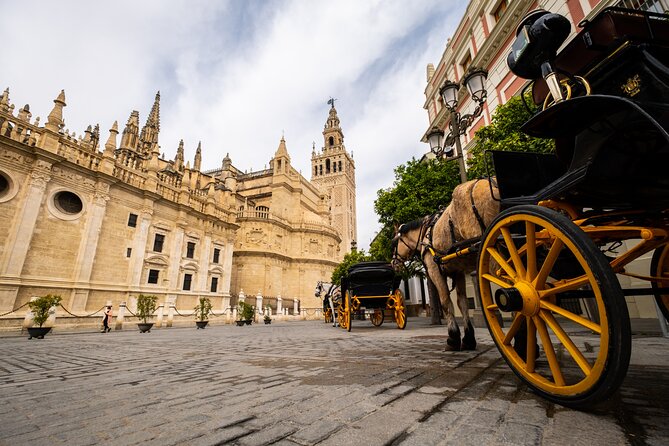
The next section turns to the outdoor setting around Seville’s Cathedral and Giralda Tower. The guide explains the earlier mosque and shows how different faiths and cultures shaped the city that exists today.
This is one of the most important parts of the route. The Giralda is not simply a famous tower to photograph. Its present form reflects Seville’s Muslim past and later Christian changes. Hearing that story on location helps you read the building as a record of changing rulers, beliefs, and architectural choices.
You should expect a walk-by explanation rather than an entry. That distinction matters. If you want to climb the Giralda, see the Cathedral interior, or spend time with the art and tombs inside, you will need a separate visit and separate ticket.
The value here is orientation. You get the basic structure of the site, learn what came before, and can then return with a better sense of what you are seeing. Guides are also able to explain details beyond dates and names, including the way Seville’s past connects to wider Spanish society.
Seville as the Port of the Indies
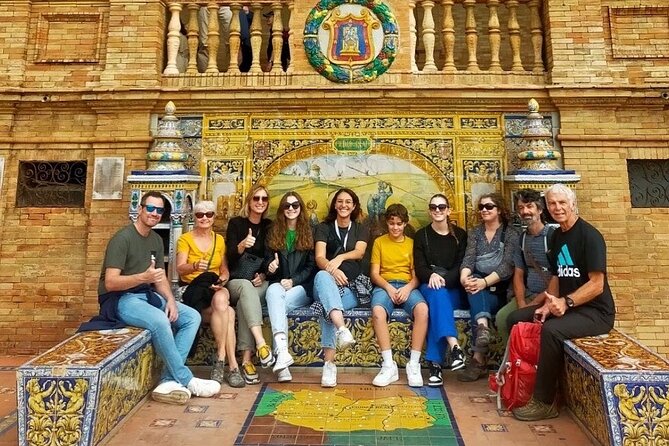
The tour then places Seville in the story of the New World. For a period, the city served as a major center for trade connected with the Americas, often described as the Port of the Indies.
This stop adds an essential layer to the city. Seville’s grand buildings were not created in isolation. The city’s role in overseas commerce helped bring wealth, influence, and political importance. A guide can make that connection clear as you move through the center, tying impressive architecture to the flows of goods, money, people, and power.
This is where the tour becomes more than a checklist of monuments. You are encouraged to see Seville as a working city with changing fortunes, not only as a pretty collection of historic facades.
If you like history delivered as a connected story, this section should suit you. If you prefer long periods at each site for photography, the two-hour schedule may feel quick.
Same city, a completely different evening:
- Seville: Royal Alcázar Entry Ticket
★ 4.6 · 28,378 reviews - Seville: Cathedral and La Giralda Entry Ticket
★ 4.5 · 24,592 reviews - Seville: Live Flamenco Dancing Show Ticket at the Theater
★ 4.7 · 16,396 reviews - Seville: Casa de la Memoria Flamenco Show
★ 4.8 · 12,964 reviews
The Alcázar from the outside
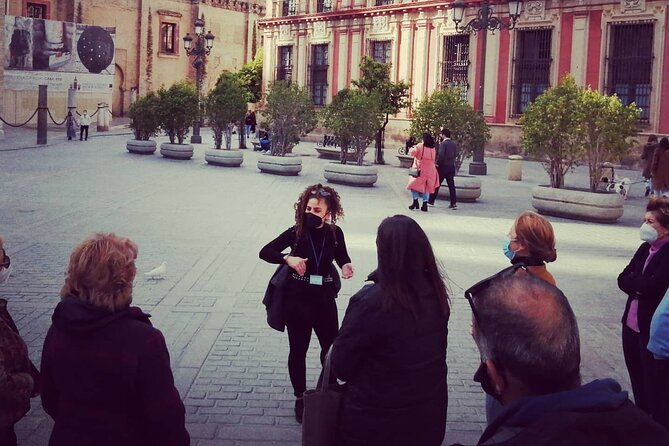
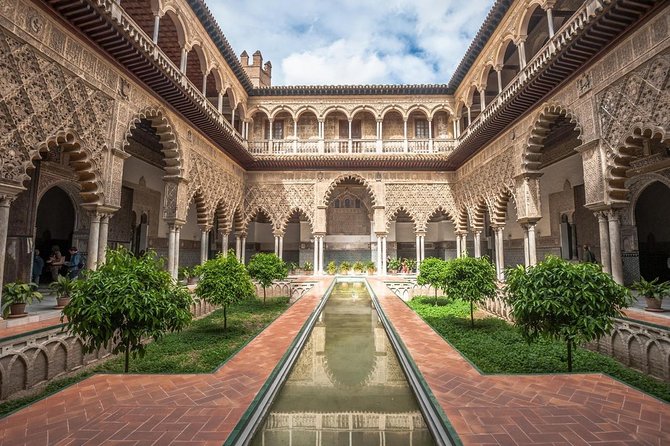
The Royal Alcázar is presented as the oldest royal palace in Europe still in use. From the exterior, the guide explains why the palace is unusual and how rulers have used the site since the 1000s.
Even without entering, this is a worthwhile stop. The palace represents the long transition between Muslim and Christian Seville, and its continued royal use gives the site unusual weight. The tour helps you understand the building’s place in the city before you decide how much time to spend inside.
Still, the outside explanation cannot replace an interior visit. The Alcázar’s gardens, rooms, tilework, and layered architectural details require time and admission. If the palace is high on your list, treat this tour as preparation rather than the main experience.
The practical advantage is that you will know what you are looking at when you return. You may also find the guide’s overview useful for deciding whether to reserve a longer visit during your stay.
Torre del Oro and Seville’s river connection
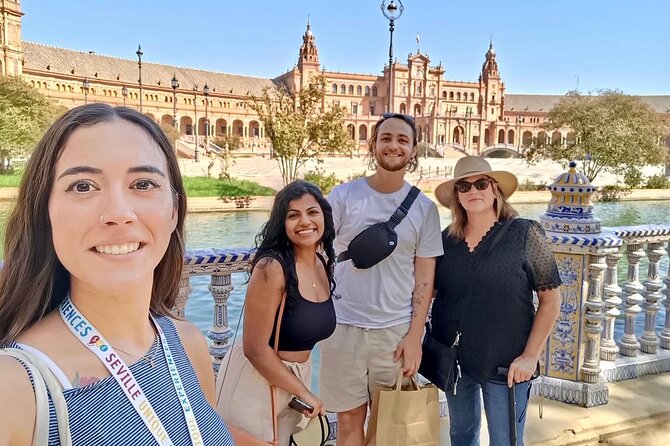
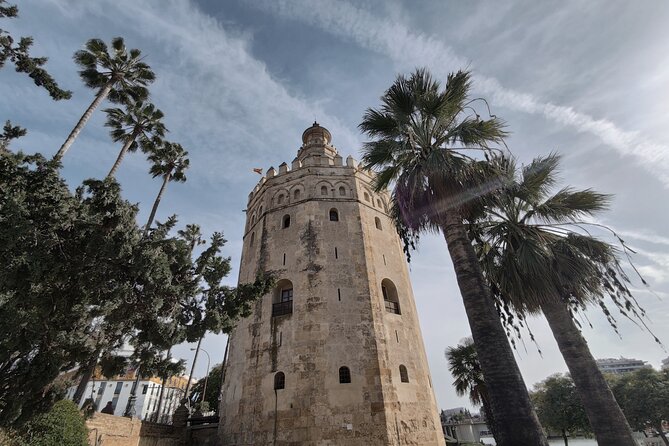
The route continues to the Torre del Oro, described as the last Muslim building in the city. It was also a watchtower and an entry point from the ocean.
This stop shifts your attention from royal and religious buildings to defense and water. The tower makes more sense when you consider Seville’s connection to the river and the sea. It was part of the city’s protection and control system, not merely a decorative landmark beside the water.
I like this change of subject because it keeps the walk varied. You move from government to religion, global trade, royal power, and military control. Each stop adds a different reason for Seville’s importance.
Again, this is an outdoor explanation. You will not be buying an admission ticket or touring the tower as part of the walk.
The old Tobacco Factory and industrial Seville
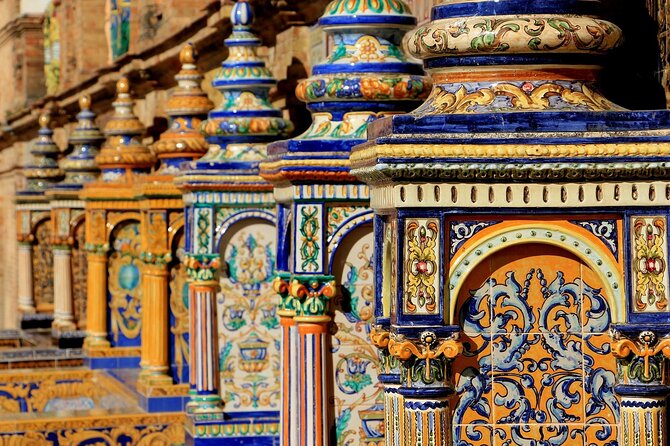
The old Tobacco Factory offers a different view of the city. Built in the 1700s, the building is presented as an example of industrial architecture in Seville.
This stop helps correct a common impression that Seville’s history is only about medieval rulers and grand churches. The city also had large workplaces and industries that shaped daily life. The Tobacco Factory gives the guide a chance to discuss how Seville changed as production and commerce evolved.
The building is also a useful architectural contrast. After seeing religious, royal, and defensive structures, you encounter a place designed around work and manufacturing. That variety makes the route feel thoughtfully assembled.
You will hear the story from outside, so the stop works best as part of the larger city narrative. It is not a factory tour.
Plaza de España and the 1929 exhibition
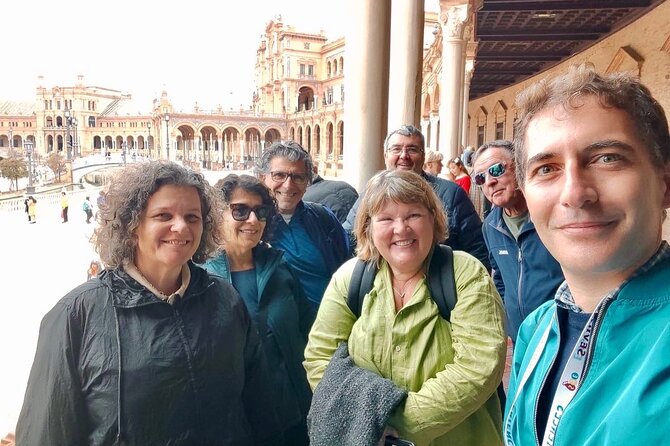
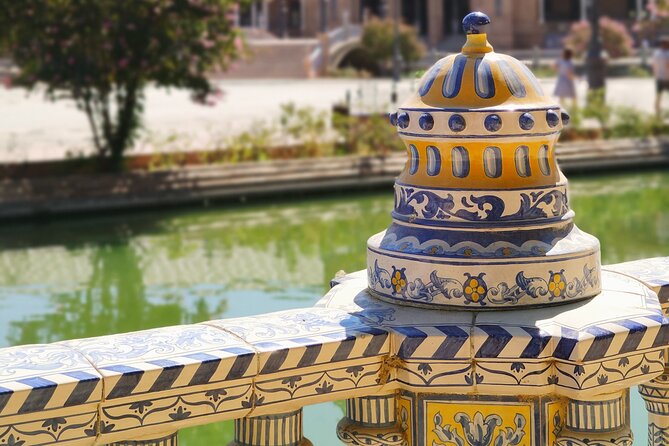
The walk ends at Plaza de España, the best-known result of Seville’s Ibero-American Exhibition. The exhibition brought major changes to the city’s urban design, and the square served as the host country pavilion.
This is a strong finish. Plaza de España is large, theatrical, and easy to appreciate at first glance, but its purpose gives it more meaning. The guide explains why it was built and how the exhibition reshaped the city.
Ending here also gives you room to continue your day. You can stay in the square, walk through the surrounding area, or use the new orientation to plan another visit. The city council can close Plaza de España during a heavy wind alert, so the final stop is subject to that safety restriction.
Because the tour ends here, you should plan your route afterward. Do not assume you will finish back at City Hall.
The guides make the biggest difference
The clearest pattern across the experience is the importance of the individual guide. Carmen is praised for adapting the walk to the group. Carlos is repeatedly noted for his strong historical command, friendly manner, and ability to connect with people. Laura is described as enthusiastic, clear, and attentive to the small-group setting.
Miguel is praised for answering questions, while Cristina earns credit for speaking clearly over street noise, keeping a comfortable pace, and choosing shady places when possible. Marta, Manuel, Barbara, and Valentín are also singled out for warm, engaging presentations.
That range matters because an outdoor walking tour depends on communication. You need to hear the explanation, follow the route, and feel comfortable asking a basic question. One fair criticism is that a guide who loves history may offer more dates and detail than you can easily remember. If you prefer a light overview, say so early and ask for the main points.
The group limit of 10 is a real benefit. It should be easier to stay together, hear the guide, and ask questions than on a large coach-style walk. The tour is offered in English and includes a licensed guide.
Pace, walking, and what is not included
The stated duration is about two hours, although one description puts the actual walk closer to two and a half hours. Plan for a substantial city walk rather than a quick chat at one plaza.
The walking is described as easy and well paced, but you will be outdoors and moving between several central sights. Wear comfortable shoes, bring water, and consider the heat when choosing a start time. A guide has made a point of using shady areas when possible, but conditions can change.
The tour includes:
- An English-language guided walk
- A licensed guide
- A small group of no more than 10 people
- Mobile ticket confirmation
It does not include monument admission. The Cathedral, Giralda, Alcázar, Torre del Oro, and other interiors should be treated as separate plans unless your booking information says otherwise. The value is in the explanation and route, not in bundled tickets.
Most people can take part, and service animals are allowed. The meeting point is near public transportation. Confirmation arrives when you book, and free cancellation is available up to 24 hours before the start time. Changes or cancellations inside that window are not accepted for a refund.
Who should book this Seville walking tour?
I would choose this tour early in a Seville visit if you want a clear framework before choosing longer monument visits. It suits first-time visitors, short-stay visitors, history fans, and anyone who prefers a local guide to explain what they are seeing.
It is also a good fit if you like asking questions. The small group makes that more realistic, and the guides are repeatedly praised for welcoming questions, including simple ones.
I would look elsewhere if you want extensive interior sightseeing, a slow photography walk, or a full-day experience. You will see the major landmarks from outdoors, but you will not replace separate visits to the city’s major monuments.
Should you book it?
At $30.25, I think this is a sensible introduction to Seville. The route covers an impressive range of subjects, from the mosque beneath the Cathedral to overseas trade, royal power, Muslim defenses, industry, and the 1929 exhibition.
Book it if you want the city to make sense before you explore it on your own. Book it early in your stay, then use the final stop at Plaza de España to continue your day. Just remember that this is an orientation walk with strong storytelling, not an admission package. If you need to see the interiors, budget both money and time for separate tickets.
FAQ
How long does the Seville Monumental Highlights Walking Tour last?
The tour lasts approximately two hours. One description of the experience notes that the walk can run closer to two and a half hours, so allow some flexibility.
What is the price?
The price is $30.25 per person.
Is the tour offered in English?
Yes. The experience is offered in English and includes a licensed English-speaking guide.
How large is the group?
The maximum group size is 10 people.
Where does the tour start?
The meeting point is Plaza de San Francisco 17, in Seville’s old town, with the address listed as Pl. de S. Francisco, 17, Casco Antiguo, 41004 Sevilla, Spain.
Where does the tour finish?
The tour ends at Plaza de España, on Avenida Isabel la Católica, 41004 Sevilla, Spain.
Are entrance tickets to the monuments included?
No. Tickets and visits inside the monuments are not included. The tour explains the major sights from outdoors.
Can Plaza de España be closed during the tour?
Yes. The city council can close Plaza de España during a heavy wind alert.
What is the cancellation policy?
You can cancel up to 24 hours before the experience start time for a full refund. Cancellations or changes made less than 24 hours before the start time are not accepted for a refund.
Recently added in Seville
- Gibraltar Day Trip from Seville + Rock Tour★ 4.0 · 179 reviews
- Seville: Sherry Wine Tasting with Light Snacks★ 4.9 · 183 reviews
- Seville Aquarium Admission Ticket★ 4.0 · 185 reviews
- Seville: Electric Bike Tour in Small Group★ 4.9 · 185 reviews
- Seville: Hospital de los Venerables Ticket with Audio Guide★ 4.6 · 190 reviews
- Flamenco Dance Class in Seville with optional Flamenco Costume★ 5.0 · 191 reviews
- VIP Guided Seville Alcazar Pre-Opening, Cathedral & Old Town★ 5.0 · 191 reviews
- Tablao Flamenco Orillas de Triana Ticket★ 5.0 · 195 reviews
Walking Tours, compared.

Barcelona Tapas and Wine Experience Small-Group Walking Tour
Read the review →
Tapas Walking Tour with Food, Wine, and History
Read the review →
Albaicín and Sacromonte Guided Sunset Walking Tour
Read the review →
Toledo Tour & Vineyard Walk with Wine Tasting from Madrid
Read the review →

Barcelona Tapas Walking Tour: Food, Wine & History
Read the review →
Madrid Old Town & Royal Palace Walking Tour Skip the Line Ticket
Read the review →
Browse the lists this tour appears in