
Reviewed · MALLORCA TOURS
Mallorca Wine Experience
Mallorca’s wine story comes to life in a small shop and cellar in central Palma, where you taste island-made wines beside cheese, sobrasada, jams, chocolate, and other carefully chosen bites. This is not a vineyard visit. It is a sit-down wine lesson with plenty in the glass and time for questions.
I like the focus on native grapes such as Manto Negro, Callet, and Giro Negre, varieties you are less likely to meet in a standard Spanish tasting. I also like the tiny group, capped at eight, and the chance to work with hosts including Sebastian, Shota, and Gabriel, all praised for their wine knowledge and easy conversation.
The main drawback is the pace. Two hours gives the host room to explain each wine, but one session felt slow to a guest who preferred a shorter tasting. Seating has also drawn a little criticism, so this suits you best if conversation and learning matter more than polished comfort.
Key points to know before booking
- Taste five or more Mallorca wines: Expect a generous spread of white and red wines, with some sessions also including a blind tasting.
- Learn the island’s native grapes: Manto Negro, Callet, and Giro Negre are central to the discussion.
- Pair wine with local food: Cheese, sobrasada, sausage, jams, chocolate, and other Mallorcan snacks show how food can change a wine.
- Stay in old-town Palma: The tasting takes place at Avinae Wine & Spirits, at Carrer dels Llums, 3.
- Keep the group small: The maximum is eight people, and some sessions may be much smaller.
- Plan ahead: The experience is often reserved about 35 days before the date, and confirmation arrives within 48 hours if space is available.
A wine tasting in the heart of Palma
This experience takes place at Avinae Fine Wine & Spirits Merchants, a wine shop at Carrer dels Llums, 3, in Palma’s Centre district. The address puts you in the middle of the city rather than out among vineyards, so it fits neatly into a day of walking, shopping, and sightseeing.
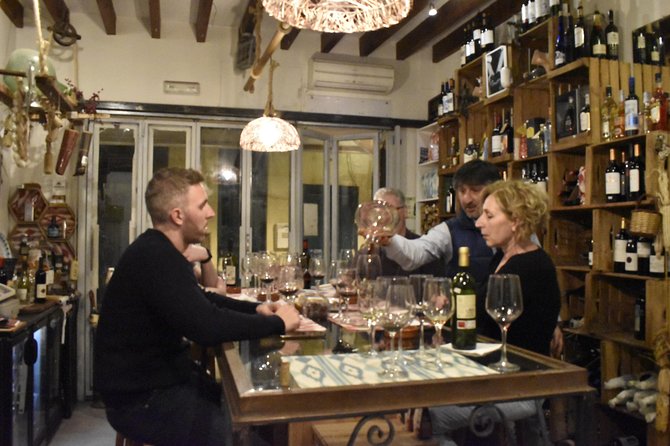
Inside, the setting is part of the appeal. The tasting may take place in a tucked-away cellar beneath or within the shop, giving it a quiet, intimate feel. You are not standing in a large production room or being moved through a commercial winery. You sit close to the host, look at the bottles, and have room to ask questions.
That setting also tells you what this activity is and is not. You will not tour vines, fermentation rooms, or a working estate. You will not get a countryside transfer. Instead, you receive a focused introduction to Mallorca’s wines without leaving Palma.
I consider that a plus for many people. A vineyard visit can take half a day or more, while this fits into roughly two hours. If your schedule is full, you can learn about the island’s wine in town and still have most of the day available.
A few other Mallorca outings to compare
- Palma: Cathedral of Mallorca Skip-the-Line Entry Ticket
★ 4.6 · 14,386 reviews - Palma de Mallorca: 5-Hour Catamaran Cruise with Lunch & Swim
★ 4.5 · 9,957 reviews - Porto Cristo: Caves of Hams Entry Ticket
★ 4.2 · 6,548 reviews
Meeting Sebastian, Shota, or Gabriel
The hosts bring different backgrounds to the table. Sebastian is described as a former sommelier who explains how wine works with food. Shota is praised for his strong grasp of Mallorcan wine and his enthusiasm, while Gabriel has led sessions that put special attention on local wines and food pairings.
The exact host may vary, so I would not book expecting one particular person unless the operator confirms it. What appears consistent is the teaching style: the host talks through the wine, explains what to notice, and invites conversation about Mallorca, its food, and its winemaking.
This is useful if wine language sometimes feels vague or intimidating. You can ask why a wine tastes different with cheese than with chocolate, or how a local grape differs from a familiar international variety. The host can connect the answer to the glass in front of you rather than offering a generic lecture.
The tone is also more personal than formal. Past sessions have been private for just two people, while the listed maximum is eight. A small group lets you hear the explanations clearly and gives you a better chance to ask questions. It also means the experience depends partly on the group’s pace and interest.
The Mallorca grape lesson
The tasting centers on indigenous Mallorcan grapes, including Manto Negro, Callet, and Giro Negre. These names are a strong reason to choose this activity instead of a broad Spanish wine class.
You may already know Rioja’s Tempranillo or Spain’s Albariño. Here, the subject is the island itself. The host explains the grapes and the producers behind the bottles, then helps you connect those details to aroma, flavor, texture, and finish.
The information provided does not promise a fixed bottle list, so you should expect the selection to change. That is normal for a shop-based tasting, where the host can present several island wines rather than tying the entire session to one estate.
Sessions have included about five wines, with a mix of white and red bottles. One tasting also included a blind portion, which adds a bit of play without turning the event into a contest. You may be asked to use your nose and palate before being told exactly what is in the glass.
The strongest part of the lesson is the conversation. This is not a quick pour, a one-line description, and a move to the next bottle. The host takes time to explain what affects the way wine tastes and how you can apply that knowledge at home.
That extra time is valuable if you want to understand wine instead of simply drinking it. It may feel long if you already know the basics or want a fast sampling of local labels. For me, that is the clearest choice you need to make before booking: education first, speed second.
Cheese, sobrasada, and the pairing table
The food is not an afterthought. The listed starter is a Mallorcan and Mahón cheese plate, with typical high-quality sobrasada served as well. Other sessions have included different sausages, meats, jams, and chocolate.
This format gives the tasting a practical purpose. You do not just hear that a wine pairs well with cheese. You taste the wine, eat a bite, and try it again. The food can make the wine seem softer, sharper, fruitier, or less balanced.
Mallorca’s cheeses provide a useful range of textures and flavors. Queso de Mahón and Queso Mallorquín are specifically included in the food and wine discussion. Sobrasada brings a salty, rich, spiced character that can make a red wine behave differently from the way it did on its own.
Chocolate and jam add another test. Some wines become more pleasant with sweetness, while others can seem thin or harsh. That contrast helps you understand why pairing advice is not just a list of fixed rules.
I like this part because it sends you home with something practical. You may start tasting a wine before deciding what to serve with dinner. Even if you never learn every grape name, you can notice how salt, fat, spice, and sweetness affect your glass.
The portions have been described as generous. Five wines over two hours is enough for a serious tasting, and you should be prepared to feel the alcohol by the end. Eat normally beforehand, take your time, and remember that this is a tasting, not simply a snack stop.
Same city, a completely different evening:
- Palma de Mallorca: City Sightseeing Hop-On Hop-Off Bus Tour
★ 4.1 · 4,450 reviews - Mallorca: Island Tour with Boat, Tram & Train from the South
★ 4.4 · 3,888 reviews - Palma: Catamaran Cruise with Swimming and Snorkelling
★ 4.3 · 2,859 reviews - Mallorca: Caves of Drach Day Trip & Optional Caves of Hams
★ 4.3 · 2,720 reviews
What the two-hour schedule feels like
The session begins at Avinae Wine & Spirits and ends at the same meeting point. You check in at the shop, settle into the cellar or tasting area, and begin with an introduction to Mallorca’s wine culture.
The host then presents the wines one by one. The exact order can change, but you should expect discussion of the grape, producer, style, and food match. The tasting may move between white and red wines, with additional bites appearing as the pairings develop.
You have time to talk throughout. Questions are welcome, and the host can compare Mallorca’s wines with styles from other countries. One session included explanations linked to the participants’ own wine experiences, which is helpful if you already have some background.
Two hours is a sensible length for this amount of material. It gives the host time to explain the pairings and lets you taste at a calm pace. Still, if you prefer a compact one-hour stop, the presentation may feel drawn out. The most useful way to think about the duration is as a small class with wine, rather than a short aperitif.
The chairs have received one unfavorable comment for comfort. This is worth noting if you have trouble sitting for long periods. The room’s cellar atmosphere adds charm, but it may not have the polished seating or spacious layout of a modern tasting room.
How much value do you get for $82.27?
At $82.27 per person, this is not a cheap drink-and-snack activity. You are paying for several pours, food pairings, an English-speaking host, and roughly two hours of personal instruction in a group of no more than eight.
The price makes more sense if you value access to an expert who can answer questions. A bar tasting might cost less, but it is unlikely to give you the same sustained explanation of Manto Negro, Callet, Giro Negre, local producers, and the effect of cheese or chocolate on each wine.
The small group matters here. If the maximum group of eight is reached, it is still far more personal than a large coach excursion. If only two or four people attend, you may receive near-private attention without paying for a private tour.
You should compare it with your own priorities. Wine lovers who want to learn about Mallorca’s lesser-known grapes will likely find the fee fair. People mainly looking for a vineyard view, a country lunch, or a low-cost glass of wine may feel they are paying too much for an indoor tasting.
The food adds real value because it is part of the lesson, not simply a plate placed on the table. Cheese, sobrasada, sausages, jams, and chocolate help explain the island’s food culture while giving you useful pairing practice.
Who will enjoy this Palma tasting most?
I would choose this for you if you like small groups, local food, and a host who takes time with each bottle. It works particularly well for couples, solo visitors, and friends who want a calm evening activity in the city.
It is also a good fit on a hot afternoon. You stay indoors, avoid a long drive, and spend a couple of hours doing something more substantial than simply ordering a drink.
You do not need to be a wine expert. Beginners can ask basic questions without being lost in a large crowd, while experienced drinkers can steer the conversation toward producers, regions, and pairings.
You may want another activity if your main goal is to see vineyards or learn how wine is made on a farm. This experience does not include a winery or vineyard visit. It is an in-town tasting, and the provider can point you toward countryside wineries for a future visit.
The activity is offered in English. Service animals are allowed, it is near public transportation, and most people can participate. Those are useful practical points, though the available information does not give detailed access measurements or a full mobility assessment.
Booking advice for Palma’s wine scene
The experience is often booked about 35 days ahead, so I would reserve early if your dates in Mallorca are fixed. Confirmation is sent within 48 hours, subject to availability.
You receive a mobile ticket, which keeps the arrival process simple. Check the address carefully: Avinae Wine & Spirits, Carrer dels Llums, 3, Centre, 07001 Palma, Illes Balears, Spain.
The activity returns to the same point, so you do not need to arrange a separate pickup. That makes it easy to follow with dinner or an evening walk through Palma.
Free cancellation is available if you cancel at least 24 hours before the start time. Cancellations or changes made inside that 24-hour window are not accepted for a refund, and the cut-off follows local Mallorca time.
One practical note comes from the session format: arrive on time. A host may be gracious if you are late, but joining after the explanation begins can interrupt the flow and leave you trying to catch up.
Should you book the Mallorca Wine Experience?
Book it if you want an educational tasting of Mallorca’s own wines, served with local cheese and sobrasada in a small Palma cellar. The personal instruction, generous pours, and food comparisons are the main reasons to spend the money.
Skip it if you want vineyards, scenery, or a quick one-hour tasting. The indoor setting, slower explanations, and less-than-perfect seating are real considerations.
For a first introduction to Mallorcan wine, I think this is a strong city choice. You leave with more than a pleasant buzz: you understand the island’s native grapes, recognize how food changes wine, and have a better idea of what to order during the rest of your stay.
FAQ
Where does the Mallorca Wine Experience begin?
It begins at Avinae Wine & Spirits, Carrer dels Llums, 3, Centre, 07001 Palma, Illes Balears, Spain.
Where does the experience end?
The activity ends back at the meeting point at Avinae Wine & Spirits.
How long does the wine tasting last?
The experience lasts approximately two hours.
What language is the experience offered in?
The experience is offered in English.
How many people can join the tasting?
The maximum group size is eight people.
Which Mallorca grape varieties are discussed?
The experience focuses on indigenous varieties including Manto Negro, Callet, and Giro Negre.
What food is served with the wine?
The listed starter includes Mallorcan and Mahón cheeses. Sobrasada is also served, and sessions may include meats, sausages, jams, chocolate, and other local snacks.
Is this a vineyard or winery tour?
No. This is an in-town wine tasting at Avinae Wine & Spirits in Palma. It does not include a vineyard visit.
Can I cancel for a full refund?
Yes. You can cancel for a full refund at least 24 hours before the experience start time. Cancellations or changes made less than 24 hours before the start time are not accepted for a refund.
Recently added in Mallorca
- Mallorca: Drach and Hams Caves, and Porto Cristo Day Tour★ 4.3 · 194 reviews
- Mallorca: Hot Air Balloon Flight with Private Options★ 4.8 · 195 reviews
- Skip the Line: Rafa Nadal Museum Xperience★ 4.0 · 196 reviews
- Palma: Guided City Tour with a Fat Tire E-Bike★ 4.7 · 196 reviews
- Small-Group Cova de Coloms Sea Caving Tour in Mallorca★ 4.5 · 200 reviews
- Palma: Tramuntana Full-Day Tour with Sóller Train and Lunch★ 4.9 · 213 reviews
- Mallorca: Drach Caves, Lake Martel, & Pearl Factory Day Trip★ 4.0 · 216 reviews
- Mallorca Midday or Sunset Sailing with Light Snacks and Open Bar★ 4.5 · 225 reviews
Mallorca Tours, compared.
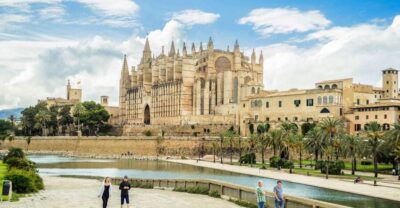
Cathedral of Mallorca Skip-the-Line Entry Ticket
Read the review →

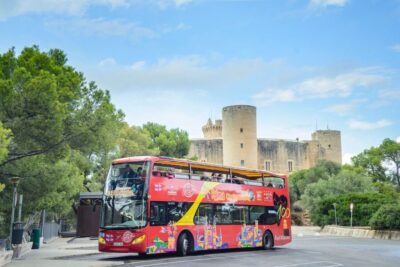
Island Tour with Boat, Tram & Train from the South
Read the review →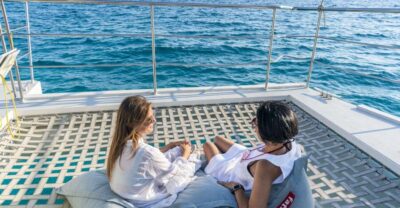
Catamaran Cruise with Swimming and Snorkelling
Read the review →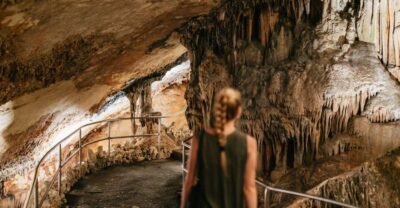
Caves of Drach Day Trip & Optional Caves of Hams
Read the review →
Quad Bike Tour, Snorkeling, and Cliff Jumping
Read the review →Browse the lists this tour appears in