
Reviewed · PRADO & MADRID MUSEUM TOURS
Private Tour through Prado Museum Highlights
The best reason to book this Prado visit is simple: a great guide gives the museum a shape. In two and a half hours, you move from Bosch and Titian to Velázquez and Goya without getting lost in the museum’s enormous collection. Guides such as Irina and Hernan Satt explain not only what you are seeing, but how the paintings connect to Spanish history, religion, royal power, and changing ideas about art.
I like two things especially. The tour is private, so your guide can adjust the pace and subject matter for your group. I also like the audio equipment, which helps you hear clearly in busy galleries. The main drawback is that the Prado admission ticket is not included, so you must arrange that separately and add its cost to the $375.05 group price.
Key points to know before booking
- Private group format: The price covers up to seven people, making this more attractive for families or friends than for one or two people traveling alone.
- A focused Prado route: You cover major works from the 15th through 19th centuries, including Bosch, Titian, El Greco, Velázquez, Ribera, Murillo, and Goya.
- Guides who adapt well: Irina and Hernan Satt are praised for adjusting explanations to different ages, interests, and levels of art knowledge.
- Useful for museum beginners: You do not need an art background. The tour is designed to make famous paintings easier to understand and remember.
- Good for mixed-age families: The minimum age is six, and the guide can keep children, teenagers, parents, and grandparents involved.
- Allow time for tickets: Museum admission is not part of the tour price, so plan for that separate expense before you arrive.
Why the Prado works best with a guide
The Museo Nacional del Prado is not a small museum where you can simply wander from room to room and expect the famous pictures to explain themselves. Its collection reaches from the Quattrocento, or 15th century, through Romanticism in the 19th century. That means many centuries, countries, painters, religious ideas, court fashions, and artistic arguments under one roof.
I like a guided visit here because the hardest part is not finding a famous painting. It is understanding why that painting matters, what you should look at first, and how it fits into the larger story. A guide can point out composition, color, gesture, symbolism, and technique before your attention drifts to the next masterpiece.
This private tour is built around that problem. Rather than trying to cover every room, your guide takes you through a selection of major works. You should expect a highlights visit, not a complete survey of the Prado. That is a sensible trade for a two-and-a-half-hour outing.
The strongest praise for the guides centers on their ability to make the art approachable. Irina is described as clear, friendly, and able to turn comments from the group into a more personal route. Hernan Satt receives similar praise for his passion, humor, and ability to explain the stories behind the paintings.
That matters if someone in your party normally avoids museums. A guide who asks questions and connects a painting to a human story can make the difference between an attentive visit and two hours of polite endurance.
More Museums in Madrid
- Madrid: Prado Museum Entry Ticket
★ 4.6 · 17,509 reviews - Madrid: Reina Sofía Museum Entrance Ticket
★ 4.5 · 6,889 reviews - Madrid: Small Group of Prado Museum Tour & Optional Tapas
★ 4.6 · 2,437 reviews
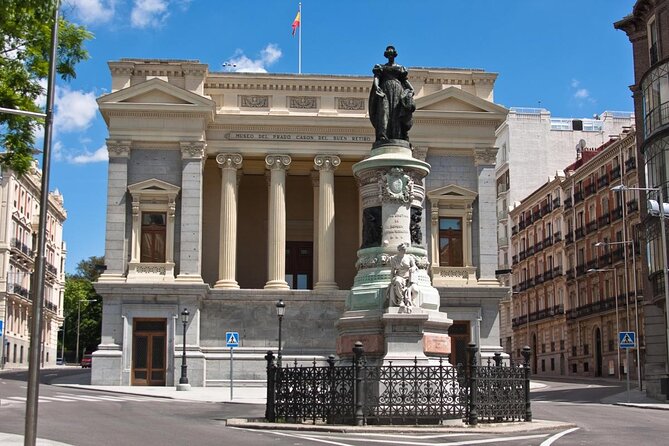
Meeting the guide at the Goya Monument
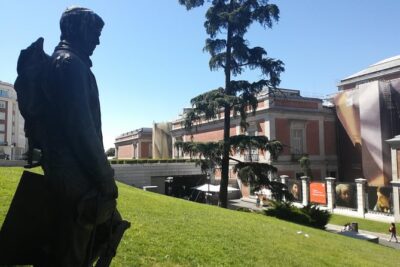
The tour begins at the Goya Monument on Calle de Felipe IV, beside the Prado area in Madrid’s Retiro district. This is a practical meeting point because it places you near the museum and gives the guide a clear landmark for the start.
Confirmation is provided when you book. The tour is offered in English, and the guide is a licensed art historian. You should arrive ready to begin at the stated meeting time, since two and a half hours passes quickly inside the Prado.
The tour ends back at the meeting point. That makes it easy to continue exploring Madrid afterward, although the supplied details do not promise a separate museum drop-off, nearby restaurant stop, or additional sightseeing.
The Prado is near public transportation, so getting to the general area is straightforward. Still, the exact transport instructions and museum entry arrangements should be checked when you book. The important point is that your guide starts outside the museum area, while the admission ticket itself is separate.
The opening stretch: from Bosch to Titian
The first part of the route introduces the older sections of the collection. You might encounter work from the Italian Renaissance and Northern European traditions, including artists such as El Bosco, better known in English as Hieronymus Bosch, and Titian.
Bosch gives a guide plenty to discuss. His paintings are packed with strange creatures, moral warnings, small scenes, and details that reward close looking. Without some direction, you can spend several minutes staring at one corner and miss the larger structure. A guide can help you sort the visual clues and explain how viewers in Bosch’s time might have read them.
Titian offers a different lesson. His paintings help show the importance of color, surface, portraiture, and dramatic storytelling in the Venetian tradition. The value of a guided explanation is that you are not just told a name and date. You learn what to watch for in the handling of paint and in the way figures are arranged.
This part of the visit is useful for setting up the rest of the museum. You see that the Prado is not only a collection of Spanish paintings. It also reflects the tastes of European courts and the connections between artists, patrons, and rulers.
The guide’s role here is to keep the sequence manageable. You are not trying to memorize a list of painters. You are learning a few visual ideas that will help you recognize changes in style as the tour moves forward.
El Greco, Ribera, and the drama of Spanish painting
The route then moves through important Spanish and Spanish-connected painters, including El Greco and José de Ribera. These works offer a chance to discuss drama, spirituality, light, and the use of the human figure.
El Greco’s distinctive approach is particularly useful for a guide-led visit. His elongated forms and intense spiritual mood can seem unusual at first. With context, those choices become easier to read as part of a deliberate artistic language rather than simple distortion.
Ribera brings another kind of power. His paintings invite discussion of realism, strong contrasts, and the emotional force of ordinary human faces and bodies. A guide can help you compare his work with the more courtly or idealized paintings nearby.
I appreciate this kind of comparison because it keeps the visit active. Instead of hearing isolated facts, you are encouraged to look from one painting to the next and ask what changed. Is the artist aiming for beauty, devotion, authority, shock, or psychological force?
The private format gives you room to ask those questions. If your group wants more religious context, the guide can spend more time there. If you are more interested in technique or biography, the discussion can shift. That flexibility is the central advantage over a fixed group route.
A few other Madrid outings to compare
- Madrid: Prado Museum Guided Tour with Skip-the-Line Ticket
★ 4.5 · 2,018 reviews - Madrid: Prado Museum Guided Tour With Fast Access
★ 4.8 · 1,785 reviews - Prado Museum Small Group Tour with Skip the Line Ticket
★ 5.0 · 1,738 reviews - Royal Palace & Prado Museum Skip the Line Guided Tour
★ 4.5 · 1,347 reviews
Velázquez and the Prado’s royal center
Velázquez is one of the essential reasons many people visit the Prado, and the tour gives special attention to him. The museum is closely associated with his work, and a guide can help you see why his paintings are more than polished pictures of court life.
Velázquez worked with the Spanish royal court, so his paintings open a window onto rank, ceremony, family life, and the way power was presented through portraiture. His compositions also reward close looking. The placement of figures, the direction of gazes, and the treatment of space can carry as much meaning as the subject itself.
A guide such as Hernan Satt can make this section manageable by focusing on the details that matter most. The goal is not to overwhelm you with dates. It is to show how a painter can create presence, tension, and status with apparently simple choices.
This is also a good point for families. Children and teenagers may not want a lecture on court painting, but they can respond to questions about who is looking at whom, who appears important, and what seems staged. The guides are praised for using questions and stories rather than speaking at the group for the entire visit.
One practical note: the tour’s two-and-a-half-hour length may include a short break, as one account of the experience describes. Do not assume this is a long rest period, though. The Prado is a large museum, and the visit is designed to keep moving through key works.
Murillo and Goya bring the route toward the modern age
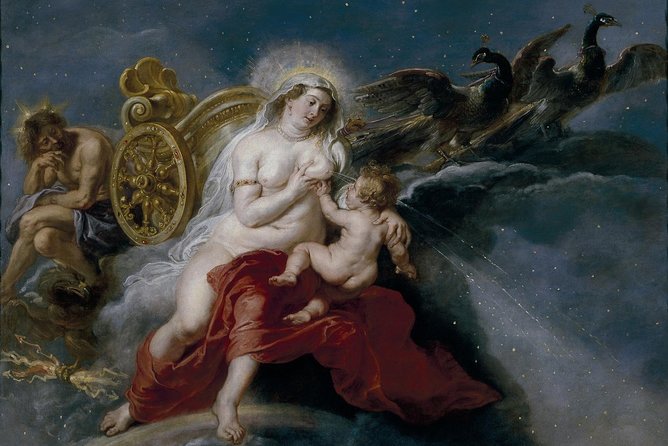
Later sections introduce Bartolomé Esteban Murillo and Francisco Goya, among others. These artists help carry the story toward the 19th century and Romanticism.
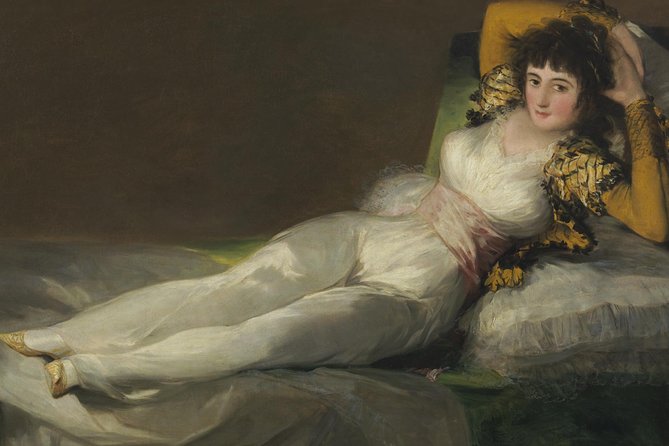
Murillo’s work can open discussion of warmth, tenderness, religious imagery, and the appeal of softer human expressions. Goya, by contrast, gives the tour a darker and more complex finish. His art can reflect war, social criticism, fear, private vision, and the unstable world of his time.
Because the meeting point is at a monument to Goya, his presence has a practical link to the beginning and end of the experience. Inside the museum, the guide can show how Goya moved beyond simple court portraiture and developed a more personal, searching way of looking at society.
I find Goya especially valuable at the end of a highlights route because his work helps you understand why the Prado’s story does not stop with idealized religious and royal images. The collection also includes unease, satire, violence, and psychological depth.
A short visit cannot cover every important Goya painting or every period of his career. That is one of the tour’s limits. You get a guided introduction to major figures, not the time required for a specialist study of one artist.
What the private format changes
The price is $375.05 per group of up to seven people. If your party fills all seven places, the cost works out to about $54 per person before the separate museum admission. For a couple, the per-person cost is much higher, so the value depends heavily on group size and how much you want personal attention.
For a family of four, three generations, or a group of friends, the calculation is more favorable. You are paying for a private guide rather than joining strangers, and the guide can respond to your group’s pace. That is especially useful when one person is an art enthusiast and another is new to museums.
I would compare this price with what you want from the visit. If your plan is simply to see a few famous paintings and leave, a private guide may feel expensive. If the Prado is a major part of your Madrid visit, the extra cost buys structure, explanation, and a chance to ask questions without holding back in a larger group.
The private format also helps with mixed ages. The experience is open to participants from age six, and the guide can adapt for children. Several accounts describe families with young daughters, teenagers, college-age children, parents, and grandparents all staying involved.
That does not mean every child will love two and a half hours of art. You know your own group best. The useful point is that this tour is better suited to family discussion than a silent audio guide or an unplanned march through gallery after gallery.
How the audio equipment helps
The tour includes guide audio equipment for clearer listening in noisy rooms. This is a small feature, but it has real value in a popular museum.
Without some kind of listening support, you may need to stand close to the guide, strain to catch the explanation, or miss part of a sentence when other groups pass nearby. The equipment lets you pay attention to the painting rather than the sound around you.
It also helps a private group stay together. You can stand at a reasonable viewing distance and still follow the explanation. That is useful when several people have different heights, mobility needs, or preferred viewing positions.
The tour is described as suitable for most participants, and it is near public transportation. No specific accessibility route or seating plan is provided, so you should ask the operator directly about any particular mobility or support needs before booking.
The main limitation: admission is separate
The largest practical catch is that the Prado ticket is not included. The tour price covers the licensed art historian guide, private service, and audio equipment, but not museum entry.
You should account for that cost before deciding that the group price fits your budget. The provided information does not give the current admission amount, so check the ticket price and entry instructions at the time of booking.
This arrangement is not unusual for a museum tour, but it does mean you have one more detail to manage. Do not arrive assuming the $375.05 covers the entire outing.
The tour is booked, on average, 44 days in advance. That suggests you should reserve early if your Madrid dates are fixed, especially if you want a particular guide such as Irina or Hernan Satt. A request may not guarantee a specific person, so confirm that point when booking.
Free cancellation is available up to 24 hours before the start time for a full refund. Cancellations or changes made less than 24 hours before the experience are not accepted for a refund, with cut-off times based on Madrid’s local time.
Who will get the most from this Prado visit
I would choose this tour if you want the Prado to feel understandable rather than merely impressive. It suits first-time museum visitors, couples who want a focused introduction, and families who need a guide to keep several age groups engaged.
It is also a good fit if you have already visited the Prado but felt you missed the point. A second visit with a strong guide can feel very different, particularly when the route is organized around connections among Velázquez, Goya, El Greco, Bosch, Titian, Ribera, and Murillo.
Art students and serious specialists may find the highlights format too broad. The guide offers in-depth commentary, but the schedule still has to cover a wide range of artists in 150 minutes. If you want a single-artist study or a detailed look at every major room, you need more time than this tour provides.
I would also think twice if your group is very small and price-sensitive. The private setup offers comfort and flexibility, but the value improves as you get closer to the seven-person limit.
Should you book the Private Tour through Prado Museum Highlights?
Book it if you want a clear, personal introduction to one of Europe’s great painting collections, and especially if you are visiting with family or friends. The strongest features are the private format, the art historian guide, the adaptable route, and the clear listening equipment.
The 4.9 rating from 309 reviews and 99 percent recommendation figure support the idea that the guiding is consistently strong, with Irina and Hernan Satt receiving particular praise for making the art lively, organized, and easy to follow.
Skip it if you prefer to wander alone, already know the Prado well, or want to keep costs as low as possible. Remember to add museum admission to the $375.05 price.
For most first-time visitors, I would consider this a sensible splurge. Two and a half hours is long enough to give the Prado a useful framework, but short enough to leave you with energy for Madrid’s other museums, plazas, and cafés.
FAQ
How long does the Prado tour last?
The tour lasts approximately 2 hours and 30 minutes.
What does the tour price include?
The price includes a licensed art historian guide, a private tour for your group, and guide audio equipment for clearer listening in noisy rooms.
Is the Prado Museum admission ticket included?
No. The Prado Museum ticket is not included in the tour price.
How many people can join the private tour?
The price covers a private group of up to seven people.
What language is the tour offered in?
The tour is offered in English.
Where does the tour begin and end?
The tour begins at the Goya Monument on Calle de Felipe IV in Madrid’s Retiro district and ends back at the meeting point.
Can children join the tour?
Yes. The minimum age is six years old, and the guides adapt the experience to suit families and different levels of museum experience.
Recently added in Madrid
- Tickets for the Authentic Flamenco Show at the Madrid Theater★ 4.5 · 301 reviews
- Flamenco Show at the Tablao de la Villa Madrid★ 5.0 · 302 reviews
- Half Day tour to Toledo from Madrid optional Santo Tome Church★ 4.5 · 303 reviews
- Tour “Madrid of the Austrias” | Old Town ❤️★ 5.0 · 304 reviews
- Madrid City Guided Bike/E-Bike Tour for Small Groups★ 4.8 · 308 reviews
- Segway Private Tour in the Historic Center of Madrid★ 5.0 · 310 reviews
- Prado Museum with Reina Sofia Museum Guided Tour★ 4.0 · 311 reviews
- 1h Ax Throw★ 5.0 · 311 reviews
Prado & Madrid Museum Tours, compared.


Small Group of Prado Museum Tour & Optional Tapas
Read the review →
Prado Museum Guided Tour with Skip-the-Line Ticket
Read the review →
Prado Museum Small Group Tour with Skip the Line Ticket
Read the review →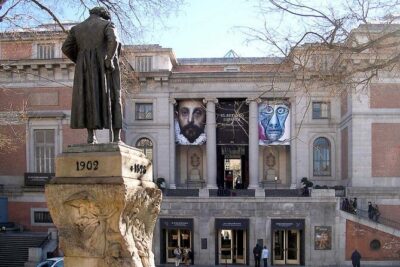
Royal Palace & Prado Museum Skip the Line Guided Tour
Read the review →
Browse the lists this tour appears in