
Reviewed · CORDOBA TOURS
Medina Azahara Guided Tour
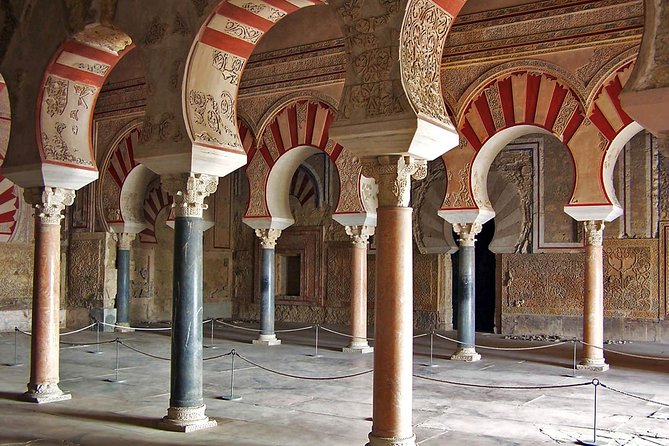
Medina Azahara is one of Córdoba’s most rewarding side trips: a vast 10th-century palace-city where broken walls, carved stone, and carefully planned terraces hint at the power of the Caliphate. A guide helps you picture what the ruins once meant, rather than leaving you to read labels and guess.
I like the choice of central bus transport or free parking, and I like that the visit includes both the archaeological site and its interpretation center. Guides such as Maria, Alejandro, Joaquin, Ana, and Fran have made the past clear and lively for many groups. The main concern is organization: the bus meeting point and guide can be hard to identify, and outdoor conditions matter.
- See Córdoba’s 10th-century seat of government, not just another monument in the old town.
- Choose your transport, with a reserved bus option or free parking if you drive.
- Learn from an art historian guide, with guides including Maria, Alejandro, Joaquin, Ana, and Fran.
- Visit the interpretation center, which displays objects found during excavation.
- Allow three hours, including the shuttle from the museum area to the ruins.
- Wear sturdy shoes and carry water, since much of the visit is outside and exposed to sun, wind, or rain.
Why Medina Azahara Deserves Three Hours
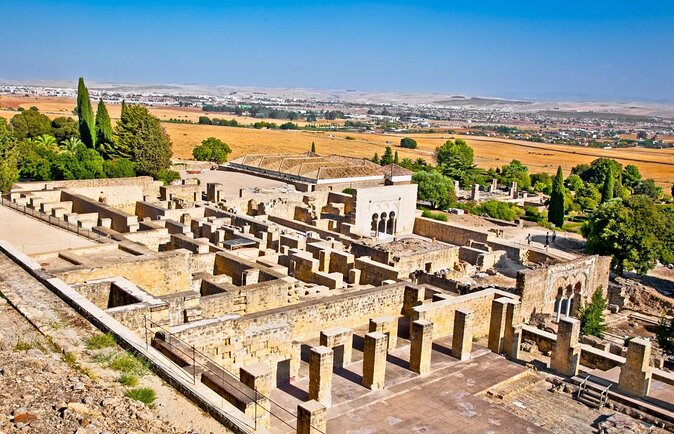
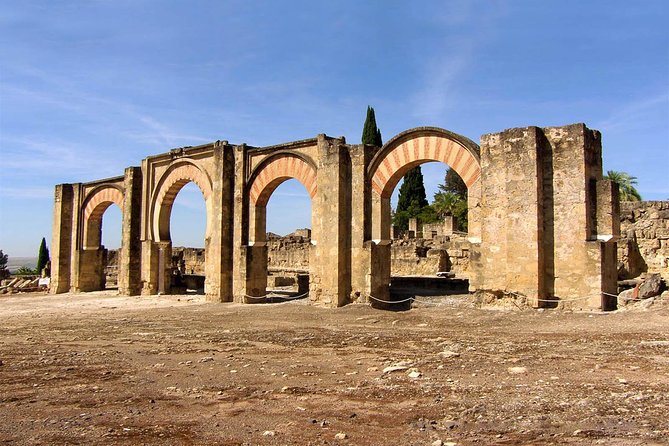
Córdoba’s famous Mezquita draws nearly all the attention, but Medina Azahara adds a different piece to the city’s Muslim past. This was not simply a palace or country retreat. It was built as the seat of government for the Caliphate of Córdoba in the 10th century, with administrative, ceremonial, and residential areas arranged across a hillside site.
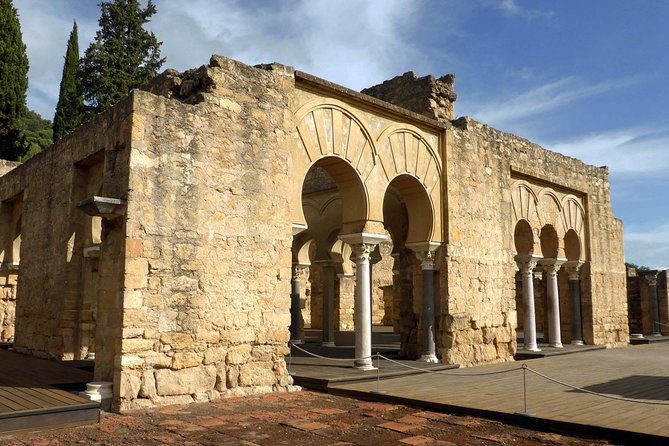
What you see today is only part of the original city. Excavation and restoration continue, so some sections look like carefully rebuilt rooms while others remain low walls and scattered stones. That unfinished quality is not a flaw, but it does affect how you experience the place. You need a guide to connect the fragments.
The tour runs for about three hours. That is enough time for a structured introduction without turning the outing into an all-day commitment. I would not treat it as a quick photo stop, though. The value comes from hearing how the site was planned, how archaeologists interpret the remains, and what the recovered objects reveal about daily and official life.
Getting There From Córdoba
You have two practical choices. The first is the bus-included option, which requires a reservation and a meeting point in Córdoba between Hotel Eurostars Palace and the Red Cross Hospital. Your guide meets you there, and the bus takes you out toward the facilities.
The second option is to drive directly to Medina Azahara. Parking is free, which makes this the sensible choice if you already have a car or are combining the visit with other stops outside Córdoba. You still use the site shuttle from the museum area to the archaeological settlement, since the transport is part of the visit arrangement.
The bus option removes the need to work out the route yourself, and it is especially useful if you are staying in central Córdoba without a car. The weak point is the meeting process. Give yourself extra time, look carefully for the guide, and do not assume the first bus or group you see is yours. One group had to ask around before finding the right guide, while another experienced a delay before the bus left.
The bus itself may not be the polished part of the outing. One account described an older vehicle with a moldy smell. That appears to be an occasional transport issue rather than the focus of the experience, but it is fair to keep expectations modest.
A few other Cordoba outings to compare
- Córdoba: Skip-the-Ticket-Line Mosque-Cathedral Guided Tour
★ 4.6 · 9,634 reviews - Cordoba Mosque-Cathedral: Skip-the-Line Guided Tour
★ 4.7 · 6,610 reviews - Cordoba: Mosque-Cathedral E-Ticket with Audio Guide
★ 4.1 · 2,124 reviews
Walking Through the Palace-City
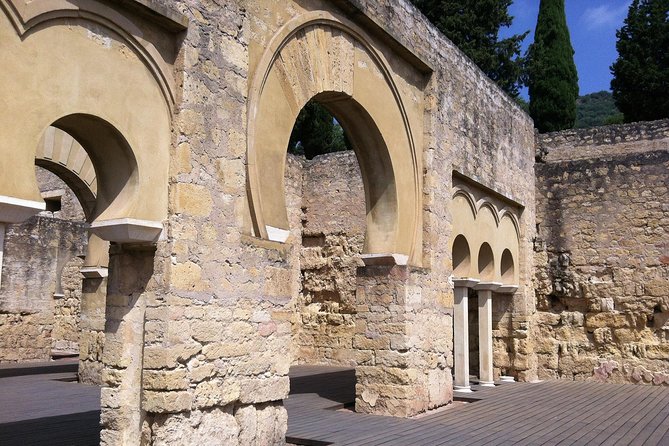
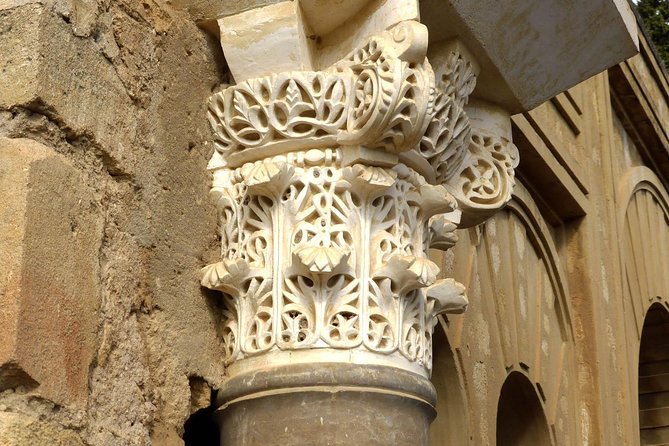
At the archaeological site, the guide leads you through the remains of Medina Azahara and explains how the palace-city functioned. The strongest part of the experience is the way a good guide supplies scale and purpose. Without that help, you may see walls, columns, and foundations without understanding which spaces were ceremonial, administrative, or domestic.
Guides Maria and Almudena are praised for making the site approachable and easy to follow. Alejandro is singled out for his historical stories and clear English, while Fran is noted for explaining both the excavation process and the events connected with the site. These names matter because the tour’s quality depends heavily on the person leading it.
The guide-led format also gives you a chance to ask questions. Carlos, for example, made time for questions and helped the group feel at ease. That personal contact is useful at an archaeological site, where a short question about a wall or carved detail can change the way you see the whole area.
The tour group can have up to 25 people. That is small enough for a proper guided visit, though not intimate by default. Group size will affect how easily you hear and how much time you have to ask questions. An audio system worked well for one group, which is helpful in open spaces, but you should still stay close enough to follow the guide.
What the Ruins Can and Cannot Show You
Medina Azahara is fascinating, but it is not a fully restored palace. Much remains underground or in fragmentary form, and restoration is still underway. You will need imagination. The setting makes sense as a former seat of power, yet the grandeur must be reconstructed from foundations, surviving architectural details, and the guide’s explanation.
That can be especially difficult in poor weather. A cold, wet, windy day may make the site feel bare and uncomfortable, and the remains will not offer much shelter. On the other hand, even mild autumn weather can feel hot in the open. Carry water and wear comfortable shoes. One October visit was uncomfortably warm, so do not judge the conditions by the calendar alone.
The best way to approach the ruins is as an active archaeological site rather than a finished monument. If you want complete rooms, intact decoration, and a short indoor visit, this may disappoint you. If you enjoy seeing how a major site is gradually recovered and interpreted, the unfinished sections add interest.
I also like that the visit does not stop at the ruins. The interpretation center holds a collection of ancient objects recovered from the site. It gives you a more concrete sense of the people and material culture connected with Medina Azahara, and it provides a welcome indoor part of the outing after time in the sun or rain.
The Interpretation Center Adds Needed Context
The interpretation center is smaller than the archaeological settlement, but it plays an important role. Objects recovered during excavation help bridge the gap between a broad historical explanation and the physical evidence found at the site.
The building itself has been described as beautifully designed, and the collection is considered small but useful. I would not expect a major museum visit, yet the center gives the tour a proper ending. You see the ruins first, then encounter objects that help explain what archaeologists have found and preserved.
Facilities are not perfect. The bathrooms at the center have needed better care, so this is not a luxury stop. Still, the center improves the visit, especially if you have little background on the Caliphate of Córdoba or on archaeological methods.
Same city, a completely different evening:
- Córdoba: Jewish Quarter, Mosque, and Alcázar Tour
★ 4.7 · 4,279 reviews - Cordoba: Equestrian Show General Entry
★ 4.5 · 2,333 reviews - Cordoba Mosque & Jewish Quarter Tour with Tickets
★ 4.6 · 1,996 reviews - Cordoba: Alcazar Guided Tour and Skip-the-Line Ticket
★ 4.2 · 1,792 reviews
Guide Quality Makes the Difference
This is a guide-dependent tour. The site is broad, partly excavated, and not self-explanatory. A strong guide can turn a pile of stones into a readable plan of government, ceremony, and power. Several guides have been praised for clear explanations, good pacing, humor, and a willingness to answer questions.
Maria appears repeatedly as a friendly and effective guide. She has been described as funny, helpful, and full of historical detail. Alejandro is a particularly good choice for anyone who wants strong storytelling and clear English. Joaquin has also been praised for accessible explanations and practical help.
Language deserves a note. The experience is offered in English and described as monolingual, but one account said the tour was available only in Spanish. English pronunciation was also difficult for one guide, although it did not spoil the visit. If language is essential to your decision, confirm the scheduled language before setting out.
That small precaution matters because three hours is a long time to spend with explanations you cannot follow. When the English is clear, the tour becomes much more valuable than walking around on your own. When communication is less smooth, the visit can feel long.
Price, Group Size, and What You Receive
At $30.25 per person, the tour is reasonably priced if you need transport and want a guide. Admission is included, as is the shuttle between the museum and archaeological site. For someone without a car, the bus option adds real convenience.
The advertised highlights also identify a drink and snack as included. However, one participant did not receive them and specifically advised not to count on that extra. I would bring your own water and a small snack, especially in warm weather, and treat the refreshment as a possible bonus rather than the reason to book.
The group limit is 25 people. That keeps the tour from becoming a huge crowd, but it does not guarantee a private feel. In one unusual case, only two people joined, creating an almost private visit. That kind of small group cannot be expected, but it shows how much the experience can improve when the group is compact.
The tour is a good value for first-time visitors to Medina Azahara. You pay for site entry, transport choices, and an expert-led explanation in one package. It is less compelling for someone who already has strong background knowledge and wants a slow, independent wander, especially since one group wished for an extra hour to explore alone.
Timing, Comfort, and Practical Tips
You should plan on the full three hours, including transport and the interpretation center. The schedule is structured, so this is not the best choice if you want to linger at every wall or take a long break for photographs.
Wear comfortable shoes. The advice is simple but important, since the visit involves walking around an outdoor archaeological site. Bring water, sunscreen, and weather protection based on the day’s forecast. Cold rain and strong wind can make the outing unpleasant, while bright sun can become tiring even outside the hottest months.
The tour requires a moderate level of physical fitness. It is not presented as a strenuous hike, but you should be comfortable walking around an exposed historic site for much of the visit. Service animals are allowed.
Plan your meeting point carefully if you select the bus. The departure area is between Hotel Eurostars Palace and the Red Cross Hospital, and the booking requires a prior reservation. Since identifying the guide has caused confusion for some groups, ask for the guide’s name and exact meeting instructions before the start time.
Cancellation is flexible enough for normal holiday planning. You can receive a full refund if you cancel at least 24 hours before the experience begins. Changes or cancellations inside that window are not accepted for a refund.
Who Will Get the Most From This Visit
I recommend Medina Azahara to you if you have already seen Córdoba’s central monuments and want to understand the city’s wider Muslim past. It also suits anyone who enjoys archaeology, political history, architecture, or places that are still being uncovered.
The tour is especially useful if you are unsure how to reach the site or do not want to rent a car. The bus option keeps the outing simple, and the guide gives the ruins a clear framework.
Families with older children may enjoy it, provided they can manage three hours of walking and outdoor conditions. The stories of a palace-city and a powerful government center can be more engaging than a silent ruin, but the site does not offer constant visual spectacle.
I would think twice if you want a polished, fully reconstructed attraction, a completely independent visit, or a guaranteed short outing. I would also avoid booking on a day forecast to be cold, wet, and windy unless Medina Azahara is a high priority.
Should You Book Medina Azahara?
Yes, if you want to see a less familiar side of Córdoba and are willing to use your imagination. The strongest reasons to book are the excellent guide potential, the useful combination of ruins and interpretation center, and the choice between bus transport and free parking.
Book with realistic expectations. This is an archaeological site, not a restored palace, and the quality of the day depends on clear English, smooth meeting arrangements, and the weather. Confirm the tour language, arrive early at the bus stop, bring water, and do not rely on the promised snack.
For most visitors, the guide makes the difference. A visit with Maria, Alejandro, Joaquin, Ana, Fran, or another strong art historian can transform scattered remains into a memorable picture of Córdoba’s 10th-century power. If you have three hours to spare, Medina Azahara is a worthwhile addition to your Córdoba plans.
FAQ
How long does the Medina Azahara guided tour last?
The experience lasts approximately three hours. This includes the guided visit to the archaeological site and the interpretation center, along with the site shuttle.
Is transportation from Córdoba included?
You can choose an option that includes a bus from Córdoba. The meeting point is between Hotel Eurostars Palace and the Red Cross Hospital, and you need a prior reservation. You can also drive to Medina Azahara yourself, where parking is free.
Is the tour offered in English?
English is listed as an available language, and the tour is described as monolingual. Because one experience was reported as Spanish-only, confirm the language for your chosen departure before booking.
Is admission to Medina Azahara included?
Yes. Admission to the site is included, as is the shuttle bus from the museum area to the archaeological site.
Does the tour include food and drinks?
The highlights identify a drink and snack as included, but the included-items information says food and drinks are not included unless specified. Since one group did not receive the advertised snack and drink, bring your own refreshments and confirm this detail before departure.
Can I cancel for a full refund?
Yes. You can cancel at least 24 hours before the experience start time for a full refund. Cancellations or changes made less than 24 hours before the start are not accepted for a refund.
Recently added in Cordoba
- Córdoba: Tablao Flamenco at Doble de Cepa with Optional Meal★ 4.4 · 197 reviews
- Patios of Cordoba Walking Tour★ 4.4 · 199 reviews
- Cordoba: Medina Azahara Museum and Archaeological Site Tour★ 4.8 · 199 reviews
- Cordoba Flamenco Show at Tablao El Cardenal with a Drink★ 4.5 · 210 reviews
- City Sightseeing Cordoba Hop-On Hop-Off Bus Tour★ 4.0 · 213 reviews
- Cordoba Monuments Intensive Tour in English Tickets included★ 4.5 · 214 reviews
- Guided visit to Medina Azahara★ 5.0 · 229 reviews
- Córdoba: Local Wine Tasting Evening★ 4.9 · 234 reviews
Cordoba Tours, compared.
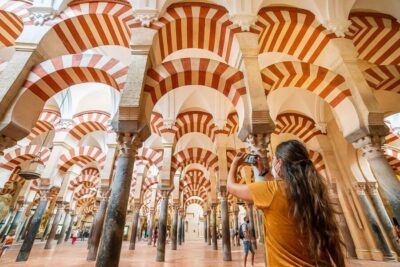
Skip-the-Ticket-Line Mosque-Cathedral Guided Tour
Read the review →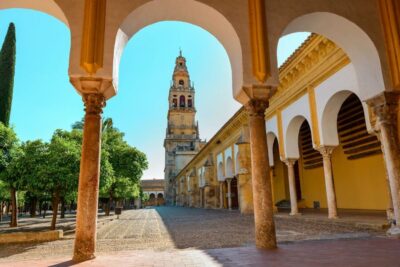
Cordoba Mosque-Cathedral: Skip-the-Line Guided Tour
Read the review →

Cordoba Mosque & Jewish Quarter Tour with Tickets
Read the review →
Skip-the-Line Great Mosque-Cathedral History Tour
Read the review →Browse the lists this tour appears in