
Reviewed · CORDOBA TOURS
Mosque-Cathedral of Cordoba Guided Tour
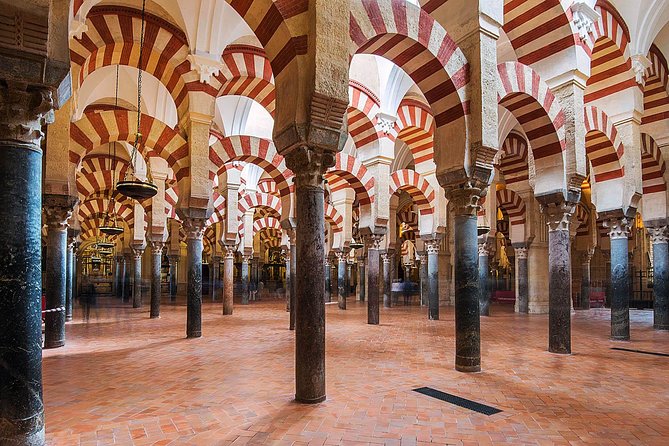
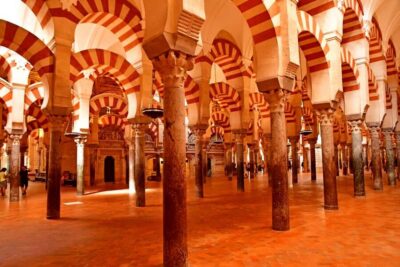
The Mosque-Cathedral of Córdoba is the sort of place that can leave you staring upward for several minutes before you remember to move. Rows of red-and-white arches seem to run forever, yet the building also contains a Christian cathedral, older archaeological remains, and layers of political and religious change. A 90-minute guided visit gives you a clear path through all of it.
I like the included admission ticket and the chance to hear the story from an art historian rather than trying to piece it together from a guidebook. I also like the range of departure times. The main concern is crowding: skip-the-line entry may still involve a wait, and one unhappy experience included poor headphones and a guide who moved too quickly.
Key points to know before booking
- The tour follows centuries of change: You begin with the remains of the Visigothic basilica of San Vicente, then move through the early mosque, later expansions, and the Christian cathedral.
- Your guide shapes the experience: Guides named María, Fatima, Saray, Patricia, Ivan, Rebecca, and Ana have been praised for clear explanations, warmth, and enthusiasm.
- The tour lasts about 90 minutes: That is enough time for a well-organized introduction, but the huge building rewards extra time if you can return or explore independently.
- Skip-the-line does not mean instant entry: A wait is still possible, especially during busy periods and holidays.
- Crowds can affect the sightseeing: You may need to stand close to your guide and move between busy areas rather than pause wherever you like.
- The meeting point is easy to identify: Begin at the Palacio de Congresos y Exposiciones de Córdoba on Calle Torrijos, then finish at the Mosque-Cathedral site.
Why Córdoba’s Mosque-Cathedral demands a guide
You can walk into the building and admire the arches on your own. You can also spend an hour wondering why a cathedral is sitting inside a former mosque, why pieces of an older church appear below, and how the structure became so large.
That is where a guide earns the fee. The building is not one clean architectural statement. It is a sequence of additions, changes, and decisions made by rulers who wanted to enlarge, replace, or Christianize what came before. Without a guide, the visual effect is powerful but the story can feel scattered.
The tour begins with the remains of the Visigothic basilica of San Vicente. From there, the explanation moves to the mosque commissioned by Emir Abderraman I and then through successive extensions, including the work associated with the period of Almanzor. The route later turns to the Christian conquest and the conversion of the mosque into a cathedral.
You are not simply looking at old stone. You are watching Córdoba change through architecture.
A few other Cordoba outings to compare
- Córdoba: Skip-the-Ticket-Line Mosque-Cathedral Guided Tour
★ 4.6 · 9,634 reviews - Cordoba Mosque-Cathedral: Skip-the-Line Guided Tour
★ 4.7 · 6,610 reviews - Cordoba: Mosque-Cathedral E-Ticket with Audio Guide
★ 4.1 · 2,124 reviews
Starting at the Palacio de Congresos
The listed meeting point is the Palacio de Congresos y Exposiciones de Córdoba, at Calle Torrijos 10 in the historic center. The tour ends at the Mosque-Cathedral Monumental Site on Calle Cardenal Herrero 1.
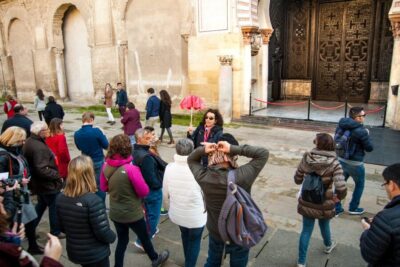
That arrangement matters. You do not begin at the monument entrance, so give yourself enough time to find the Palacio de Congresos. Your mobile ticket and booking confirmation should be ready at the start. The activity is offered in English, and the group can include up to 25 people.
A group of 25 is not tiny, but it is manageable for a strong guide. In practice, the quality of the visit depends partly on how well the guide handles stops, questions, and the building’s busy interior. Several guides, including María, Fatima, Saray, Patricia, Ivan, and Rebecca, have been praised for making complicated material easy to follow.
The route is not described as a walking tour through Córdoba’s streets. It focuses on the Mosque-Cathedral itself, although one experience also included the Jewish Quarter and an archeologist. Treat the standard tour as a monument visit unless your booking specifically says otherwise.
The Visigothic basilica beneath the monument
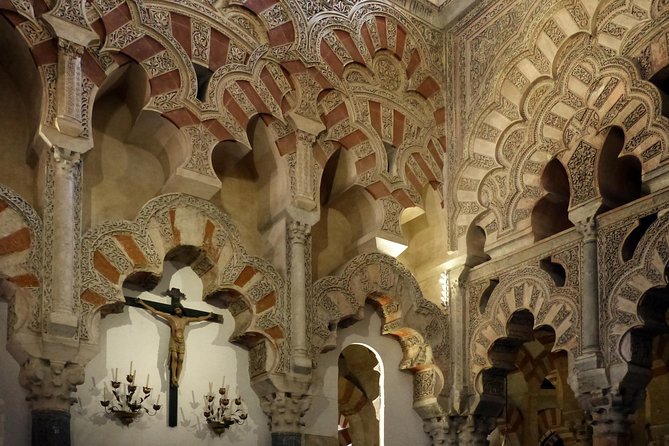
The first historical layer is the old Visigothic basilica of San Vicente. Remains of it are still preserved within the monument, offering a useful starting point for understanding how the site developed.
This is an important moment in the tour because it prevents you from seeing the mosque as an isolated building. The structure occupies a place that had already served as a Christian site. Your guide explains how those earlier remains relate to what came later, giving the building a physical sequence rather than a list of dates.
The archaeological pieces may not have the instant visual punch of the famous arches. Still, they help you read the building. Look for the way the surviving fragments sit below or among later construction. The point is not just to identify an old wall. It is to see how one sacred site was repeatedly adapted.
Abderraman I and the early mosque
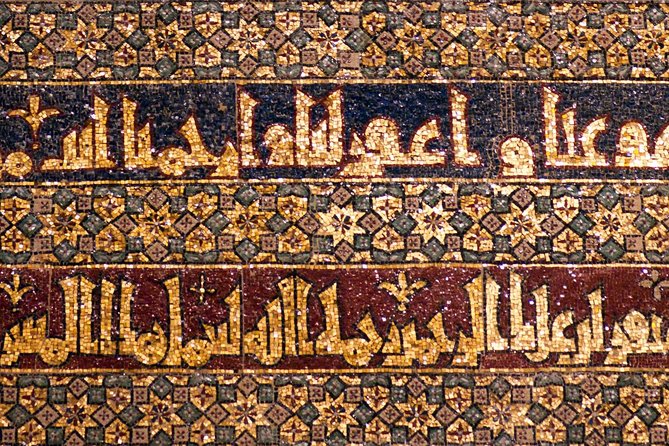
The next stage is the mosque built by Emir Abderraman I. This is where the building’s most recognizable visual language begins to take shape.
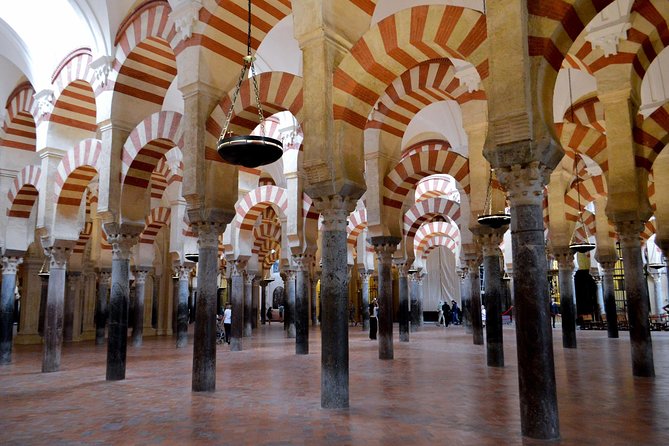
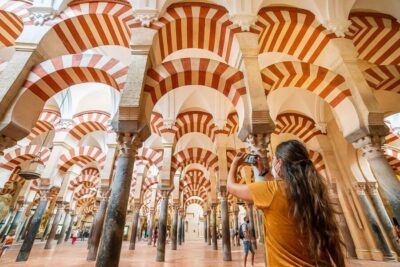
The red-and-white arches are the feature most people expect, but a guide can show you how the construction works and how the early mosque differs from later additions. The repeated arches create a strong sense of order, yet their sheer number can make the interior feel almost unreal.
This is also the place to listen for the connection between political power and building projects. The mosque was not merely a place for worship. Its size and design expressed the authority of the ruler who commissioned it. A guide can connect the architecture to the decisions behind each expansion instead of reducing the site to pretty patterns.
The tour’s art historian guides are especially useful here. Several praised guides have explained both the architecture and the art, not just the dates. That broader approach helps you understand why the interior looks the way it does.
Same city, a completely different evening:
- Córdoba: Jewish Quarter, Mosque, and Alcázar Tour
★ 4.7 · 4,279 reviews - Cordoba: Equestrian Show General Entry
★ 4.5 · 2,333 reviews - Cordoba Mosque & Jewish Quarter Tour with Tickets
★ 4.6 · 1,996 reviews - Cordoba: Alcazar Guided Tour and Skip-the-Line Ticket
★ 4.2 · 1,792 reviews
The expansions through the Almanzor period
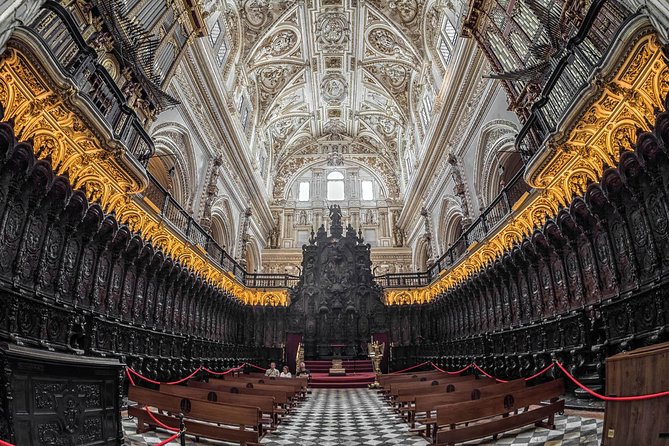
The mosque did not reach its final size in one step. The route follows later expansions, including the enlargement associated with Caliph Al-Hakam II and the final growth during the Almanzor period.
These additions can be difficult to separate at first. The repeating arches make the entire interior look unified, even though different areas belong to different building phases. This is one of the strongest reasons to take the guided tour. Your guide can point out changes in design, materials, and purpose that you might miss while wandering.
The Al-Hakam II expansion is particularly important in the explanation because it later affected how Christian worship took place inside the converted building. The tour connects the enlargement of the mosque with the later use of adjoining spaces for liturgical celebrations.
You will hear plenty of dates and names. That can be useful, but the best guides turn those facts into a story. Fatima, Saray, María, Patricia, and Ivan were praised for clear delivery, humor, enthusiasm, and the ability to make the site feel understandable rather than academic.
From mosque to cathedral
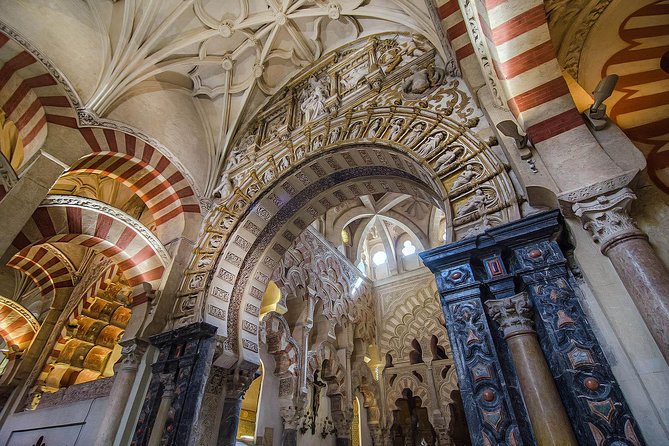
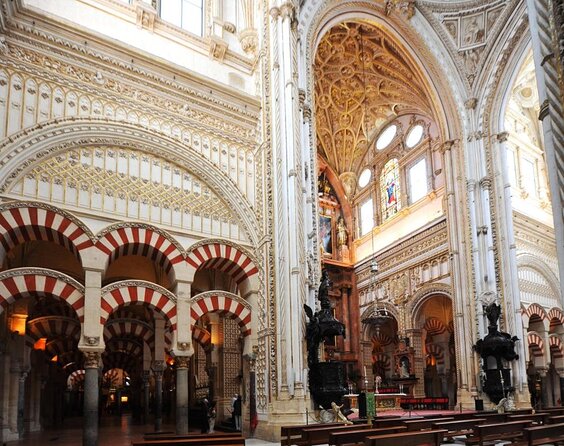
After Córdoba was conquered by a Christian army, the mosque became a cathedral. That change did not erase the earlier building. Instead, the Christian structure was inserted into it, creating the unusual combination you see today.
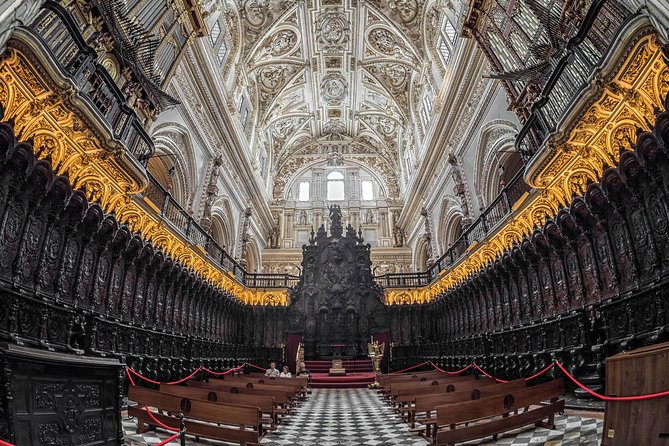
The existing cathedral transept is a major part of the explanation. Its scale and form contrast sharply with the lower, repeating rhythm of the mosque. The result can look visually awkward in places, but that awkwardness is part of the point. You are seeing two different religious and architectural programs occupying the same monument.
The tour also explains how areas of the mosque were used for Christian liturgical celebrations after the conversion. The Christian additions are not a small footnote. They alter the way you read the entire space.
I find this part of the visit most rewarding when the guide avoids simplistic claims about harmony or conflict. The building reflects conquest, adaptation, devotion, and changing power. It can carry several meanings at once. Rebecca’s tour was praised for giving context about the people who built the monument, while Saray was praised for connecting the architecture with personal and cultural insight.
What the 90-minute route feels like
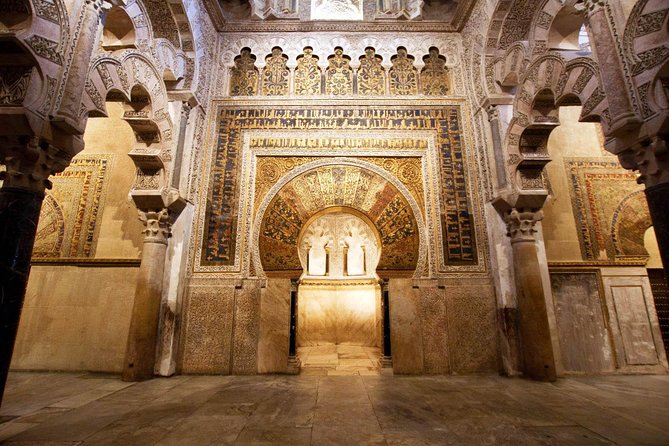
Ninety minutes is a sensible length for a first visit. It is long enough to cover the main stages without turning into a full-day lecture. The pace is generally manageable, and one account specifically described the visit as well paced for someone with walking difficulty.
Still, the building is so large that you will see only part of its details. One guide described the tour as covering a small percentage of the monument, which is a fair warning. You receive a guided framework, not an exhaustive examination of every chapel, arch, inscription, and decorative feature.
The tour is most effective if you treat it as your introduction. Listen closely, identify the sections you want to revisit, and then allow extra time afterward if the conditions permit. One negative experience reported that the guide required the group to leave at the end rather than letting participants remain inside. Since the supplied tour details do not promise independent time after the guided portion, you should not book it on the assumption that you can automatically stay inside.
Photography can also be a practical issue. The building offers endless details worth capturing, but a moving group cannot stop for every picture. If you care deeply about photography, choose a quieter time and ask your guide early how much time you will have at stops.
Crowds, headsets, and the skip-the-line promise
The phrase skip-the-line sounds simple, but you should read it as a time-saving feature, not a guarantee of walking straight inside. One English-language tour still encountered a long entrance line. Busy periods and holidays can create congestion, and even a November Friday morning at 10:00 was described as crowded.
Inside, groups may overlap. Several parties can reach the same famous areas at nearly the same time, making it hard to hear or find a clear place to stand. One guide managed the problem well, but the crowd still made the visit harder.
Headsets are supplied or used on some departures. Audio quality appears to vary. One experience praised the earphone sound, while another found the headphones so poor that the guide was difficult to hear. If you struggle with low-volume audio, stand near the guide and raise the issue promptly rather than waiting until the group has moved on.
You can improve your odds by choosing a less busy departure. The available schedule includes multiple start times, and an afternoon departure around 4:00 was recommended in one account. Another person advised going early in the morning. The exact best time will depend on the day, but the useful lesson is clear: avoid assuming that the first available slot will be quiet.
How much value do you get for $35.07?
At $35.07 per person, this is not the cheapest way to enter the Mosque-Cathedral. One dissatisfied participant felt the tour cost considerably more than a regular admission ticket and expected more freedom after the guided portion.
You are paying for more than entry. The price includes a guided explanation in English, an art historian guide, and an included admission ticket. The real value comes from understanding the building’s layers without having to research the Visigothic basilica, Abderraman I, Al-Hakam II, Almanzor, and the Christian cathedral on your own.
For a first visit, I think the price can make sense if you care about history, architecture, or context. The monument is visually overwhelming, and a good guide gives you a map for what you are seeing. The value falls if you prefer to move slowly, take many photos, or listen to an audio guide at your own pace.
A self-guided visit may suit independent museum-goers better. This tour is the better choice if you want a human explanation and the chance to ask questions. The guide quality is not perfectly predictable, but the strongest accounts describe warm, clear, engaging presentations from guides such as María, Fatima, Saray, Patricia, Ivan, and Ana Delgado.
Who should book this Córdoba tour?
I would recommend it most strongly to first-time visitors who want the monument’s basic story in one sitting. You will get a clear introduction to the structure, its construction phases, and the religious changes that shaped it.
It also suits you if:
- You prefer spoken explanations to reading an audio guide.
- You want an English-language tour.
- You have limited time in Córdoba and need a focused visit.
- You enjoy architecture but want help identifying what you are seeing.
- You want a guide who can answer questions and add human detail.
- You can handle a group visit in a busy interior.
You may prefer to go independently if you want complete control over the pace. The tour can feel rushed when the building is crowded, and the group may need to keep moving. It is also not the best match if your main goal is quiet photography.
Most participants can take part, and one review found the pace comfortable for a person with walking difficulty. The group size can reach 25, so anyone needing a very personal pace should keep that in mind.
Practical details that can save you trouble
Bring your mobile ticket and arrive at the Palacio de Congresos meeting point rather than heading directly to the monument entrance. The tour ends at the Mosque-Cathedral, so plan your next activity from there.
Inside, only water is allowed according to one practical note. Men should remove their hats. Dress and behavior should respect the fact that the building remains a cathedral as well as a historic monument.
Keep your expectations realistic about the word skip-the-line. You may enter more efficiently than with a standard queue, but you can still face a wait. Also expect other groups inside, especially during holidays and popular morning periods.
Free cancellation is available if you cancel at least 24 hours before the scheduled start time. Changes or cancellations made later are not accepted for a refund, and the cut-off follows Córdoba local time.
Should you book the Mosque-Cathedral guided tour?
Yes, if this is your first time in Córdoba and you want the building to make sense rather than simply look beautiful. The architecture is unforgettable on its own, but the tour explains how the Visigothic church, the mosque, the later expansions, and the cathedral fit into one complicated place.
Book it with two cautions. Do not assume skip-the-line means no wait, and do not assume you can stay inside afterward unless your departure specifically confirms it. If you can choose, aim for a quieter time, listen for your guide at the start, and leave room in your day for more sightseeing around Córdoba.
At $35.07, it is a fair buy for a well-delivered introduction, especially with a strong guide such as María, Fatima, Saray, Patricia, or Ivan. If you already know the monument well or prefer complete independence, save the money and explore at your own pace. For most first-time visitors, the explanation is what turns a spectacular building into a memorable one.
FAQ
Where does the Mosque-Cathedral tour begin?
The tour begins at the Palacio de Congresos y Exposiciones de Córdoba, at Calle Torrijos 10 in the Centro area of Córdoba.
Where does the tour end?
It ends at the Mosque-Cathedral Monumental Site of Córdoba, at Calle Cardenal Herrero 1.
How long does the guided tour last?
The tour lasts approximately 1 hour and 30 minutes.
Is admission to the Mosque-Cathedral included?
Yes. The admission ticket is included in the tour price.
Is the tour offered in English?
Yes. The listed tour is offered in English.
How many people can join the tour?
The maximum group size is 25 participants.
Is the tour suitable for most people?
Yes. Most people can participate, and one account found the pace suitable for a person with walking difficulty.
Can I cancel for a full refund?
Yes, if you cancel at least 24 hours before the experience start time. Cancellations or changes made less than 24 hours before the start are not accepted for a refund.
Recently added in Cordoba
- Córdoba: Tablao Flamenco at Doble de Cepa with Optional Meal★ 4.4 · 197 reviews
- Patios of Cordoba Walking Tour★ 4.4 · 199 reviews
- Cordoba: Medina Azahara Museum and Archaeological Site Tour★ 4.8 · 199 reviews
- Cordoba Flamenco Show at Tablao El Cardenal with a Drink★ 4.5 · 210 reviews
- City Sightseeing Cordoba Hop-On Hop-Off Bus Tour★ 4.0 · 213 reviews
- Cordoba Monuments Intensive Tour in English Tickets included★ 4.5 · 214 reviews
- Guided visit to Medina Azahara★ 5.0 · 229 reviews
- Córdoba: Local Wine Tasting Evening★ 4.9 · 234 reviews
Cordoba Tours, compared.
Skip-the-Ticket-Line Mosque-Cathedral Guided Tour
Read the review →
Cordoba Mosque-Cathedral: Skip-the-Line Guided Tour
Read the review →
Cordoba Mosque & Jewish Quarter Tour with Tickets
Read the review →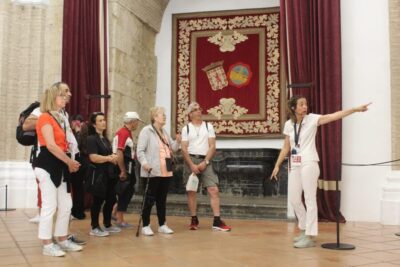
Skip-the-Line Great Mosque-Cathedral History Tour
Read the review →Browse the lists this tour appears in