
Reviewed · FLAMENCO SHOWS
Seville: Museum of Flamenco Dance Admission Ticket
Seville’s Flamenco Dance Museum gives you a quick, focused look at the art form that shaped Andalusia. Founded by celebrated dancer and choreographer Cristina Hoyos, it brings together costumes, props, artwork, and interactive displays just five minutes from the Cathedral and Giralda. I like the central location and the chance to see how flamenco changed from folk art into a major cultural institution.
I also like the museum’s attention to specific styles, including Alegría, Soleá, Seguiríya, Taranto, Tangos, and Guajira. The main catch is simple: this is a museum ticket, not a show ticket. If you want live singing, guitar, and dancing, you need to book the separate flamenco performance.
Key points to know
- Cristina Hoyos founded the museum: Her name gives the collection a direct link to one of flamenco’s most important artists.
- Five minutes from Seville Cathedral: You can fit the museum into a walking day around the Old Town.
- About one hour is enough for a first visit: You can stay longer at displays that catch your eye.
- Room 3 rewards extra time: Interactive material there can take longer than a quick walk-through.
- The ticket covers the museum only: A flamenco show is not included.
- The museum opens from 11:00 to 18:00: Last entry is at 18:00, except on the first Monday of each month, when opening begins at 16:00.
What the Flamenco Dance Museum actually offers
Flamenco can be hard to understand if you only see a short performance. The footwork is quick, the posture is proud, and the music may sound unfamiliar. This museum gives you a way to place those details in context before or after seeing a show.
The focus is flamenco dance, not a general museum about all of Spain. You move through material about its styles, clothing, stage objects, and place in Andalusian culture. That narrow focus is useful if you want more than a photograph in a ruffled dress.
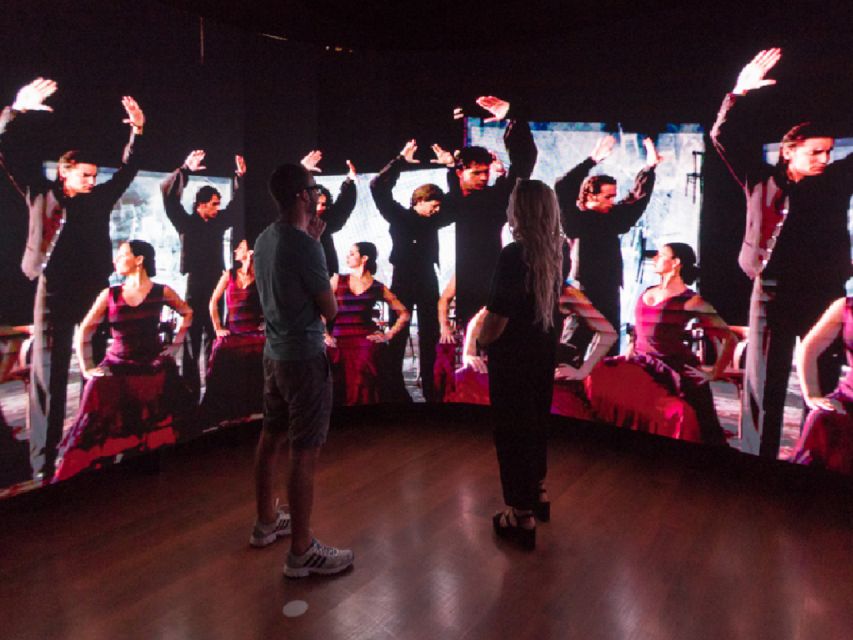
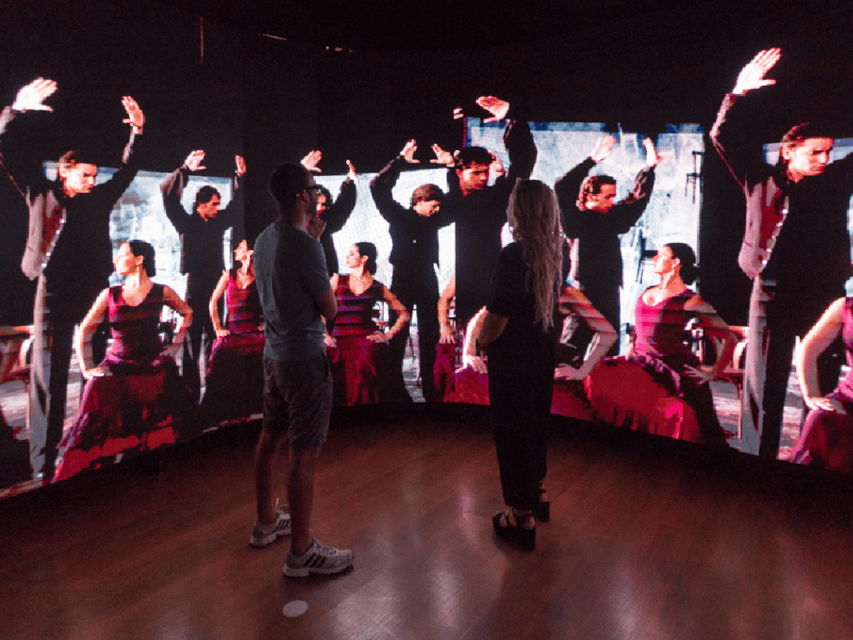
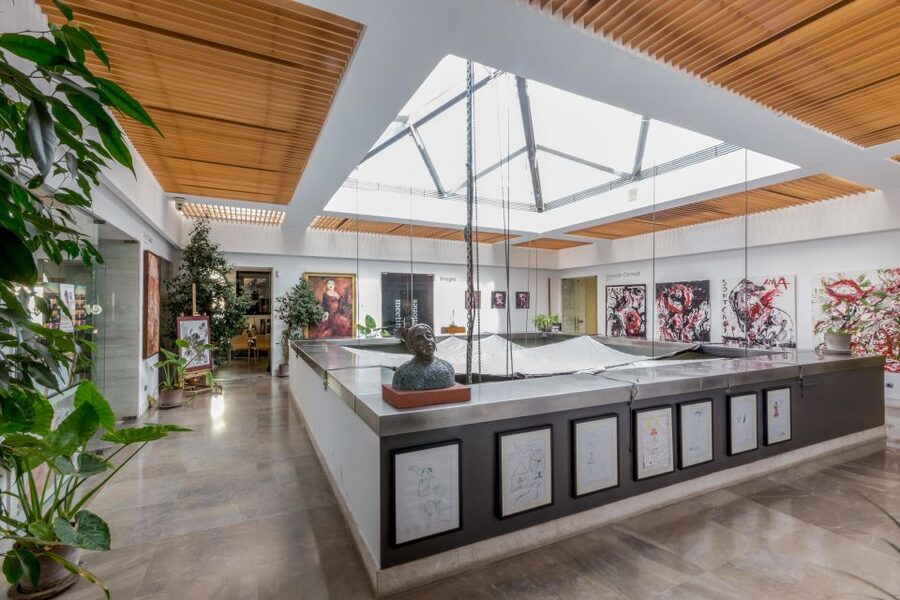
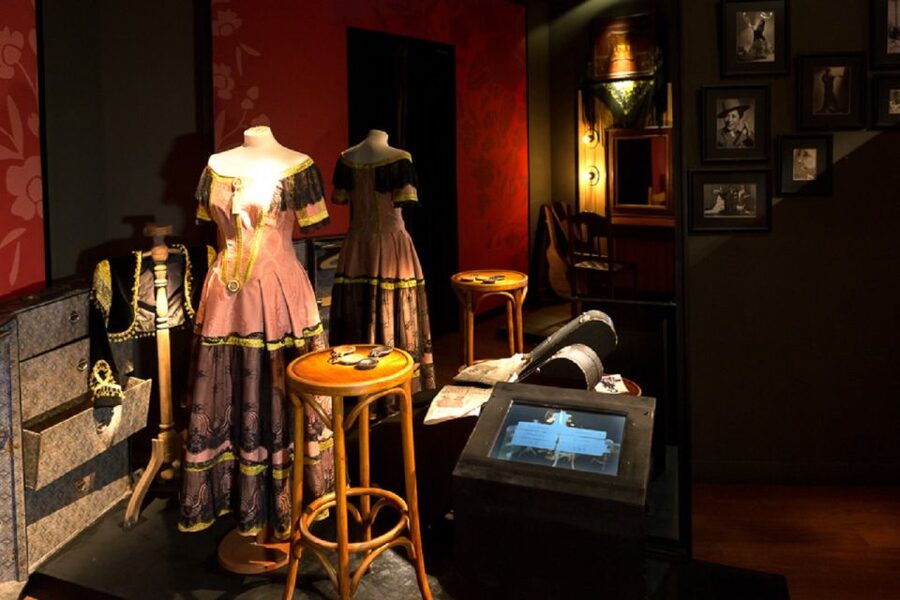
The museum uses interactive screens along with physical displays. You can examine dresses from different periods, look at props, and see artwork connected with flamenco. The combination gives the visit more movement than a row of static cases, though the quality of your experience depends on how much time you spend with the displays.
At a brisk pace, the visit takes about an hour. That makes it easy to schedule between the Cathedral, the Giralda, and other Old Town sights. If a particular display catches your attention, you can listen and explore longer, especially in room 3.
More Flamenco Shows in Seville
- Seville: Live Flamenco Dancing Show Ticket at the Theater
★ 4.7 · 16,396 reviews - Seville: Casa de la Memoria Flamenco Show
★ 4.8 · 12,964 reviews - Seville: Puro Flamenco Show with Optional Museum Ticket
★ 4.8 · 6,088 reviews
Cristina Hoyos and the museum’s central idea
The museum was founded by Cristina Hoyos, one of flamenco’s best-known dancers and choreographers. Her involvement matters because the museum is not simply presenting flamenco as a decorative Spanish souvenir. It connects the art form to a major performer who helped shape its public identity.
The central idea is evolution. Flamenco began as a popular folk art and gradually became a respected cultural institution with established styles, costumes, stage traditions, and international reach. The museum helps you see that change through objects and explanations rather than through a long academic lecture.
You will not get a full account of every person, region, or debate connected to flamenco from a one-hour visit. That is not the museum’s role. Instead, it gives you a clear starting point and helps you recognize that flamenco is made up of different forms, moods, rhythms, and visual traditions.
For first-time visitors, this distinction is important. A flamenco performance can be thrilling but fleeting. The museum slows things down and gives you time to notice details that disappear once the dancers are on stage.
The costumes, props, and artwork
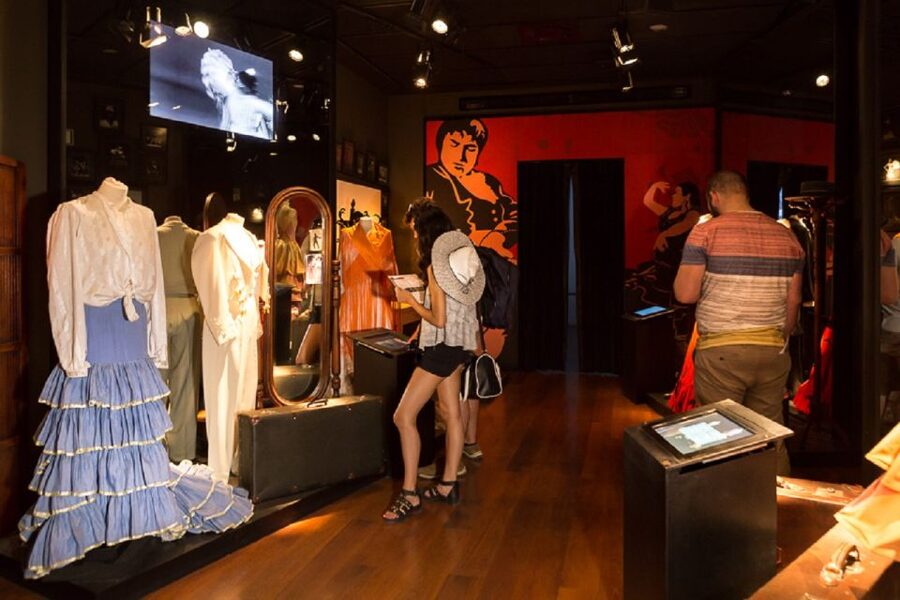
The costumes are among the most accessible parts of the museum. You can look closely at dresses and clothing from different periods, seeing how shape and decoration changed over time. These displays help explain why costume is such an important part of flamenco’s visual language.
The dresses are not just pretty objects. They affect how dancers move and how a performance looks from the audience. The sweeping fabric, fitted shapes, and small details all contribute to flamenco’s sense of control and drama. The museum lets you examine those elements without the pressure of a live performance moving on before you are ready.
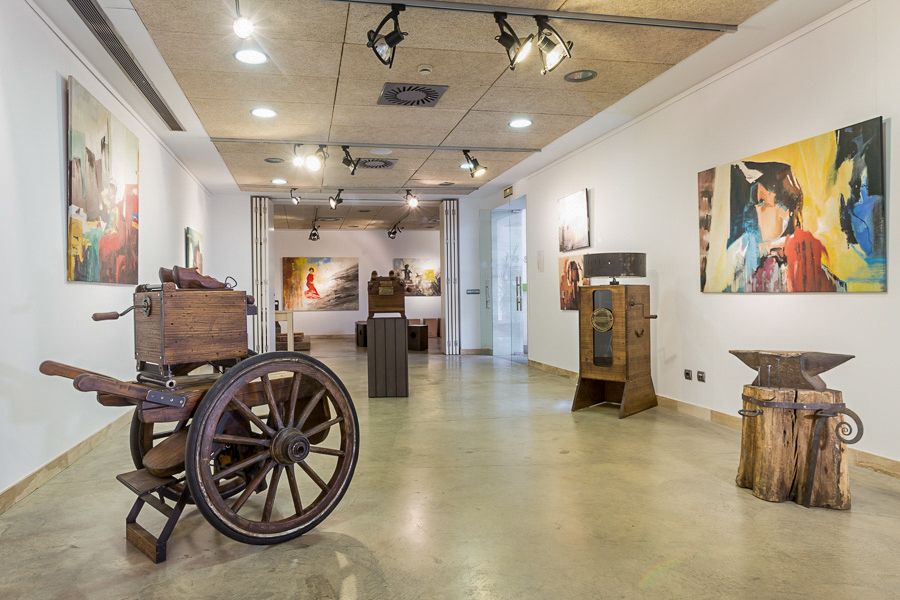
Props add another layer. The material supplied for the museum does not identify every object, so I would not promise a particular item or sequence. What you can expect is a mix of stage-related objects and visual material that shows how flamenco works as both dance and theater.
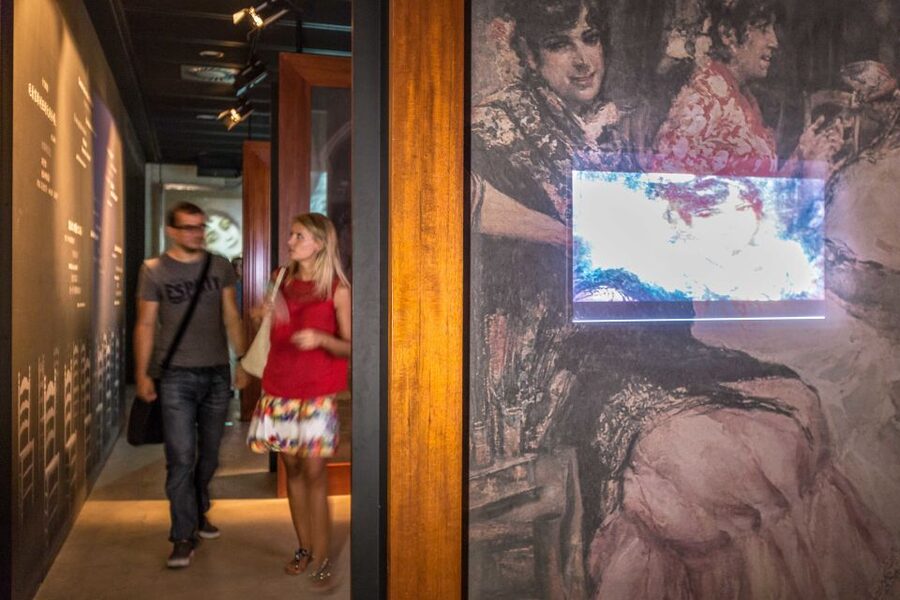
Artwork helps place flamenco within a wider Spanish cultural setting. Again, this is not a large art museum, and art lovers should not expect an extensive gallery. The works function mainly as part of the story of flamenco’s public image and artistic development.
Understanding the named flamenco styles
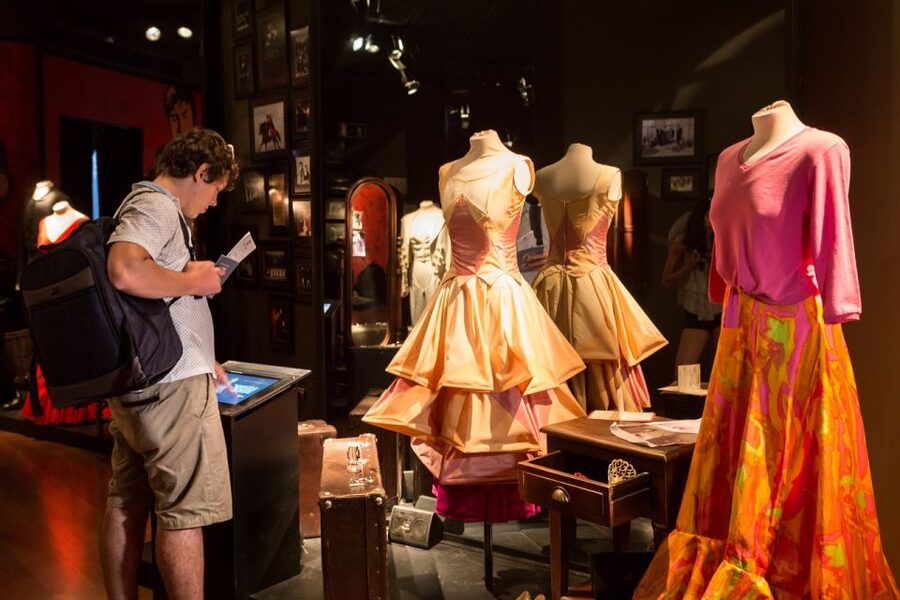
One of the museum’s strongest features is its attention to individual flamenco styles. The displays include Alegría, Soleá, Seguiríya, Taranto, Tangos, and Guajira.
These names may mean little to you at first. That is exactly why seeing them identified together is useful. Flamenco is not one single dance with one fixed rhythm. It includes different forms with their own character and musical setting.
You should treat the museum as an introduction rather than a complete music lesson. The available information does not promise a full technical explanation of every style, and a one-hour ticket cannot cover all the details. Still, the list gives you useful vocabulary for a later show or for further study.
I especially like this approach for anyone who has already seen a flamenco performance and wanted to know what they were watching. You may not leave able to identify every style with certainty, but you will have a better sense of the range within flamenco.
More flamenco nights in Seville:
- Seville: Live Flamenco Show at “Teatro Flamenco Triana”
★ 4.6 · 3,290 reviews - Seville: Flamenco Show Ticket at Tablao Flamenco Las Setas
★ 4.8 · 2,214 reviews - Seville: Traditional Flamenco Show in Triana
★ 4.8 · 1,580 reviews - Authentic Flamenco Show with Tapas & Wine Guided Tour
★ 5.0 · 1,476 reviews
Room 3 and how long to allow
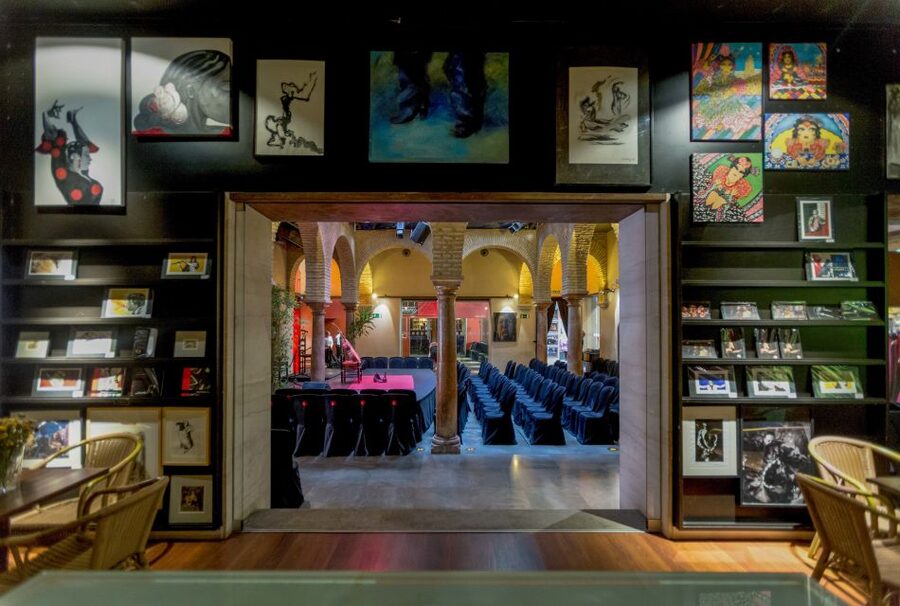
The advertised duration is one hour, and that is a sensible planning figure. You can walk through the main displays in that time without turning the visit into an all-day museum stop.
Do not assume that one hour means you must leave after exactly 60 minutes. The displays can be explored at your own pace during the opening period on your ticket. If you like listening to every explanation or working through interactive material, you can spend longer than a fast visit.
Room 3 deserves particular attention. It contains material that can keep you listening and exploring beyond a quick pass. If you are short on time, do not rush through it simply because the museum is small. If you have a strict schedule, set aside a full hour rather than trying to squeeze it into 20 minutes.
This flexibility is one reason the ticket works well between major Seville sights. You do not need to commit to a long guided excursion. You can enter during the stated time and let the museum provide a quiet change of pace from the streets.
Location beside Seville’s major sights
The meeting point is the museum ticket office at Calle Manuel Rojas Marcos, 3, 41004 Sevilla. It is in Seville’s Old Town, about a five-minute walk from the Cathedral and the Giralda.
That location makes the museum easy to pair with a day of central Seville sightseeing. You could visit before the Cathedral, after the Giralda, or during a break from walking through the Old Town. Because the experience lasts about an hour, it does not require the transport planning of a distant attraction.
The practical benefit is more than convenience. Flamenco is closely tied to Andalusia, and seeing the museum in Seville gives the subject a strong local setting. You are not studying the dance in an isolated exhibition hall far from the city’s historic center.
Use the address rather than relying only on the attraction name. The meeting point is specifically the museum ticket office, and the activity begins there.
Museum ticket versus flamenco show
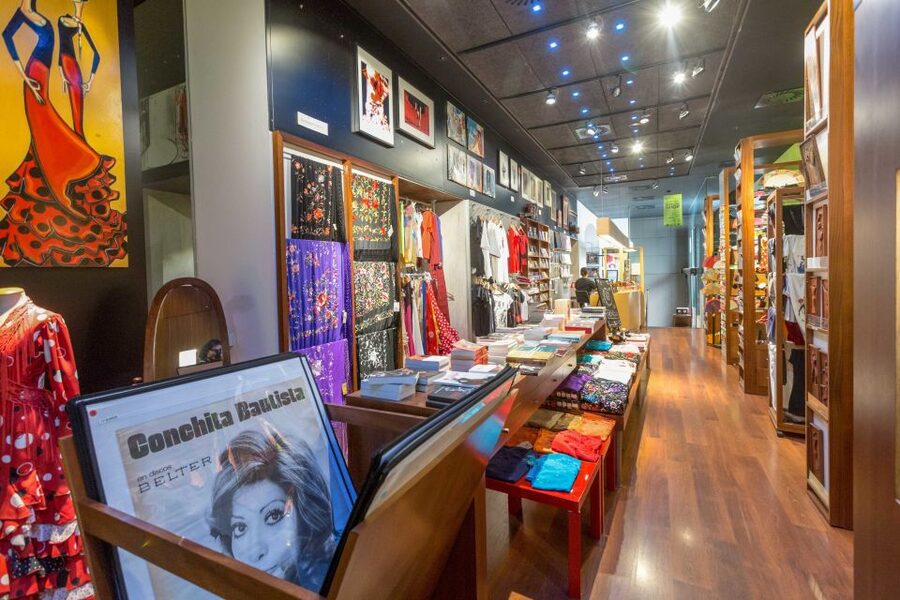
This is the decision that matters most. The museum admission does not include the Flamenco Dance Museum show.
If you want to watch a live performance, you must arrange the show separately. The museum ticket gives you costumes, artwork, props, interactive screens, and explanations of styles. It does not give you the sound of live music or the energy of dancers performing in front of you.
For many people, the best plan is to use the museum as preparation for a show. You can first learn a few style names and see how costumes are made, then watch the movement and music in action later. The museum alone is more suitable for someone who wants cultural background than for someone seeking a complete evening of entertainment.
I would be cautious about booking only the museum if your main goal is a classic flamenco night. A short museum visit cannot replace a performance. On the other hand, I would not dismiss the museum if you already have a show booked. It can make the live experience easier to follow and give you more appreciation for the visual details.
Is the $7 price good value?
At $7 per person, the ticket is inexpensive by Seville sightseeing standards. The value is strongest when you want a short cultural stop near the Cathedral and prefer to explore independently.
You are paying for access to a specialized museum, not a guide-led lesson or performance. That keeps the price low, but it also means you need to read, listen, and make sense of the displays on your own. If you enjoy museums and cultural background, the cost is easy to justify.
The value is weaker if you expect a full flamenco experience for the price. There is no show included, and the museum can feel limited if you are not especially interested in dance, costumes, or cultural development. A perfect one-line choice for everyone would be misleading.
I would call it good value as an add-on to a Seville sightseeing day. It is less convincing as your only flamenco activity. If your budget allows only one flamenco-related booking, decide first if you want explanation and objects or the excitement of a live performance.
Opening hours and the best time to go
The museum is open for visits from 11:00 to 18:00, with last entry at 18:00. On the first Monday of each month, it opens later, at 16:00.
The flexible entry period is helpful. You can plan around the Cathedral, lunch, or other Old Town stops instead of racing to a fixed departure time. Check the time printed for your booking and allow about an hour for the museum itself.
The first Monday schedule deserves attention because it changes the normal morning and afternoon plan. If your Seville visit falls on that day, do not assume you can enter at 11:00.
The supplied information does not give a seasonal schedule beyond these hours, so check the current booking details before setting your day. The ticket also offers free cancellation up to 24 hours in advance and a reserve-now, pay-later option, which can help when your itinerary is still shifting.
Accessibility and who will enjoy it most
The museum is wheelchair accessible. That makes it a practical choice for visitors who need an attraction without complicated access arrangements.
I would recommend this visit most strongly to:
- Anyone curious about Andalusian culture and flamenco beyond a staged photo
- Museum fans who enjoy costumes, artwork, and interactive displays
- People planning to attend a flamenco show and wanting useful background first
- Families or couples looking for a short indoor stop in central Seville
- Repeat visitors who want a focused cultural experience rather than another major monument
I would be more cautious if you dislike explanatory displays or want nonstop action. The experience is built around looking, listening, and learning. The one-hour length is convenient, but it also means the museum cannot offer the scale or variety of a major national museum.
A practical plan for your Seville day
Start with the Cathedral and Giralda if those are on your list, then walk to Calle Manuel Rojas Marcos for the museum. The five-minute distance makes the combination simple, though you should allow extra time for the Cathedral if you have a timed entry there.
Inside, begin with the broad story of flamenco’s development. Then slow down for the costumes and interactive displays. Save enough time for room 3, where the listening material can hold your attention longer than a quick walk-through suggests.
After the museum, you will be in a good position to continue through the Old Town. If you have a separate flamenco show planned, think of the museum as an introduction rather than the main event.
The best mindset is curious and realistic. You are not buying a performance. You are buying a compact explanation of an art form, presented through clothing, objects, artwork, and named styles.
Should you book the Flamenco Dance Museum?
Book it if you want a low-cost, central introduction to flamenco and you enjoy learning through museum displays. Cristina Hoyos’s connection, the range of costumes, and the focus on specific styles give the visit more purpose than a simple souvenir stop.
Skip it if your only goal is to see live flamenco. Put the money toward the separate show instead, or add the museum only if you have enough time and interest for both.
For most first-time visitors, the strongest plan is museum plus performance, not museum instead of performance. At $7 and about an hour, it is an easy addition to a day near the Cathedral, as long as you know exactly what the ticket includes.
FAQ
Where is the Flamenco Dance Museum?
The museum is at the ticket office on Calle Manuel Rojas Marcos, 3, 41004 Sevilla, Spain. It is about a five-minute walk from Seville Cathedral and the Giralda.
How long does the museum visit take?
The stated duration is one hour. You can spend longer with the displays if you want to listen to more material, especially in room 3.
What are the museum’s opening hours?
Visits are available from 11:00 to 18:00, with last entry at 18:00. On the first Monday of each month, the museum opens at 16:00.
Does the ticket include a flamenco show?
No. The Flamenco Dance Museum show is not included in this admission ticket.
Who founded the Flamenco Dance Museum?
The museum was founded by Cristina Hoyos, a famous flamenco dancer and choreographer.
What can you see inside the museum?
You can see historic costumes, props, artwork, interactive screens, and displays about flamenco styles and its development.
Which flamenco styles are covered?
The museum includes Alegría, Soleá, Seguiríya, Taranto, Tangos, and Guajira.
Is the museum wheelchair accessible?
Yes. The activity information states that the museum is wheelchair accessible.
Can I cancel the ticket?
Yes. You can cancel up to 24 hours in advance for a full refund. The booking also offers a reserve-now, pay-later option.
More Museums in Seville
- Seville: Museum of Illusions Entry Ticket
★ 4.2 · 1,196 reviews - A Fantastic Visit To The Museum Of Illusions Seville
★ 4.5 · 390 reviews - Madrid: Prado Museum Entry Ticket
★ 4.6 · 17,509 reviews - Barcelona: FC Barcelona Museum “Barça Immersive Tour” Ticket
★ 4.4 · 10,944 reviews
Recently added in Seville
- Tablao Flamenco Orillas de Triana Ticket★ 5.0 · 195 reviews
- Seville Paddle Surf Sup in the Guadalquivir River★ 5.0 · 198 reviews
- Alcazar of Seville Exclusive Group, max. 9 travelers★ 4.7 · 197 reviews
- Sevilla: Rooftop Paella Cooking Class & 30-minute expert Q&A★ 5.0 · 198 reviews
- From Seville: White Villages and Ronda Tour★ 4.4 · 201 reviews
- Seville City Bike Tour★ 4.5 · 202 reviews
- Casa de Salinas Entry Ticket with Audio Guide★ 4.5 · 202 reviews
- Seville: Flamenco Show & Roof Dinner with Cathedral Views★ 4.7 · 203 reviews
Flamenco Shows, compared.
Live Flamenco Dancing Show Ticket at the Theater
Read the review →
Live Flamenco Show with Food and Drinks Options
Read the review →
Puro Flamenco Show with Optional Museum Ticket
Read the review →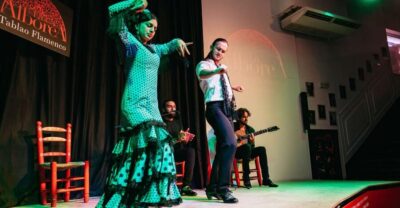

Browse the lists this tour appears in