
Reviewed · WALKING TOURS
Madrid: Guided Walking Tour of Monasterio de las Descalzas
The best reason to visit the Descalzas Reales Monastery is that it feels far removed from the traffic and shopping streets just outside its doors. Behind a fairly restrained facade, you find a cloister, painted stairway, choir room, and art collection linked to one of Madrid’s most important religious foundations. The guide adds the stories that turn quiet rooms into memorable places.
I especially like the 75-minute length, which gives you enough time to see the main rooms without taking half a day from your Madrid plans. I also like the focus on details you could easily miss alone, including the ceiling painting attributed to Claudio Coello and the old Plateresque doors. The main caution is practical: photography is not allowed, there are no public restrooms inside, and the tour requires at least seven passengers to operate.
Key points to know before you book
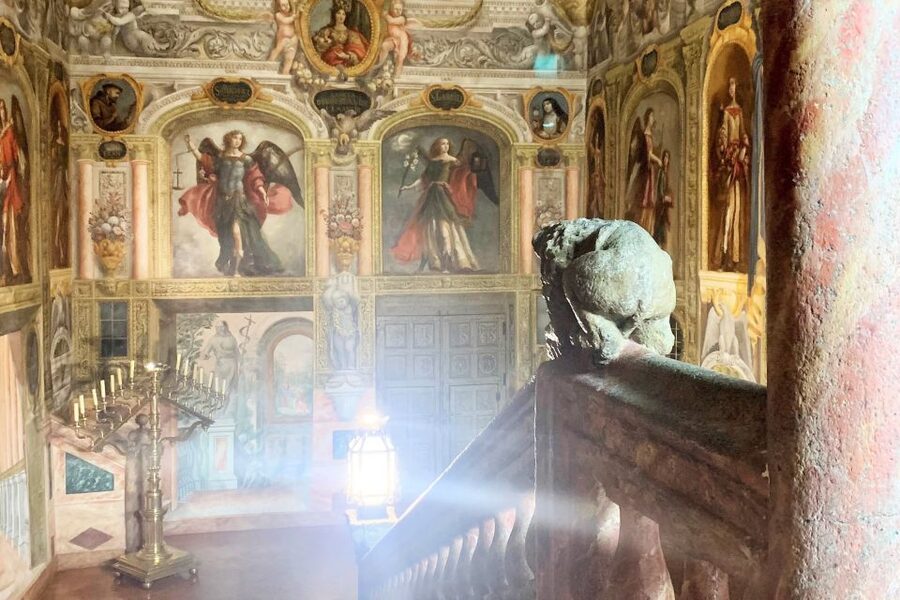
- The main staircase is the visual prize: Look up at its painted ceiling, attributed to Claudio Coello, and study the murals climbing the walls.
- The cloister still has a living religious purpose: The Good Friday Procession of the Holy Burial passes through it each year.
- The collection is unusually strong: You see works associated with Zurbarán, Antonio Moro, Luca Giordano, and other major painters.
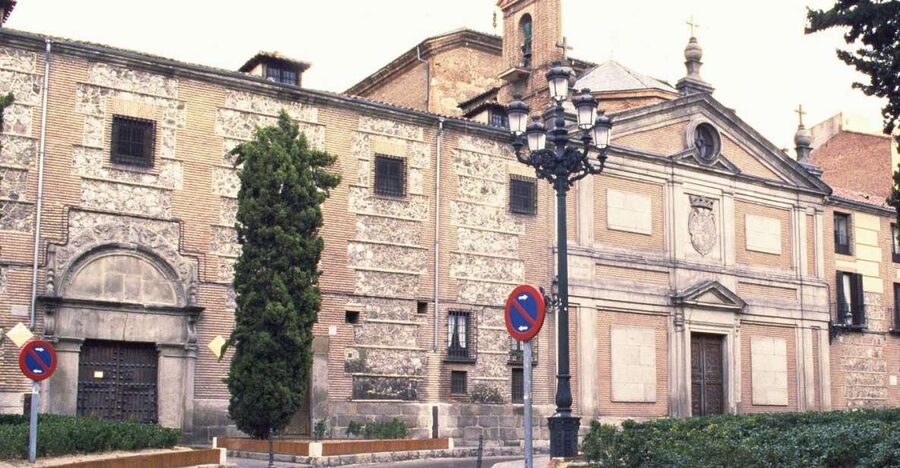
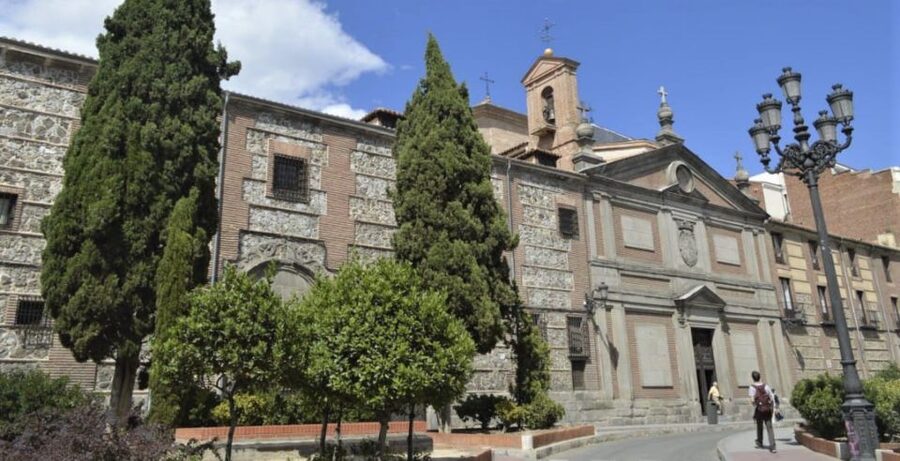
- The visit begins outside: Meet at Plaza de las Descalzas, directly by the entrance, for an explanation of the facade before going in.
- The group may feel intimate: The tour runs with a minimum of seven passengers, and one July booking became a private-feeling visit for only two people.
- Plan around strict house rules: The monastery operates in rain or shine, photography is forbidden, and there are no public toilets inside.
Why this quiet monastery belongs on your Madrid list
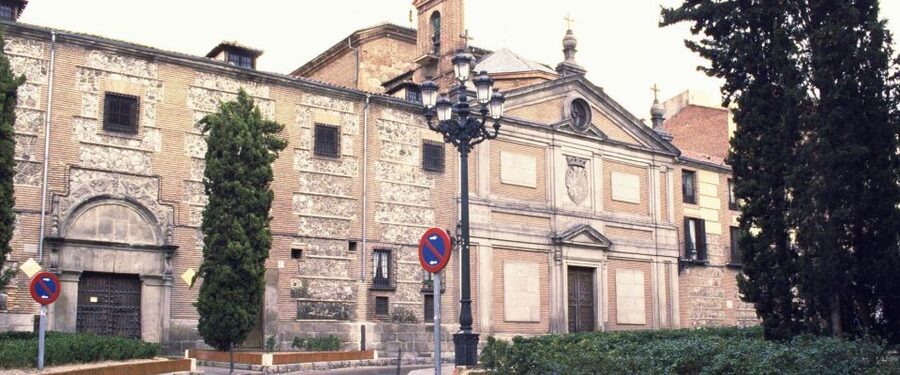
Madrid is full of grand palaces and famous museums, but the Descalzas Reales offers a different kind of visit. It is a former royal foundation that became a convent for cloistered nuns, and its wealth was once said to make it the richest convent in Europe.
That contrast is the appeal. You are not simply walking through a beautiful church or looking at a standard collection of religious art. You are entering a place shaped by royal connections, convent life, ceremony, and private devotion. The building’s plain exterior gives little away, so the first look inside has real impact.
The visit is also compact. At 75 minutes, it fits neatly between larger Madrid sights. You can see the monastery in the morning, then continue to the Royal Palace, Plaza Mayor, or Puerta del Sol without giving up a full afternoon.
I would choose this tour if you enjoy art, architecture, religious history, or places where the past still has a strong presence. If your main interest is outdoor sightseeing, modern Madrid, or a very relaxed café-style outing, this may not be the best use of your time.
More Walking Tours in Madrid
- Toledo Tour & Vineyard Walk with Wine Tasting from Madrid
★ 5.0 · 2,546 reviews - Madrid Walking Tour from Puerta del Sol to Retiro Park
★ 5.0 · 2,285 reviews - Madrid Old Town & Royal Palace Walking Tour Skip the Line Ticket
★ 4.5 · 1,829 reviews
Meeting at Plaza de las Descalzas
The tour begins at Plaza de las Descalzas, 3, directly in front of the monastery entrance. Look for the guide near the benches and statues, with a sign or an IBE TOURS umbrella.
That meeting point matters because the plaza is an easy place to get oriented before entering a historic building. Give yourself enough time to find the entrance without rushing. The guide first explains the exterior and facade, so arriving just before the scheduled start lets you hear that opening rather than joining late.
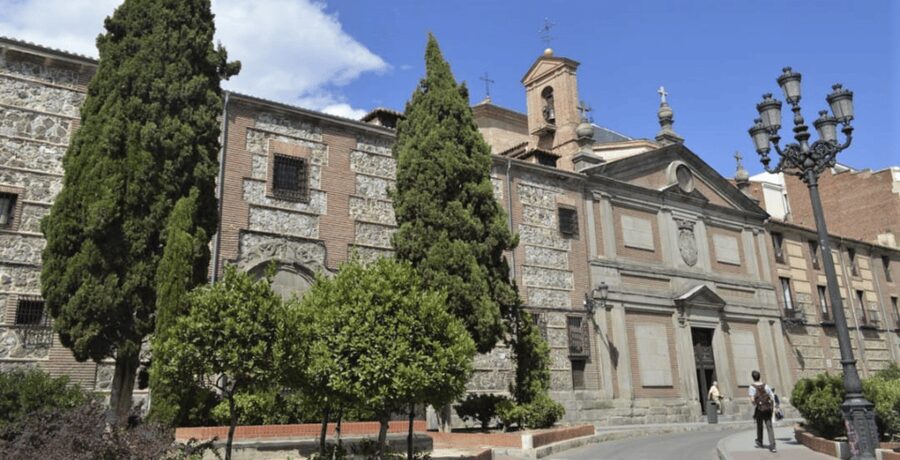
The outside portion is brief, but it gives the building a useful introduction. From the street, the monastery does not announce all the decoration and art inside. That is part of the pleasure of the visit, since the interior story develops in stages.
The guide language information lists Spanish, English, and French. The activity details specifically include a guide in Spanish, so check the available departure and language when booking if you need English or French.
Entering the cloister and understanding its purpose
The cloister is one of the first major spaces you see. Its importance goes beyond its appearance. This is not simply an old courtyard preserved for visitors. The Good Friday Procession of the Holy Burial passes through it each year, connecting the space to an ongoing religious ceremony.
That detail helps you read the architecture. A cloister is designed for movement, prayer, and separation from the outside world. On this visit, you see it as both a peaceful architectural space and part of a larger ritual setting.
The guide’s role is useful here because a quiet cloister can otherwise seem simple at first glance. Stories and legends give you reasons to look at the passageways, walls, and relationship between the open center and surrounding rooms.
Do not expect a long free-roaming visit. This is a guided route through selected rooms, and the group moves according to the monastery’s visiting rules. That structure is helpful if you want the major highlights explained, though visitors who prefer to linger alone may find the pace more fixed than they would like.
The main staircase and its painted ceiling
The main staircase is widely considered the true jewel of the monument, and it earns that attention. It combines architecture and wall decoration in a way that rewards looking upward and around you rather than simply walking from one room to the next.
The walls carry mural paintings from different periods. Above, the ceiling features an impressive painting attributed to Claudio Coello, one of the major Spanish painters associated with the late seventeenth century.
This is the place where a guide makes a clear difference. The ceiling and murals can be easy to overlook when you are watching your footing or following the group. I would pause here and take in the full vertical effect: staircase, walls, doors, and ceiling working as one decorated setting.
Because photography is not permitted inside, you need to pay attention while you are there. That rule may disappoint anyone hoping to collect interior images, but it also keeps the visit focused on seeing the rooms directly. If a work or detail interests you, listen carefully to the explanation or make notes afterward outside.
Same city, a completely different evening:
- Madrid: Tour Bernabéu Entry Ticket
★ 4.5 · 21,573 reviews - Madrid: Prado Museum Entry Ticket
★ 4.6 · 17,509 reviews - Madrid: Royal Palace Fast-Access Admission Ticket
★ 4.6 · 13,856 reviews - Madrid: “Emociones” Live Flamenco Performance
★ 4.8 · 12,866 reviews
The textile room, choir room, and historic doors
The route includes the Hall of Tapestries, referred to in the tour details as the Tapestry Room, along with the Choir Room. These rooms add variety after the cloister and staircase, shifting the visit from open circulation spaces to more specific areas connected with convent life and ceremony.
The textile room is a reminder that the monastery’s importance was tied not only to prayer but also to wealth, patronage, and works made for display and devotion. The Choir Room gives you another view of the building’s religious function.
You also see Plateresque doors, a small architectural detail with plenty of character. Plateresque decoration is known for intricate ornament, so look closely at the carving and surface work rather than treating the doors as simple entrances.
The exact time spent in each room can depend on the guide and the group. That is normal in a monument with a fixed route. If you have a particular interest in painting, sculpture, furniture, or convent architecture, tell the guide early so the visit can be as useful as possible.
Paintings by major European artists
The monastery contains thousands of works of art, including paintings by artists such as Francisco de Zurbarán, Antonio Moro, and Luca Giordano. You do not visit as you would a large public museum, moving from one numbered gallery to another. Instead, the art appears as part of the rooms and the building itself.
That setting changes how you see the collection. Paintings are not isolated from the doors, staircases, murals, and religious spaces around them. You get a sense of how art served a working institution, not just a modern exhibition hall.
Zurbarán is particularly associated with intense religious images and a strong sense of form. Antonio Moro represents an earlier portrait tradition, while Luca Giordano brings a more theatrical Baroque style. The mix gives the monastery artistic range across different periods.
The guide can also help you connect individual works to the monastery’s royal and religious background. Without that context, a room filled with paintings may blur together. With it, you can better understand why certain works were commissioned, preserved, or placed where they are.
Legends of the richest convent in Europe
The tour promises legends and stories about what was once the richest convent in Europe. I would treat these as part of the atmosphere rather than as a substitute for the building itself.
Stories are most useful here when they explain why the monastery accumulated so much art and why royal and aristocratic connections mattered. They can also make the cloister and closed rooms easier to picture as lived spaces rather than frozen museum displays.
The guide’s storytelling style appears to be one of the strongest parts of this experience. The available feedback repeatedly praises clear explanations, friendly service, and personal comments that make the visit enjoyable. One July visit happened with only two people, giving it a private-tour feel, while another booking described the tour as especially pleasant and well documented.
The group size can vary, so do not book expecting a private visit. Still, the minimum of seven passengers means the tour may sometimes be fairly small. That can make it easier to hear the guide and ask questions.
How the 75-minute visit feels
A 75-minute tour has a useful rhythm:
- You meet outside and hear about the facade and exterior.
- You enter the monastery and visit the cloister.
- You spend focused time at the main staircase and its painted ceiling.
- You continue to the Hall of Tapestries and Choir Room.
- You examine doors, murals, and selected paintings while hearing the building’s stories.
This is enough time for a strong first look, but not enough for every artwork to receive a long explanation. The monastery has thousands of works, and the guided route necessarily selects the most important rooms and details.
I like that limitation for a first visit. Madrid can overwhelm you with major museums, palaces, and churches. A short, focused tour lets you understand one place without exhausting your attention.
You should wear comfortable shoes, even though this is not a long walking excursion through the city. The visit includes movement through a historic building and a staircase, and the tour operates rain or shine because the meeting and entry schedule remain fixed.
Is $28 a fair price?
At $28 per person, the tour sits in a reasonable range for a 75-minute guided visit with skip-the-line admission. The value comes from combining entry with interpretation. You are paying not only to get inside but also to have the staircase, paintings, cloister, and stories explained in a short period.
If you already know the monastery well and prefer to move at your own pace, a guided visit may feel less necessary. But for most first-time visitors, the guide helps you understand why the rooms matter and prevents the art from becoming a series of names without a story.
Skip-the-line access is another practical benefit. The time saved may be modest on a quiet day, but it matters when your Madrid schedule is tight. You can also reserve now and pay later, with free cancellation up to 24 hours before the tour for a full refund.
The price does not include food, drinks, or hotel pickup and drop-off. That is not a serious drawback because the meeting point is central, but you need to make your own way to Plaza de las Descalzas.
Important limits inside the monastery
The two biggest restrictions are no photography and no public restrooms. Use a restroom before you arrive, especially if you are visiting with children or planning to continue directly to another sight.
The no-photo rule means you should not plan this as a picture-taking stop. It is better suited to people who enjoy looking closely, listening, and remembering the setting rather than documenting every room.
The tour takes place rain or shine. The outdoor meeting is short, but bring suitable clothing for the weather and do not assume you can wait comfortably outside for a long time.
Finally, the tour operates with a minimum of seven passengers. If that number is not reached, the departure may not go ahead. The flexible cancellation policy helps reduce the risk, but you should still check the booking details and starting time before arranging a tightly timed museum visit afterward.
Who will get the most from this tour?
I would recommend it most strongly to:
- Art lovers who want to see works by Zurbarán, Antonio Moro, and Luca Giordano in their original religious setting.
- Architecture fans interested in the cloister, murals, Plateresque doors, and painted staircase.
- First-time Madrid visitors who want a guided introduction rather than a large, crowded museum.
- History-minded visitors who enjoy royal foundations, convent legends, and ceremonial traditions.
- People with only a short opening in their Madrid schedule.
It may be less suitable if you need photography, restrooms inside the attraction, a self-guided pace, or guaranteed operation regardless of group size. It is also not a food or neighborhood walking tour. The experience is concentrated almost entirely on the monastery.
Should you book the Descalzas Reales tour?
Book it if you want a short and well-focused look at one of Madrid’s quieter historic interiors. The main staircase, the Claudio Coello ceiling, the cloister used for the Good Friday procession, and the strong collection of religious art give the visit plenty of substance for its 75 minutes.
The guide is the key reason to choose this option over simply seeing the building on your own. The clearest praise centers on friendly, well-explained guiding, with personal comments that help the rooms feel less formal. Just arrive prepared for the photography ban, lack of restrooms, rain-or-shine operation, and possible group minimum.
For $28, this is a sensible choice when you value context and efficient sightseeing. It will not replace Madrid’s major art museums, but it offers something they cannot: art and architecture still connected to the life of a historic cloistered convent.
FAQ
Where does the tour meet?
Meet at Plaza de las Descalzas, 3, directly in front of the monastery entrance. The guide will be near benches and statues and should have a sign or an IBE TOURS umbrella.
How long does the tour last?
The guided visit lasts 75 minutes.
What languages are available?
The activity information lists French, English, and Spanish. The included-tour details specifically identify a guide in Spanish, so check the selected departure for your preferred language.
Is admission included?
Yes. Skip-the-line admission to the Descalzas Reales Monastery is included.
Can I take photographs inside?
No. Photography is not allowed inside the monastery.
Are there public restrooms inside?
No. The monument has no public restrooms, so plan to use facilities before the tour begins.
Can I cancel the booking?
Yes. You can cancel up to 24 hours in advance for a full refund. You can also reserve now and pay later.
Recently added in Madrid
- Hot-Air Balloon Ride over Madrid’s Guadarrama Regional Park★ 4.5 · 100 reviews
- Madrid Local’s Wine and Tapas Lunch Tour with a side of History★ 5.0 · 101 reviews
- Prado Museum Private Tour with Skip-The-line & on Foot Pick-Up★ 5.0 · 101 reviews
- Madrid: Ultimate Food Tour of Local Markets & Tapas★ 4.9 · 103 reviews
- Photographic tour of Madrid with a professional photographer★ 5.0 · 104 reviews
- Escorial & Valley Half-Day Morning Tour from Madrid★ 4.0 · 104 reviews
- Madrid: Eco-Friendly, Private, and Unique Tuk Tuk Experience★ 4.9 · 105 reviews
- From Madrid: Avila, Segovia and El Escorial Private Tour★ 4.6 · 106 reviews
Walking Tours, compared.

Barcelona Tapas and Wine Experience Small-Group Walking Tour
Read the review →
Tapas Walking Tour with Food, Wine, and History
Read the review →
Albaicín and Sacromonte Guided Sunset Walking Tour
Read the review →
Toledo Tour & Vineyard Walk with Wine Tasting from Madrid
Read the review →

Barcelona Tapas Walking Tour: Food, Wine & History
Read the review →
Madrid Old Town & Royal Palace Walking Tour Skip the Line Ticket
Read the review →
Browse the lists this tour appears in