
Reviewed · SCUBA DIVING
Mallorca: Discover Scuba Diving for Beginners
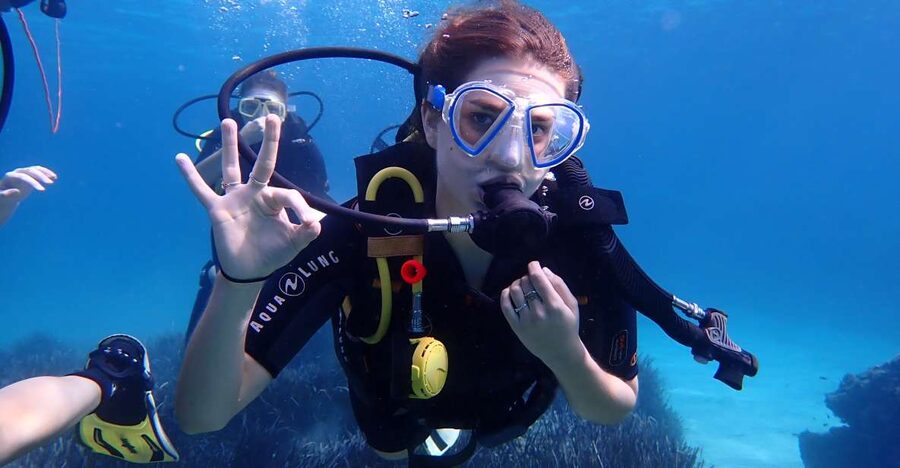
Mallorca’s best first scuba experience is not a dramatic boat jump into open water. You begin from shore, use comfortable steps, practice in calm shallows, and reach a maximum depth of only 6 meters inside a protected marine reserve. That gentle setup matters when your first concern is simply learning to breathe underwater.
I like the small groups of six or fewer, with two certified PADI instructors keeping a close eye on everyone. I also like the patient, step-by-step teaching. Instructors such as Robert, Bruno, Raul, Koen, and Kristofer have been singled out for helping nervous beginners settle down and enjoy the underwater time.
The main drawback is practical: the equipment is heavy, and getting from the center to the water can involve a walk with all that gear. The actual underwater portion may also feel short if you are eager to spend the whole morning below the surface.
Key points before you book
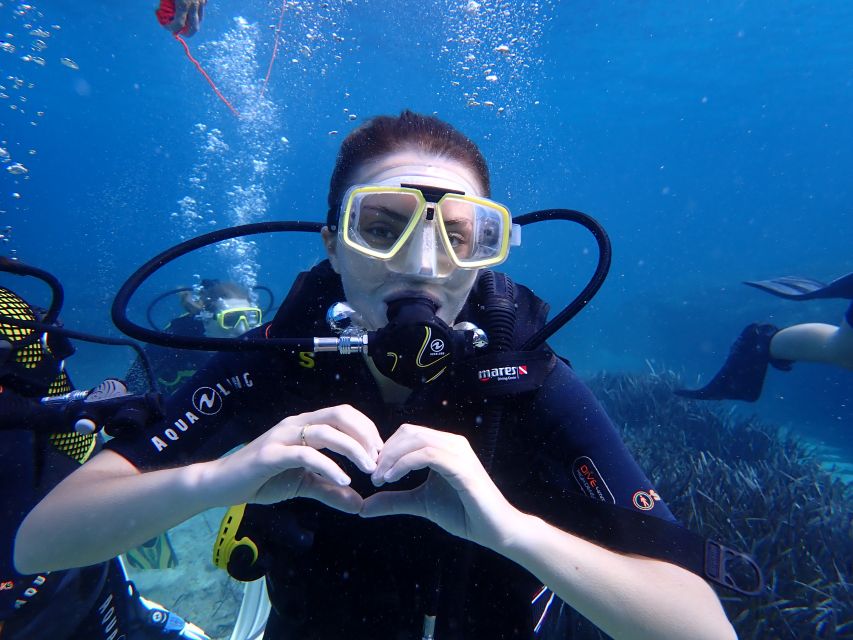
- A shallow first session: Practice breathing, ear equalizing, mask clearing, and hand signals before heading farther from shore.
- Maximum depth of 6 meters: This is a controlled introduction, not a full certification course or an advanced reef outing.
- Two PADI instructors: A maximum of six participants allows for close supervision and personal help.
- Shore entry instead of a boat jump: You enter by comfortable steps, a useful feature if you feel uneasy about open-water entries.
- Everything important is included: Equipment, minivan transport, reserve entry, activity insurance, and a PADI Discover Scuba certificate are covered.
- Bring your documents: A passport or ID and the completed PADI medical questionnaire are required.
Why this is a good first underwater experience
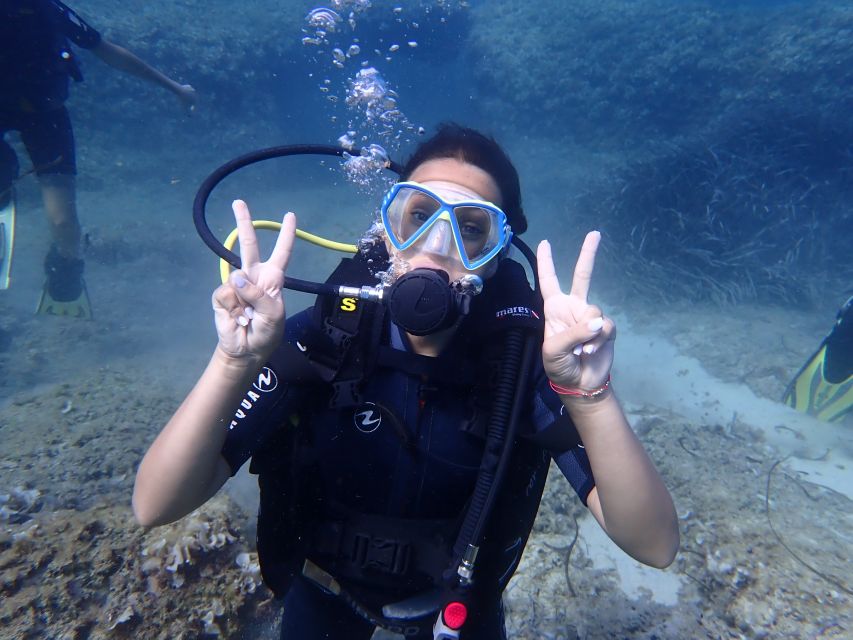
This activity is built for people who have never used scuba equipment. You do not need prior training, and the lesson begins on land with the basic ideas you need: how the regulator works, how to breathe, what the hand signals mean, and what to do if water enters your mask.
That sounds simple, but the first few minutes can feel strange. Breathing through your mouth while wearing a mask is not a natural habit, and many beginners need time to relax. The instructors do not rush the process. You move on only when you feel ready.
The water work begins in a calm, shallow area. You hold your position near shore while practicing the key skills one at a time. You learn to breathe steadily, equalize the pressure in your ears, clear your mask, and communicate with hand signals.
I consider this practice period the most valuable part of the session. It gives you a chance to solve small problems before you are farther from shore. If you struggle with your breathing, as some first-timers do, an instructor can work with you until the equipment feels less foreign.
The group size also makes a difference. With no more than six participants and two PADI instructors in the water, you should receive far more attention than in a large class. Several instructors have been praised for checking on participants often, staying close, and offering extra support without making nervous people feel embarrassed.
You must be comfortable in the water, but the activity can suit people with limited swimming ability. Some participants who could not swim reported feeling supported throughout the session. That does not mean you can ignore the water requirement. You still need to feel at ease in the sea and follow the instructor’s directions.
More dive trips in Mallorca:
- Tenerife: Beginners Scuba Dive Experience in Turtle Area
★ 4.6 · 1,347 reviews - Barcelona: PADI Discover Scuba Diving
★ 4.7 · 1,016 reviews - Lanzarote Introductory Scuba Diving Experience
★ 5.0 · 766 reviews
From the Playa de Palma meeting point to the reserve
The experience lasts about 3.5 hours, including preparation, transport, practice, and the underwater session. If you are staying in the Playa de Palma area and walking, you meet at the ticket shop on Carretera de l’Arenal, 48, in Platja de Palma.
The van leaves early and cannot wait, so arrive 30 minutes before the stated start time. This is one detail I would take seriously. A late arrival can disrupt the schedule and may mean you miss the pickup.
If you are driving, go directly to the dive center at Ctra. Cabo Blanco, Km 11, Cabo Regana. The center is on the right just after the barrier. Parking is outside the barrier, and this option is recommended for people arriving by car.
From the center, an air-conditioned minivan takes you to a nearby shore site in a protected nature reserve. The exact journey time is not fixed in the activity details, but some participants have described the drive as roughly 30 to 45 minutes. The transport is useful because carrying a full set of scuba equipment over a longer distance would be tiring.
The location itself is part of the appeal. Mallorca’s coast is known for clear water, and the reserve provides a more controlled setting than a busy open-water swimming area. The site has been described as calm and suitable for beginners, with no strong current reported in one account.
What happens during the briefing
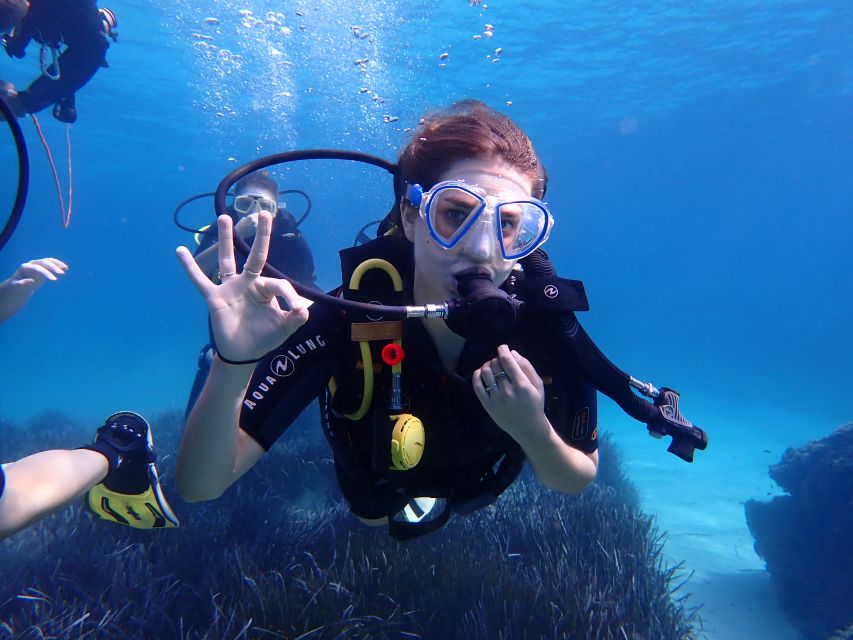
Before you enter the water, the instructor introduces the equipment and explains how each part is used. You work with a mask, fins, tank, buoyancy equipment, regulator, and the other standard gear supplied for the session.
The briefing also covers safety. You learn how to signal that everything is fine, how to indicate a problem, and how to communicate underwater without speaking. Expect a practical lesson rather than a long classroom lecture.
The instructors speak Spanish, English, French, and German. That language range is helpful when you are learning safety instructions and hand signals for the first time. It also gives you a better chance to ask questions in the language you understand best.
Instructors named in participant feedback include Robert, Bruno, Raul, Koen, and Kristofer, along with other members of the team. The specific instructor for your session depends on the day, but the repeated strength of the teaching is clear: calm explanations, frequent checks, and a willingness to repeat a skill until you understand it.
Give yourself permission to go slowly. The goal is not to look graceful in the first five minutes. The goal is to breathe steadily, stay calm, and learn what to do if something feels unfamiliar.
Learning the basic skills in shallow water
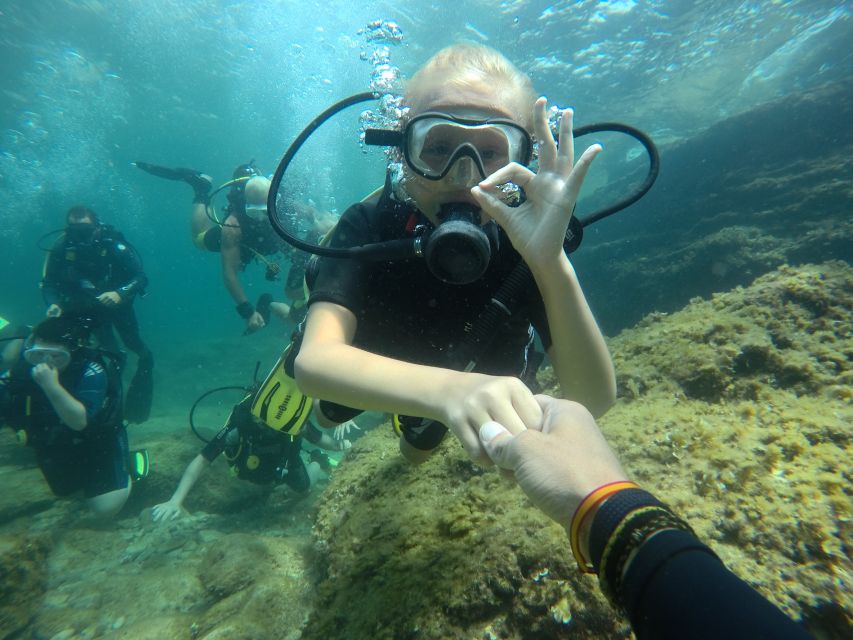
The shallow-water section is where you build confidence. You practice breathing through the regulator while staying close to shore. You also learn to equalize your ears as you move lower, which is essential because pressure changes even at modest depths.
Mask clearing is another key skill. A small amount of water in the mask can feel alarming when you are new to scuba. Practicing the correct response in shallow water means you are less likely to panic if it happens during the guided underwater excursion.
Hand signals let you communicate when your voice cannot travel through the equipment. You will learn the basic signals needed to say that you are okay, need help, or want to stop. The instructors also keep checking your comfort level as you practice.
This is a controlled session, but it is not entirely effortless. Some people struggle to find a natural breathing rhythm at first. Others find the equipment heavy on land, especially while walking toward the entry point. Once you are supported by the water, the weight becomes less of an issue, but the walk can still be the most awkward part of the experience.
The shore entry is a strong choice for beginners. You do not have to climb onto a boat, leap into deep water, or descend from a moving platform. You enter using comfortable steps, get used to the regulator, and only proceed after the initial nerves have eased.
A few other Mallorca outings to compare
- Palma: Cathedral of Mallorca Skip-the-Line Entry Ticket
★ 4.6 · 14,386 reviews - Palma de Mallorca: 5-Hour Catamaran Cruise with Lunch & Swim
★ 4.5 · 9,957 reviews - Porto Cristo: Caves of Hams Entry Ticket
★ 4.2 · 6,548 reviews - Palma de Mallorca: City Sightseeing Hop-On Hop-Off Bus Tour
★ 4.1 · 4,450 reviews
The guided underwater session at 6 meters
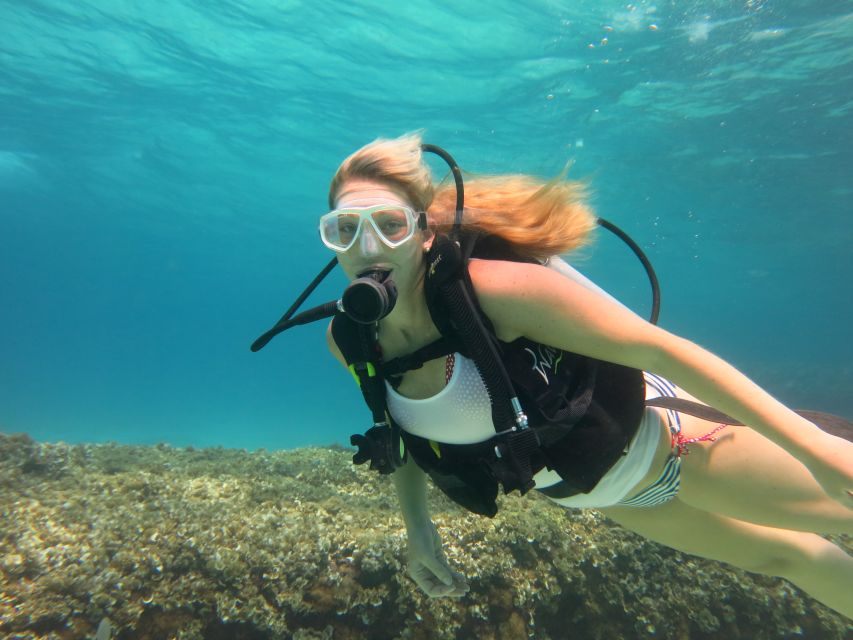
After the practice exercises, you begin the main underwater portion with your instructor. The maximum depth is 6 meters, keeping the activity within a beginner-friendly range.
At this depth, you may experience the weightless feeling that attracts many people to scuba in the first place. The protected site can include fish and underwater features such as small caves, according to the information available for the activity. Visibility, marine life, and color can change from one day to another.
That variation is worth keeping in mind. Some sessions have produced memorable views, plenty of fish, and attractive rock formations. At other times, people have seen few fish and found the underwater colors less dramatic than expected. This is a nature-based experience, not an aquarium, so the sea does not guarantee a particular animal encounter.
The actual underwater time also varies. Accounts describe roughly 25 to 45 minutes below the surface, while the listed activity length of 3.5 hours includes transport, gear, instruction, and preparation. If you book mainly for a long underwater session, keep your expectations realistic.
Your instructor stays nearby and checks that you are comfortable. This close support is especially important when you are still thinking about every breath. You can concentrate on the surroundings because you are not left to manage the equipment alone.
What the $176 price includes
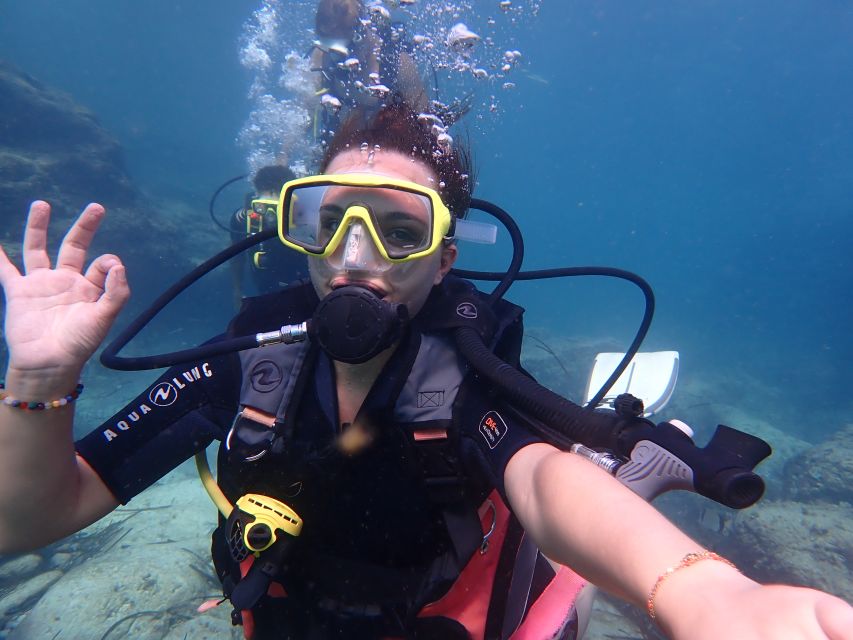
At $176 per person, this is not a cheap add-on to a beach day. The price makes more sense when you count what is included: full scuba equipment, two PADI instructors in the water, transport in an air-conditioned minivan, entry to the protected reserve, diving insurance during the activity, and an official PADI Discover Scuba certificate.
The small group is the biggest value point. You are paying for instruction and supervision, not just access to the sea. A maximum of six participants means the instructors can give individual attention, which is particularly useful if your breathing or ear equalizing takes extra practice.
The certificate is also useful if this first experience inspires you to continue. It may be credited toward a PADI Open Water Diver course, so ask the provider how that credit works before booking a later course. It is not the same as earning an Open Water certification, but it records your introductory session.
Photos are not included. Some participants have described an optional photo package costing about 10 euros, but that price is not part of the included features and should be confirmed directly before you rely on it. If you want a visual record, ask about it at the center.
For someone who wants a professionally supervised first attempt, the package offers solid value. For a certified scuba diver looking for a long, independent underwater outing, it is the wrong product and likely poor value.
Who should book this Mallorca activity
This session suits adults and children aged 10 or older who feel comfortable in the water and want a first taste of scuba. Participants under 14 must go with an adult, and anyone under 18 needs a legal guardian’s signature.
I would particularly recommend it to:
- First-time scuba participants who want a gradual introduction
- Nervous swimmers who prefer a shore entry and shallow practice
- Families with children old enough to meet the age rules
- Couples or friends who want a shared activity without committing to a full course
- People staying near Playa de Palma or arriving by car at the Cabo Regana center
- Anyone considering a future PADI Open Water course
It is not suitable for children under 10, pregnant participants, people with mobility impairments, or people with heart or respiratory problems. Alcohol and drugs are not allowed.
You must complete the official PADI medical questionnaire. Depending on your answers, you may need written medical clearance from a doctor before the activity. If that clearance is required and you cannot show it on the day, you cannot participate and no refund is available, so handle this before arriving.
You also need to plan around air travel. Scuba must take place at least 12 hours before your flight. Do not schedule this activity on the final morning of a trip if you expect to fly later that day.
What to pack and how to make the morning easier
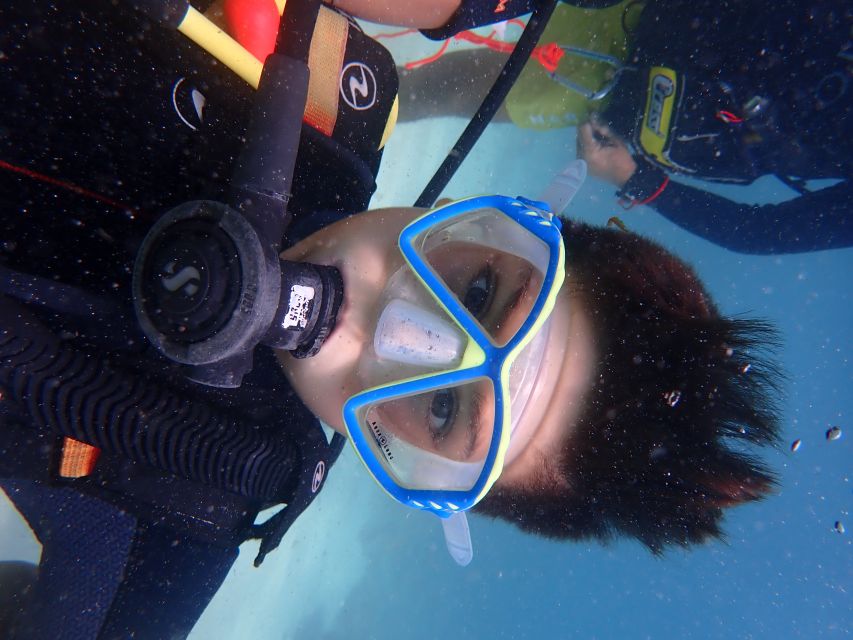
Bring your passport or ID, swimwear, a towel, a change of clothes, and something to drink. Your passport is not just a nice extra because it is specifically required for the activity.
Wear clothing that is easy to change out of after the session. You will be handling bulky equipment, and a dry change of clothes makes the return trip more comfortable.
Arrive early at the correct meeting point. Walkers from Playa de Palma should use the ticket shop, while drivers should go to the center in Cabo Regana. Do not assume the minivan will collect you from the center if you are staying elsewhere.
The equipment is heavy before you enter the water. Walk carefully and do not worry about looking clumsy. Once you are in the sea, buoyancy supports the gear, and the underwater part becomes much easier than the preparation on land.
If you are nervous, say so immediately. The instructors are used to first-timers who need extra time, and the structure of the session allows them to work with you individually. Slow breathing and clear communication will help more than trying to act confident.
Final verdict: should you book it?
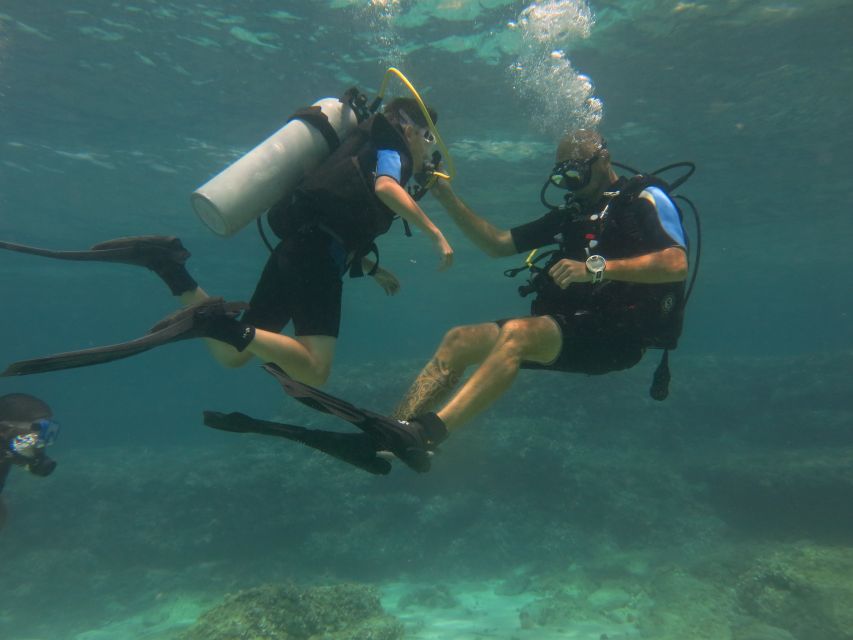
Book this Mallorca scuba session if you want a carefully managed first attempt, especially if the idea of jumping from a boat makes you uneasy. The calm shallow practice, shore entry, protected reserve, small groups, and two instructors address the main worries beginners usually have.
The activity is less suitable if you already hold a scuba certificate, want a deeper or longer underwater trip, or expect guaranteed colorful marine life. Fish sightings can be excellent, but they are not promised, and some sessions may be quieter.
For a complete beginner, I see the $176 price as reasonable because it covers instruction, equipment, transport, insurance, reserve entry, and the certificate. Arrive on time, complete the medical paperwork in advance, and treat the underwater time as an introduction rather than a full course. If that sounds like the right first step, this is a sensible way to meet Mallorca from below the surface.
FAQ
Do I need previous scuba experience?
No. The activity is designed for complete beginners, and the instructors explain equipment use, breathing, safety procedures, and underwater communication before you enter the water.
How deep will I go?
The guided underwater session reaches a maximum depth of 6 meters.
How old must I be to participate?
The minimum age is 10. Anyone under 14 must scuba with an adult, and participants under 18 need a legal guardian’s signature.
What is included in the price?
The price includes full scuba equipment, two certified PADI instructors in the water, small-group instruction, air-conditioned minivan transport, entry to the protected marine reserve, activity insurance, and an official PADI Discover Scuba certificate.
Do I need medical clearance?
You must complete the official PADI Medical Questionnaire. Depending on your answers, a doctor’s medical clearance may be required in advance. If it is required but unavailable on the activity day, you cannot participate and no refund is granted.
How long before a flight can I take part?
You must complete the scuba activity at least 12 hours before your flight. Pregnancy excludes participation.
Recently added in Mallorca
- Puerto Pollença: Ferry to Formentor Beach★ 4.7 · 308 reviews
- The Award-Winning PRIVATE Food Tour of Mallorca: The 10 Tastings★ 4.5 · 317 reviews
- Quad Bike / ATV Tour★ 5.0 · 323 reviews
- S’Arenal: Sunset Catamaran Cruise with BBQ★ 4.5 · 338 reviews
- “Cala Millor & Sa Coma: TOP Buggy Tours – your mega experience!”★ 4.5 · 340 reviews
- El Arenal: Private Mallorca Boat Rental (No License Needed)★ 4.8 · 343 reviews
- Palma de Mallorca: Deluxe Catamaran Sailing Tour with Meal★ 4.7 · 353 reviews
- Ticket Palma Aquarium★ 4.0 · 354 reviews
Scuba Diving, compared.
Beginners Scuba Dive Experience in Turtle Area
Read the review →
Scuba Diving Experience for Beginners in Gran Canaria
Read the review →
Tenerife First Time Scuba Dive – Turtle Habitat, Small Groups
Read the review →
Try Dive – PADI Discover Scuba Diving in Tenerife
Read the review →Browse the lists this tour appears in