
Reviewed · HISTORICAL TOURS
Granada: Historic Center and Lower Albaicin Walking Tour
Granada’s story comes alive when you walk from the Catholic Kings monument into the old city and then up through the lower Albaicin. In 2.5 hours, you see the places where Islamic Granada, Christian rule, trade, law, and daily life overlap, ending with a fine view toward the Alhambra.
I like the compact route, which gives you a useful first look at central Granada without spending half a day on one monument. I also like the strong local storytelling, especially when guides such as Pablo, Jaime, Irene, and Anna explain the Reconquista, Moorish architecture, flamenco, and the city’s later Christian buildings.
The main catch is the walk into Albaicin. Narrow streets and uphill sections can be tiring, and this tour is not suitable for people with mobility impairments. A strong accent may also make parts of the English commentary harder to follow, though the guides are praised for clear subject knowledge and patient answers.
Key points to know before booking
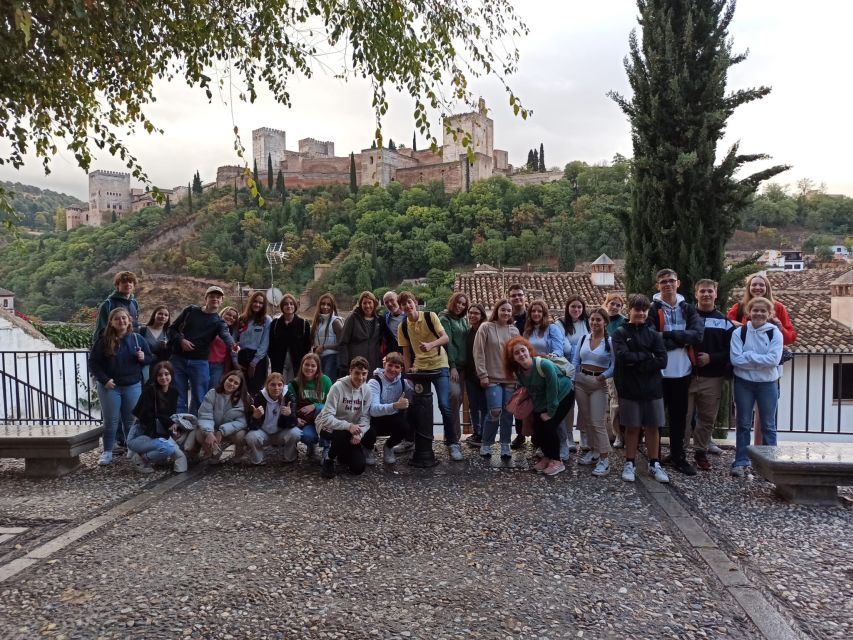
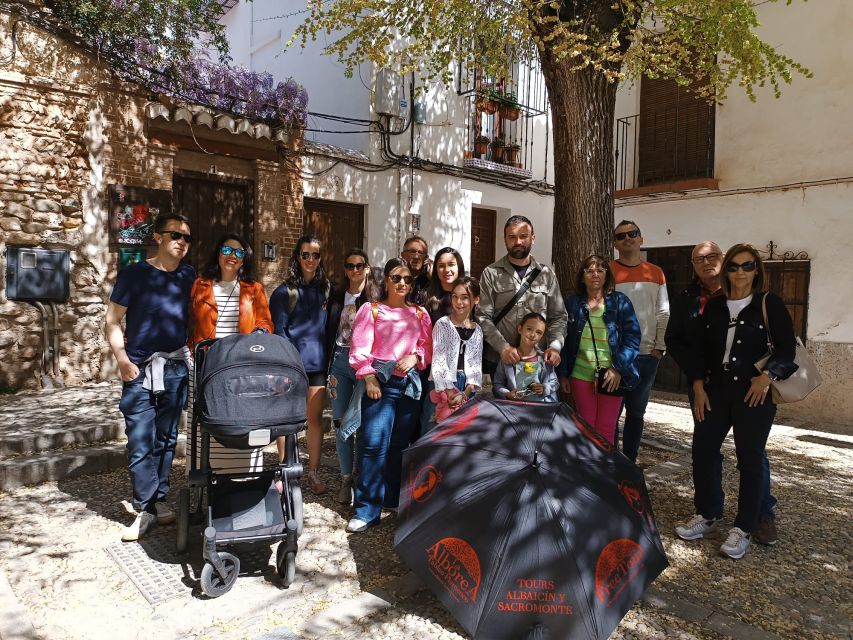
- See the Alhambra from lower Albaicin: The viewpoint gives you a different angle from the monument itself and a good photo stop.
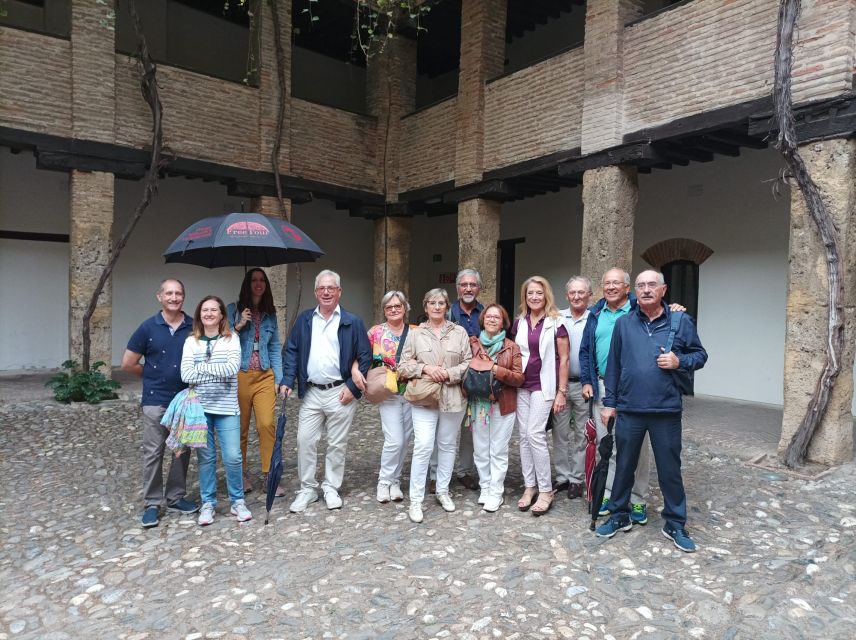
- Cover several central landmarks: The route includes the Alcaiceria, Corral del Carbón, Madraza, Cathedral, Royal Chancillería, and Plaza Bib Rambla.
- Learn Granada’s Islamic and Christian story together: The tour connects Moorish Granada with the 1492 Reconquista and the city that followed.
- Expect a walking tour, not monument admission: You see important buildings from the route, but the activity is built around outdoor interpretation.
- Small groups can make a big difference: Some departures have been intimate, with only a handful of people, while group size can vary.
- Plan it early in your stay: The route helps you understand the city’s layout and gives useful ideas for places to visit later.
Why this short Granada walk is useful
Granada can feel confusing at first. The Cathedral, old commercial quarter, Albaicin, and Alhambra all sit close together, but their stories belong to different periods. This walk gives you a basic map in your head before you begin exploring on your own.
The tour starts in the city center beside the monument to Isabel La Católica and Cristóbal Colón. That location is easy to identify and puts you near the main historic quarter. From there, you move through streets and squares rather than riding between isolated sights.
At $16 per person, the price is modest for 2.5 hours with a live guide. You are not paying for entry to the Alhambra or the Cathedral, so this is not a substitute for timed admission to those sites. The value comes from seeing many important places in one organized walk and gaining the context that can be hard to piece together from plaques and guidebooks.
I would book it near the beginning of a Granada stay. You can use the guide’s suggestions for later meals, museums, historic buildings, and neighborhoods, then return to the places that deserve more time.
More Walking Tours in Granada
- Granada: Albaicín and Sacromonte Guided Sunset Walking Tour
★ 4.9 · 2,962 reviews - Guided Walking Tour of the Alhambra in Granada
★ 4.0 · 863 reviews - Granada: Albaicín and Sacromonte 2.5-Hour Walking Tour
★ 4.7 · 777 reviews
Starting at the Catholic Kings monument
The meeting point is in front of the monument of Isabel La Católica and Cristóbal Colón. This is more than a convenient landmark. It introduces the political story that shaped Granada, since the Catholic Monarchs and the 1492 conquest are central to the city’s modern identity.
Your guide explains how Granada became the final Muslim kingdom in Iberia and how the Reconquista concluded here in 1492. That date is not treated as a simple ending. It opens the larger question of what happened to the city’s Islamic buildings, streets, customs, and residents after Christian rule began.
This is where the tour’s historical approach earns its keep. You are not just collecting names of monuments. You are being shown how different periods sit beside one another in the same city.
The guides tend to make the information lively rather than formal. Pablo is noted for mixing useful explanations with humor and practical suggestions. Jaime has led groups through detailed discussions of architecture, old paving, and the city’s development. Irene is praised for involving people with questions, while Anna is described as both clear and well organized.
Guide quality can vary by departure, of course. The available guides include Spanish and English speakers, and one English-speaking guide was sometimes difficult for a participant to understand because of a strong accent. If you miss a point, ask for it again. The guides are repeatedly described as willing to answer questions.
The Alcaiceria and Granada’s old trading quarter
The route continues through the Alcaiceria, one of the most atmospheric parts of the central city. Its name and surviving street pattern recall Granada’s old commercial world, when this area served as a market district under Muslim rule.
You will not get a full museum visit here, but the guide can help you read the streets as part of a former trading center. That matters because Granada’s Islamic past is not limited to the Albaicin or the Alhambra. It also survives in the shape and purpose of central streets.
The Alcaiceria is now a busy shopping area, so it can feel more commercial than historic. The tour’s explanation helps bridge that gap. Instead of expecting an untouched medieval quarter, you can appreciate the area as a place where old routes and modern shops overlap.
Corral del Carbón and the working city
The Corral del Carbón is another important central stop. Its name points to its former role as a place connected with trade and lodging. The building helps you picture Granada as a working city, not just a royal setting.
This is one of the stops where a guide adds real value. A quick look at an old structure tells you little on its own. The story gives it a purpose and places it within the city’s wider commercial life.
The tour also passes the Royal High Court, the Royal Chancillería, and the Royal Jail. These buildings shift the focus from trade to government and law. Together, they show how Christian Granada was organized after 1492, with institutions that expressed royal authority.
You should expect exterior viewing and explanation rather than long indoor visits. If you want to study the buildings in detail, make a note of them and return later.
More historic sites in Granada:
- Segway Your Way Through Granada’s History: The Ultimate Ride
★ 5.0 · 334 reviews - Albayzín y Sacromonte, Unesco Heritage Neighborhoods
★ 5.0 · 250 reviews - Granada: 3-hour Historical Tour by Segway
★ 5.0 · 104 reviews - Madrid Essential: Historic Center, Plaza Mayor & Royal Palace
★ 5.0 · 6,416 reviews
Plaza Bib Rambla, the Giants Fountain, and the city’s public life
Plaza Bib Rambla offers a more open pause in the route. The square’s Giants Fountain provides a visual focus, and the stop gives you a chance to understand how public spaces have shaped Granada’s daily life.
This is also a useful break from the tighter streets. One guide was praised for choosing sensible stopping points and places to rest on a busy holiday day. That detail matters because a walking tour can become tiring when every explanation happens in the middle of a crowd.
The square is a good place to notice the difference between a formal monument and a lived-in city center. You are seeing a public gathering place, not a single grand attraction. The tour works best when you pay attention to that connection between buildings, streets, and ordinary movement.
The Madraza and Granada’s changing identity
The Madraza brings the Islamic intellectual and civic story into the route. Its name refers to a school, and it helps explain that Muslim Granada was a center of learning and administration, not only a place of palaces and fortifications.
The tour places the Madraza near later Christian landmarks, including the Cathedral. That side-by-side setting is one of the strongest parts of the walk. You can see, in a small area, how Granada’s identity changed after the Christian conquest.
The Cathedral is among the most important buildings on the route. Its scale and design make a clear statement about the power of the Christian city that followed 1492. Again, the activity is not a Cathedral admission tour, so do not book it if your main goal is an interior visit and detailed art commentary.
Instead, use the guide’s explanation as a framework. You can return to the Cathedral on your own if you want more time inside.
Royal Chancillería and the Royal Jail
The Royal Chancillería and Royal Jail add another layer to the central route. These buildings represent the legal and administrative machinery of the city under Christian rule.
I like this part of the itinerary because it avoids making Granada’s story only about pretty streets and famous views. Government buildings can seem less exciting than the Alhambra, but they explain how power worked and how the city operated after the change of rulers.
The guide’s job here is to connect architecture with function. You learn why these buildings mattered, who used them, and how they fit into the wider story. That kind of explanation is particularly useful if you are not already familiar with Spanish history.
Entering lower Albaicin by way of Moorish streets
The route then leaves the central grid and enters the lower Albaicin. This is where the character of the walk changes. Streets become narrower, the footing less even, and the route includes an uphill section.
The lower Albaicin evokes Granada’s Moorish past through its lanes, walls, and irregular street plan. You are not climbing to every part of the neighborhood, but even the lower section gives you a taste of how different it feels from the central city.
This portion requires comfortable walking shoes. The old cobblestones can be hard on knees and ankles, and anyone with serious mobility limits should choose another activity. A family group once included people with angina and knee problems. Their guide, Jaime, allowed pauses and adjusted the pace because the group was small, but that level of flexibility cannot be guaranteed in a larger departure.
The climb is worthwhile for the change in atmosphere and the view ahead. It also helps explain why Granada’s neighborhoods feel so distinct even when they are close together.
The Alhambra viewpoint
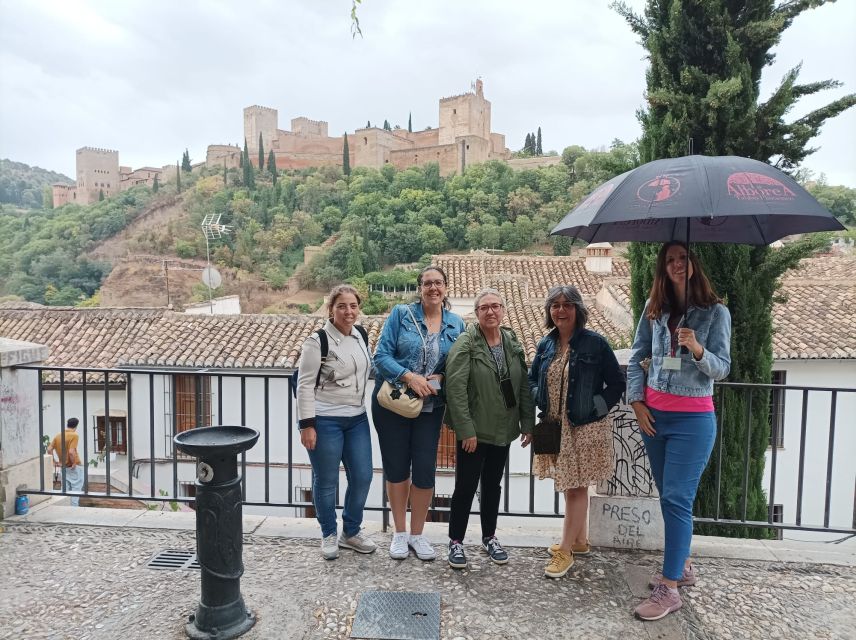
The final highlight is a viewpoint in lower Albaicin with a clear look toward the Alhambra. This is not a tour of the Alhambra, and the viewpoint does not replace a reserved entry. It does give you a strong visual connection between the palace complex and the city below.
I would keep your camera ready, but do not rush the stop. The guide’s explanation helps you understand the Alhambra as part of Granada’s setting rather than as an isolated attraction. From this side of the city, you can see why the relationship between hill, palace, and old neighborhood matters.
The viewpoint also makes a good endpoint because the route has moved from political monuments in the center to the older street fabric of Albaicin. You finish with a broad image of Granada after spending most of the tour at street level.
The guides and the feel of the group
Guide quality is the most praised part of this experience. Pablo, Jaime, Irene, Anna, Rocio, Emilio, and Elene are all singled out for explaining history clearly, answering questions, and keeping the walk personable.
The strongest guides do more than recite dates. They ask questions, draw connections between architecture and politics, and offer suggestions for what you can see later. One guide included a calm explanation of flamenco, which added a cultural note beyond the advertised monuments.
Group size can shape the experience. Some departures have been very small, including groups of five people and a family group of seven. In those cases, the walk can feel almost private, with more time for questions and occasional pauses. Other departures may be larger, so do not book on the assumption that you will always receive one-on-one attention.
The tour is offered in Spanish and English. Most feedback about the guides is strongly positive, but two English-language participants found an accent hard to understand at times. That is a minor concern for most people, but it is worth keeping in mind if you need especially slow or simple spoken English.
Who should book this $16 walking tour?
I would choose this tour if you want a first orientation to Granada and prefer local stories to a quick checklist of photo stops. It suits first-time visitors, couples, families who can handle the uphill section, and anyone who wants to understand the connection between Moorish and Christian Granada.
It is also a smart pick if you have limited time. In 2.5 hours, you cover central squares, market streets, government buildings, religious landmarks, lower Albaicin, and an Alhambra view.
I would not choose it as your only Granada activity if your main goal is entering the Alhambra, Cathedral, or other monuments. Those visits require separate planning, and this experience focuses on walking and interpretation.
The route may also be a poor match for anyone with mobility impairments. The lower Albaicin section includes uneven streets and an uphill walk. Ask yourself honestly how comfortable you are on cobbles before booking.
At $16, the tour offers good value if you would otherwise spend the same time wandering without context. The guide’s suggestions can also help you use the rest of your stay better.
Practical details for a smoother walk
Meet in front of the Isabel La Católica and Cristóbal Colón monument, not at a separate museum or ticket office. Arrive ready to begin on foot.
Wear comfortable shoes. This is the one item specifically required, and it is sensible advice given the cobbled lanes and Albaicin climb.
The tour lasts 2.5 hours, and starting times depend on availability. You can cancel up to 24 hours before the activity for a full refund, and you can reserve now and pay later, which helps if your Granada plans are still shifting.
Should you book it?
Book this Granada Historic Center and Lower Albaicin Walking Tour if you want a low-cost, history-focused introduction with a real neighborhood walk and an Alhambra viewpoint. The guides are the main strength, and the route gives you useful context for exploring on your own.
Skip it if you need step-free access, dislike uphill walking, or want a full indoor tour of Granada’s major monuments. For most able walkers arriving in Granada for the first time, I would schedule it early in the visit, wear good shoes, and use the guide’s advice to plan the days that follow.
FAQ
How long does the Granada walking tour last?
The walking tour lasts 2.5 hours.
Where is the meeting point?
Meet your guide in front of the monument of Isabel La Católica and Cristóbal Colón.
What languages are available?
The live tour guide service is available in Spanish and English.
Does the tour include entry to the Alhambra or Cathedral?
The activity includes a guide and walking tour. The provided details do not include admission to the Alhambra, Cathedral, or other monuments.
Is the tour suitable for people with mobility impairments?
No. The activity is listed as unsuitable for people with mobility impairments, and the route into lower Albaicin includes narrow streets and an uphill section.
What should I bring?
Bring comfortable shoes for the 2.5-hour walk.
Recently added in Granada
- Tickets included: Alhambra Tour (Gardens, Alcazaba, Generalife)★ 4.5 · 101 reviews
- Alhambra: Night Visit to Nasrid Palaces★ 3.5 · 101 reviews
- Granada: 3-hour Historical Tour by Segway★ 5.0 · 104 reviews
- Private Tours Alhambra : Tickets & Tour Guide & Skip-the-Line★ 5.0 · 106 reviews
- Alhambra Tour and Nazaries Palaces with Hammam Massage Experience★ 4.0 · 106 reviews
- Alhambra Small Group Tour: Secrets of the Alhambra★ 5.0 · 107 reviews
- Granada: Alhambra and Sierra Nevada Sunset Views by E-Bike★ 5.0 · 107 reviews
- Alhambra: Skip-the-Line to Nasrid Palaces & Generalife★ 4.0 · 108 reviews
Historical Tours, compared.
Madrid Essential: Historic Center, Plaza Mayor & Royal Palace
Read the review →
Tapas Walking Tour with Food, Wine, and History
Read the review →
Sevilla Food Tour: Tapas, Wine, History & Traditions
Read the review →
Valencia Old Town Tour with Wine & Tapas in 11th Century Historic Monument
Read the review →
Barcelona Tapas Walking Tour: Food, Wine & History
Read the review →
Ultimate Seville Tapas, Wine & History Small Group Tour
Read the review →
Skip-the-Line Great Mosque-Cathedral History Tour
Read the review →
Browse the lists this tour appears in