
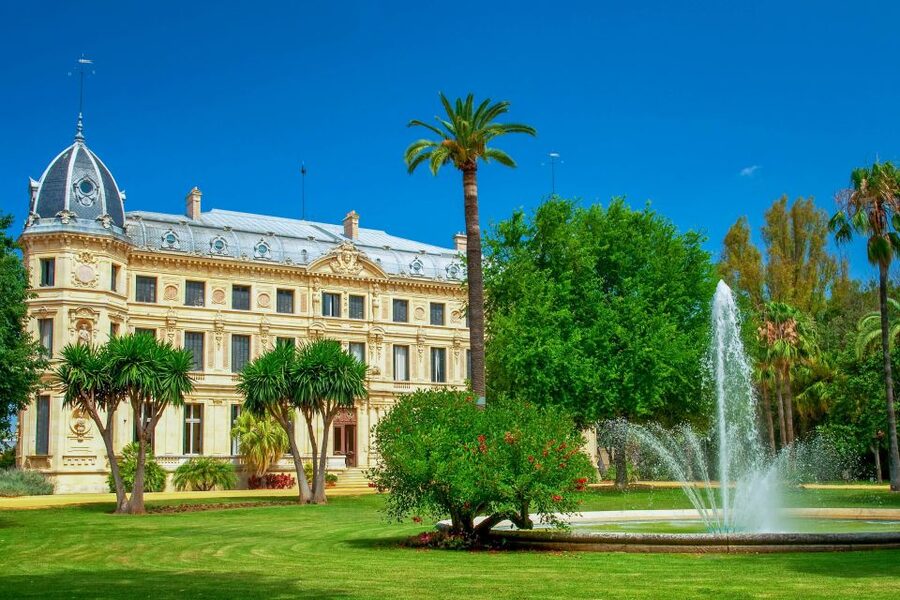
Reviewed · HORSES
Jerez de la Frontera: How the Andalusian Horses Dance
The horses are the stars here, but the real surprise is the precision. At Jerez’s Royal Andalusian School of Equestrian Art, you’ll see horses perform pirouettes, Spanish walks, carriage work, and high-level dressage in a carefully staged equestrian ballet. This is not a casual riding demonstration. It is a formal show with music, costumes, and choreography.
I like the mix of disciplines, especially the contrast between elegant classical dressage and the faster, more earthy Doma Vaquera. I also like the setting and price: about $31 per person buys a 90-minute to two-hour performance in one of Spain’s great horse towns. The main consideration is that the program can change, and you do not choose an exact seat when booking.
Key points to know before booking
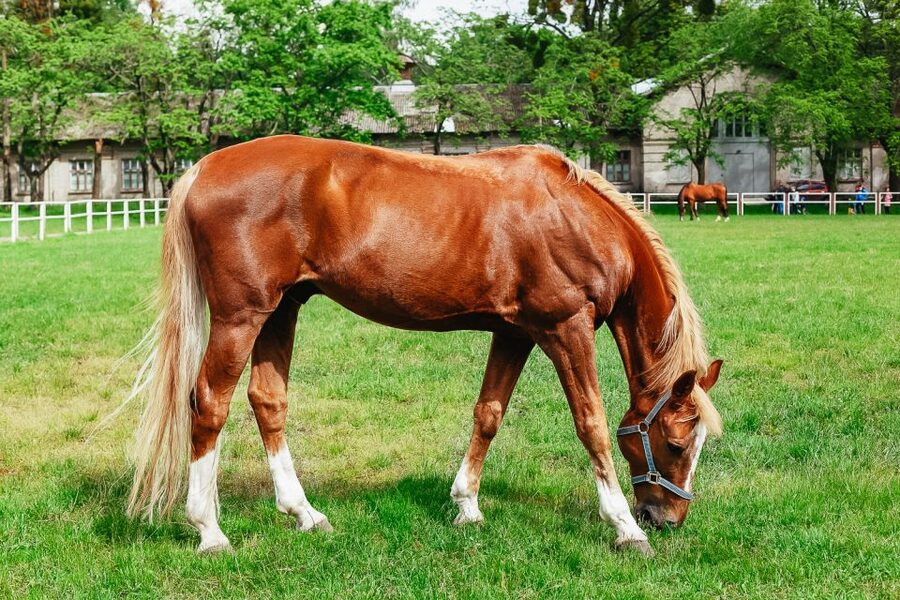
- Six to eight choreographies: Each performance combines selected numbers from dressage, Doma Vaquera, carriage driving, work in hand, and the final Carrousel.
- Spanish riding at its most polished: Horses and riders perform pirouettes, piaffe, passage, levades, caprioles, courbettes, and the Spanish walk.
- Traditional presentation: Spanish music and 18th-century style costumes give the show a formal, distinctly Andalusian character.
- A good value at $31: The show lasts from 90 minutes to two hours, making it easy to fit into a day in Jerez.
- Easy from Cádiz: You can reach Jerez by train from Cádiz, then continue by taxi to the school.
- Practical restrictions: Bring your passport or ID card and a printed voucher. Flash photography, audio recording, pets, glass, bottles, cans, and sharp objects are not allowed.
Why the Andalusian horses are the main event
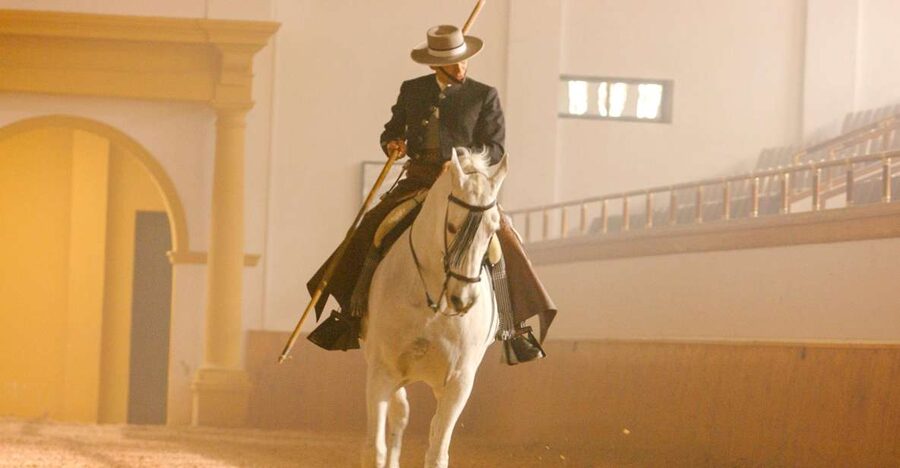
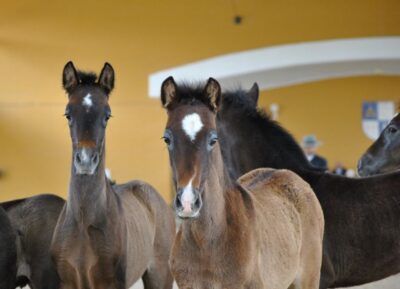
The Andalusian horse has a reputation for grace, but this show lets you see what that means in practical terms. The horses are trained to respond to tiny signals from the rider, often while moving at a slow, controlled pace. That makes each shift of weight, raised leg, or sudden change of rhythm easy to notice.
You may see a horse turn in a tight pirouette, lift its feet in the Spanish walk, or pause in the piaffe, a highly collected movement in which the horse appears to trot in place. These actions look effortless from the seats. They are not. The appeal comes from watching power held in reserve and released with exact timing.
The show is designed for a broad audience, including people who know little about dressage. You do not need to understand every technical term to appreciate the sight of a horse moving sideways, balancing on its hind legs, or working in perfect time with another horse. If you already follow dressage, you will have plenty to study in the horses’ posture, rhythm, and obedience.
The presentation also helps you read the action. Classical Spanish music sets the pace, while the riders’ traditional costumes make the movements easier to follow. This is polished theater, but the skills are genuine equestrian skills rather than stage tricks.
More horse rides in Spain:
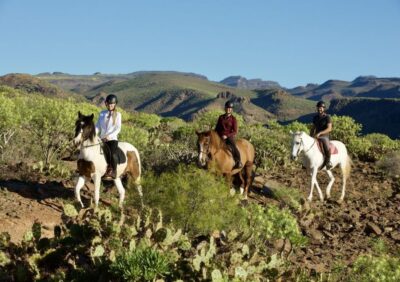
- El Salobre: Horse Riding Adventure with Transfer Options
★ 4.5 · 1,609 reviews - Jerez de la Frontera: Andalusian Horse Dance and Museums
★ 4.7 · 1,289 reviews - Jerez: Yeguada de la Cartuja Carthusian Horses Tour
★ 4.8 · 970 reviews
Doma Vaquera brings the countryside into the arena
One of the most useful parts of the program is Doma Vaquera, the Spanish riding discipline linked to cattle work. It gives the show a different feel from formal dressage.
The rider works with one hand while guiding the horse around the arena. The performance may begin at a trot, then shift into a gallop, with changes of rhythm, tight turns, and sudden bursts of speed called arreones. The horse seems to go from calm to explosive in a moment.
This section helps explain how Spanish riding developed outside the court and competition arena. The movements are not included only for decoration. They come from practical work with cattle, where a rider needed a responsive horse, one free hand, and the ability to change direction quickly.
I especially like this contrast in the program. The classical numbers reward patience and stillness. Doma Vaquera has more snap and forward motion. If you are choosing the show for children or for a companion who is not especially interested in dressage, this faster section can provide a welcome change of pace.
Classical dressage, from piaffe to the Airs Above the Ground
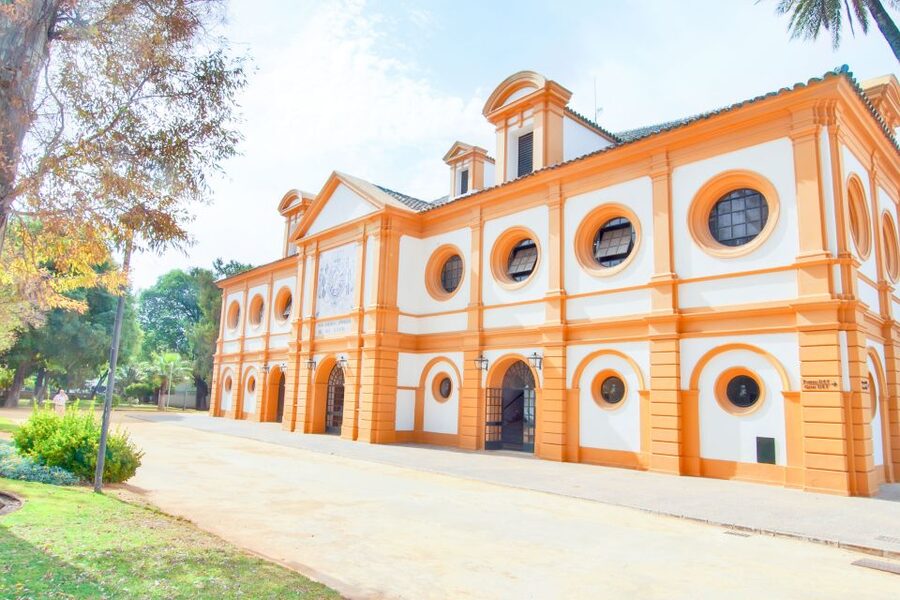
The classical dressage portion is the most refined part of the performance. The school may select from numbers with names such as The Colts, Airs on Horseback, Pas de Deux, Passage and Piaffer, Domino on Horseback, Airs Above the Ground, and Fantasy.
A Pas de Deux pairs two horses and riders in matching movements. The interest is not simply that both horses move at the same time. The riders must maintain distance, rhythm, and posture while making the pair look like one choreographed unit.
Passage and piaffe focus on collection. Passage is a slow, elevated trot with a pronounced moment of suspension. Piaffe is more contained, with the horse appearing to trot almost in place. From the audience, the effect is quiet and controlled, so watch the legs and the timing rather than waiting for speed.
Airs Above the Ground are more dramatic. These advanced movements ask the horse to lift the front of its body or spring upward in a controlled way. The names can sound grand, but the important thing is to notice how little visible effort the rider uses to request such demanding work.
The school does not promise every listed number at every performance. Each show contains six to eight choreographies chosen from the repertoire. That keeps the program manageable, but it also means you should treat the published list as a range of possible performances rather than a guaranteed running order.
Carriage driving adds wheels, teamwork, and speed
Carriage driving breaks up the horse-and-rider format. Here, the horses pull traditional carriages while coachmen guide them through the arena.
These carriages once served ordinary transport. Today they are used for sport and exhibition, but the basic challenge remains clear: the coachman must control several moving parts at once. The horses must respond to the harness, the vehicle, the reins, and the pace of the performance.
This is a good section to watch from the point of view of teamwork. The coachman cannot use the same body language as a rider sitting directly on the horse. The distance between driver, reins, carriage, and horses gives the display its own rhythm.
If you have already seen dressage, carriage driving gives you something genuinely different rather than another version of the same routine. It also makes the performance feel connected to older Spanish transport traditions.
Same city, a completely different evening:
- Barcelona: Sagrada Familia Entry Ticket with Audio Guide
★ 4.6 · 105,312 reviews - Barcelona: Park Güell Admission Ticket
★ 4.4 · 76,534 reviews - Seville: Royal Alcázar Entry Ticket
★ 4.6 · 28,378 reviews - Barcelona: Casa Batlló Entry with Self-Audioguide Tour
★ 4.7 · 25,359 reviews
Work in Hand shows obedience without a rider in the saddle
Work in Hand may be the most revealing number for first-time viewers. The horse performs while the rider works from the ground rather than sitting in the saddle.
The program can include Haute École exercises such as levades, caprioles, courbettes, piaffe between pillars, and the Spanish walk. The exact movements depend on the day’s selection, but the point is consistent: the horse obeys commands without the rider’s weight or position providing the usual guidance.
This section rewards close attention. Watch the handler’s feet, hands, and position beside the horse. The horse’s response may look small compared with a gallop, yet it shows the trust and training behind the larger movements.
For families, this can be a useful moment because it makes the horse-rider relationship easier to understand. You can see the communication rather than simply watching a fast pass across the arena.
The Carrousel provides a proper finale
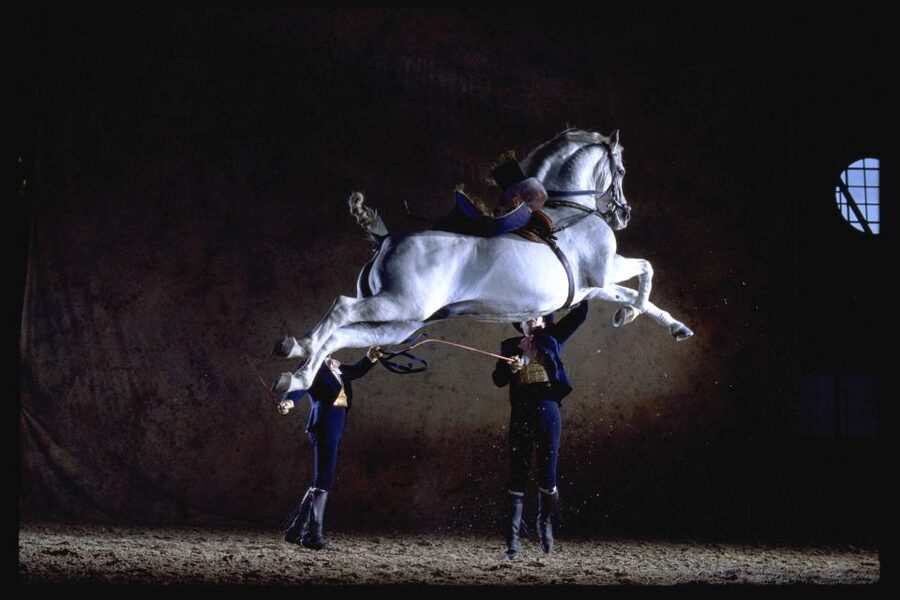
The Carrousel brings a group of horses and riders together for synchronized exercises. After the individual displays, this final number gives the show a sense of order and ceremony.
Several horses moving in formation can be more impressive than one horse performing a difficult movement. Riders need to maintain spacing, pace, and direction while also handling their own horses. The result is a carefully timed conclusion rather than a loose parade.
The Carrousel also brings together the show’s main ideas: Spanish riding, formal presentation, music, and group precision. It is a fitting finish, especially if you appreciate the visual side of the performance as much as the technical side.
What the costumes and music add
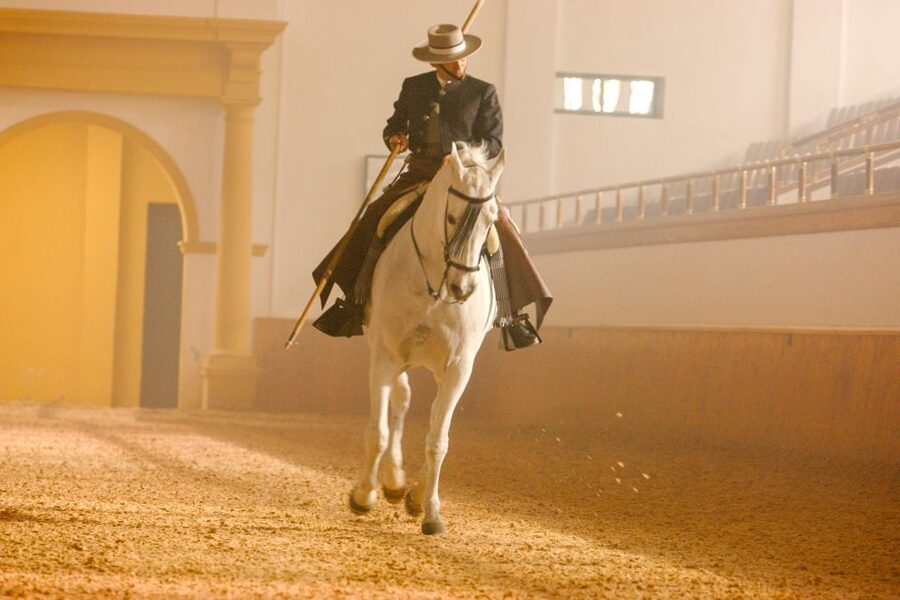
The 18th-century style costumes are not a minor detail. They frame the performance as a presentation of Spanish equestrian culture rather than a modern sporting event.
The riders’ clothing gives the show a formal look, while the Spanish music provides cues and atmosphere. You may find the combination theatrical, but that is part of the appeal. The school is presenting riding as a cultural art, not only as a test of athletic skill.
The music also helps you follow changes in mood. A slower classical number feels measured and almost courtly. Doma Vaquera brings a more direct country-riding energy. Carriage driving has a separate visual rhythm, with the movement of the wheels adding to the show.
The Royal School setting and what to do before the show
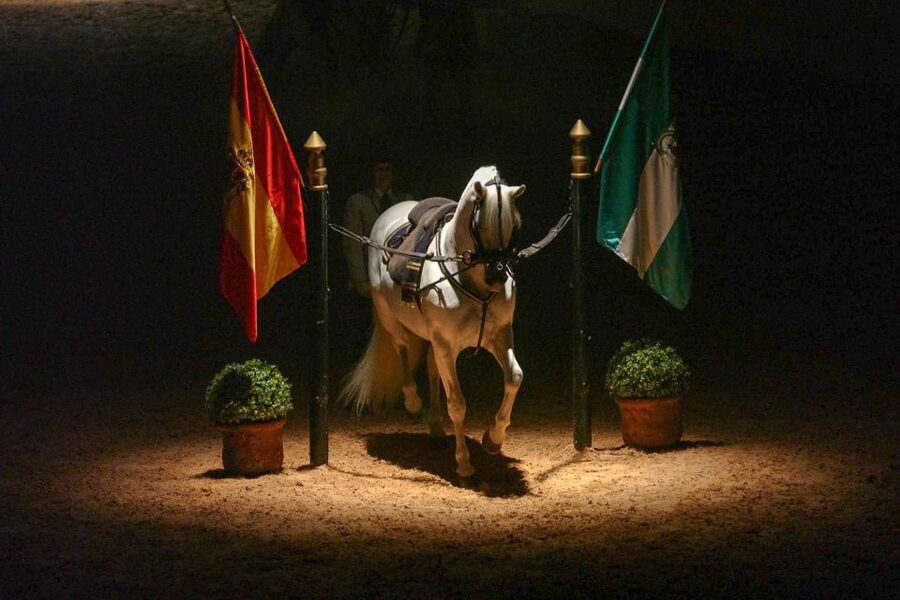
You collect your ticket at the Reservation Box Office at the Royal Andalusian School of Equestrian Art Foundation. Bring your printed voucher, along with a passport or ID card. If you bought a discounted ticket, bring proof of eligibility or you may have to pay the difference to the full standard price, if seats remain.
Allow time to reach the box office before the performance. The show itself lasts from 90 minutes to two hours, and the management can alter the program. Your ticket category determines the price level, but you do not select a specific row or seat number. Seats are assigned according to the order of purchase or booking.
The school is wheelchair accessible. If you are visiting from Cádiz, the train to Jerez can make this a straightforward outing, followed by a short taxi ride to the school. The transfer details are simple enough, but leave room for the ticket collection process rather than arriving at the last minute.
Some of the best moments may happen around the performance. You might see riders and trainers working before or after the show, and you can spend time walking the grounds. These extra glimpses are not a guaranteed part of the formal program, so treat them as a bonus rather than a promised backstage visit.
The gift shop may close earlier than you expect. If you want time to browse, do it before the performance or check the opening arrangements when you arrive.
Is $31 a fair price for the show?
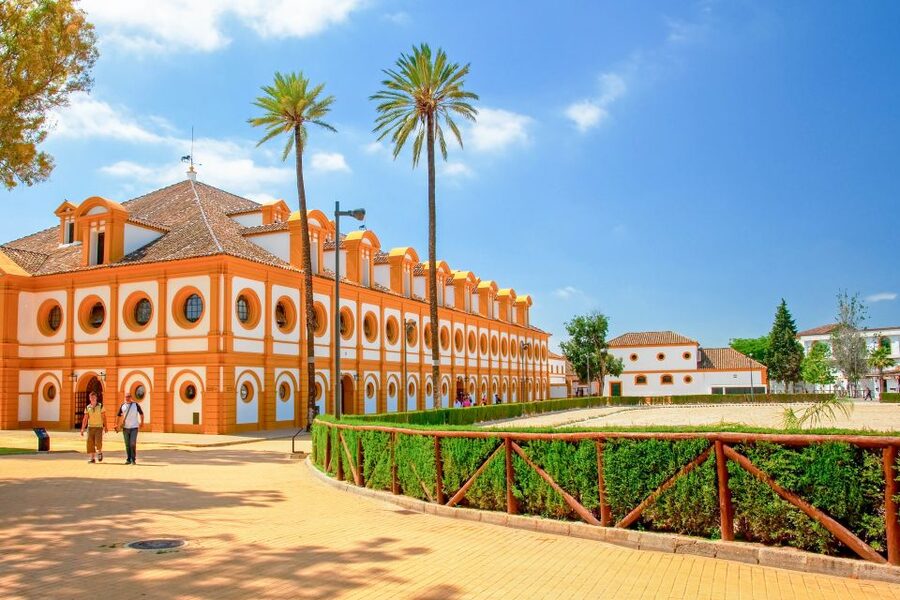
At about $31, I consider this a good-value cultural performance in Jerez. You are paying for a long, structured show rather than a short photo opportunity, and the program covers several forms of Spanish horsemanship.
The value is strongest if you are already planning to visit Jerez or Cádiz. The show gives you an activity with a clear start and finish, and its 90-minute to two-hour length fits neatly around a meal or a walk through Jerez.
It may feel less worthwhile if you have no interest in horses, dressage, or formal performances. The show is not a casual flamenco-style spectacle with constant action. Some numbers are slow, precise, and technical. You need to watch closely to appreciate them.
Discounted prices may be available, but eligibility must be documented at the ticket office. Also remember that you choose only the ticket category, not the exact seat. The seating arrangement is intended to provide good viewing, but people who need a specific location should check the booking terms carefully.
Who should book this Jerez performance?
I would choose this show for anyone interested in Spanish culture, horses, dressage, or traditional riding. It is particularly well suited to:
- First-time visitors who want a distinctly Andalusian activity
- Dressage followers who want to see advanced movements in a formal setting
- Families looking for a structured performance rather than a long museum visit
- Anyone staying in Cádiz who wants an easy day trip to Jerez
- Visitors who appreciate music, costumes, and traditional presentation
I would be more cautious if you dislike staged performances or have little patience for slow technical work. The program includes exciting gallops and carriage displays, but it also depends on control, repetition, and quiet concentration.
You should also consider the rules. No flash photography, audio recording, pets, glass objects, bottles, cans, weapons, or sharp objects are allowed. These restrictions are easy to manage, but they matter if you are carrying a picnic bag or recording equipment.
My verdict: book it if you want more than a horse show
I recommend the Royal Andalusian School performance if you want to see how Spanish horsemanship combines sport, tradition, and ceremony. The strongest parts are the change from classical dressage to Doma Vaquera, the carriage driving, and the synchronized Carrousel finale.
Book it with realistic expectations. You may not see every named choreography, and you will not pick your exact seat. But for about $31, you receive a substantial performance with skilled horses, polished riders, Spanish music, and a clear connection to Andalusian riding culture.
If your schedule lines up, this is one of Jerez’s most distinctive activities. It is especially easy to recommend as a Cádiz day trip, and the chance to see the horses and riders working around the show can make the visit feel like more than a single performance.
FAQ
Where does the Andalusian horse show take place?
The performance takes place at the Fundación Real Escuela Andaluza del Arte Ecuestre, also called the Foundation Royal Andalusian School of Equestrian Art, in Jerez de la Frontera.
How long does the performance last?
The activity lasts between 90 minutes and two hours. Starting times vary, so check availability for the date you want.
How much does admission cost?
The listed price is $31 per person. Discounted prices may be available for eligible visitors, who must show proof of eligibility when collecting tickets.
What types of riding are included?
The program can include Doma Vaquera, classical dressage, carriage driving, work in hand, and a Carrousel finale.
Will I see every choreography listed in the program?
No specific set of numbers is guaranteed. Each performance includes six to eight choreographies selected by the school from its repertoire.
Can I choose my exact seat?
No. Tickets are sold by price category, without selection of a particular row or seat number. Seats are allocated according to the order of purchase or booking.
Is the venue wheelchair accessible?
Yes, the experience is listed as wheelchair accessible.
What should I bring to the ticket office?
Bring your printed voucher and your passport or ID card. If you bought a discounted ticket, bring the required proof of eligibility.
Can I take photographs during the performance?
Photography with flash is not allowed. Audio recording is also prohibited.
Can I bring a pet, bottle, or glass container?
No. Pets, glass objects, bottles, cans, weapons, sharp objects, and other items considered unsuitable by management are not allowed.
Recently added in Spain
- From Andratx: Formula Sunset Driving Tour★ 4.8 · 176 reviews
- Barcelona: Catamaran Cruise w/ Sailing, Wine, & Tapa★ 4.7 · 176 reviews
- Entrance to the Flamenco Temple Room in Madrid with Tapas Option★ 5.0 · 176 reviews
- Fuerteventura: Round-Trip or 1-Way Ferry Ticket to Lanzarote★ 4.7 · 176 reviews
- Mallorca Sailing Adventure with Snorkeling, Snacks & Drinks★ 5.0 · 176 reviews
- Valencia Private Walking Tour with Official Valencian Guide★ 5.0 · 176 reviews
- Benahavís: Canyoning Guided Tour at Guadalmina River★ 5.0 · 177 reviews
- Guided Gaudí Trencadís Mosaic Workshop in Barcelona 2 Hours★ 5.0 · 176 reviews
Horses, compared.
El Salobre: Horse Riding Adventure with Transfer Options
Read the review →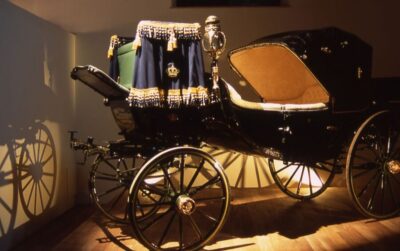
Montserrat Monastery & Horse Riding Experience from Barcelona
Read the review →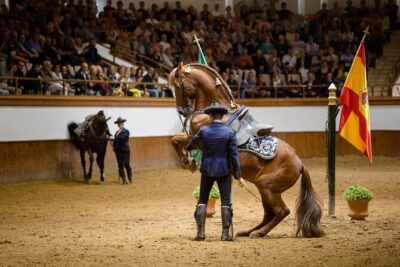
Browse the lists this tour appears in